
3D Printed Terracotta Reefs: Hong Kong’s Innovative Solution to Global Coral Restoration and Marine Biodiversity
Our planet’s marine ecosystems are facing unprecedented threats. Climate change, rampant pollution, and unsustainable fishing practices are accelerating the degradation of vital natural habitats, with coral reefs being among the most severely impacted. These intricate underwater cities, teeming with life, are succumbing to stressors that lead to widespread coral bleaching and erosion. As corals perish, the structural integrity of the reefs weakens, destroying the unique marine biodiversity they once sheltered. Recognizing this dire situation, researchers, scientists, and forward-thinking companies across various industries are actively seeking and developing innovative solutions, dedicating substantial time and financial resources to safeguard our planet’s well-being. Among these pioneering efforts, the integration of advanced 3D printing technologies has emerged as a promising avenue for coral reef restoration.
From the creation of robust 3D printed reef blocks constructed from sustainable materials to the cutting-edge process of bioprinting actual corals, the commitment to preserving these indispensable elements of our global ecosystem is growing. This journey of innovation is continually evolving, with new breakthroughs frequently announced. A significant recent development comes from Hong Kong, where a collaborative team of scientists and architects has engineered unique 3D printed reef tiles crafted from terracotta. This pioneering project aims to revitalize and restore damaged coral reefs within the region’s protected Marine Park, offering a beacon of hope for marine conservation worldwide.
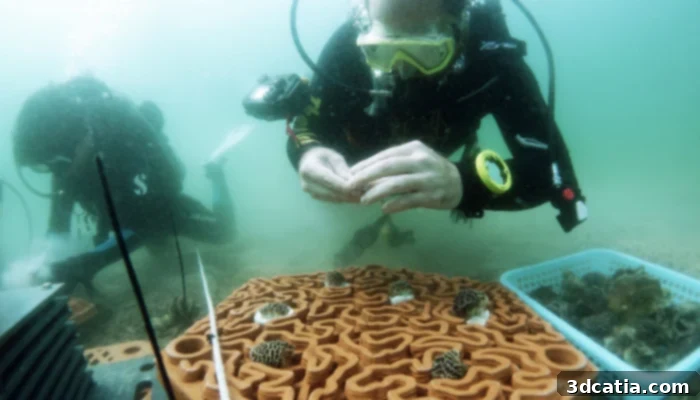
The Marine Park in Hong Kong is an ecological treasure, hosting over three-quarters of all reef-building coral species found in the Hong Kong area. Unfortunately, like many coral ecosystems globally, these reefs have suffered substantial damage from erosion and other environmental pressures over recent years. In response, the Agriculture, Fisheries and Conservation Department (AFCD) initiated a crucial restoration project. Its primary objective is to meticulously preserve and actively manage the precious coral communities within the Marine Park, ensuring their survival and recovery. This ambitious project brought together a multidisciplinary team: innovative architects from the Robotic Fabrication Lab collaborated with experienced marine scientists from the University of Hong Kong (HKU). Their combined expertise was instrumental in designing and additively manufacturing specialized reef tiles, precisely tailored to facilitate coral attachment and growth. Beyond the manufacturing process, the team was also responsible for the delicate installation of these 3D printed reef tiles onto the seabed and for the ongoing, rigorous monitoring of the rejuvenated marine life.
All image credits: University of Hong Kong
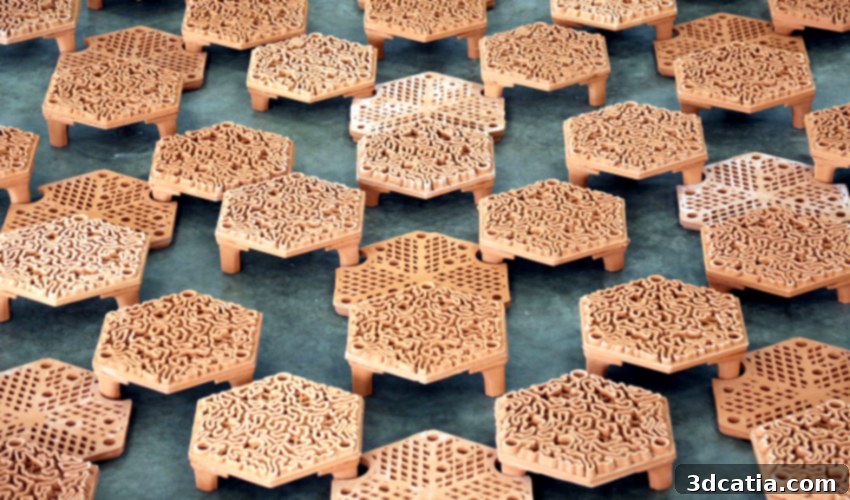
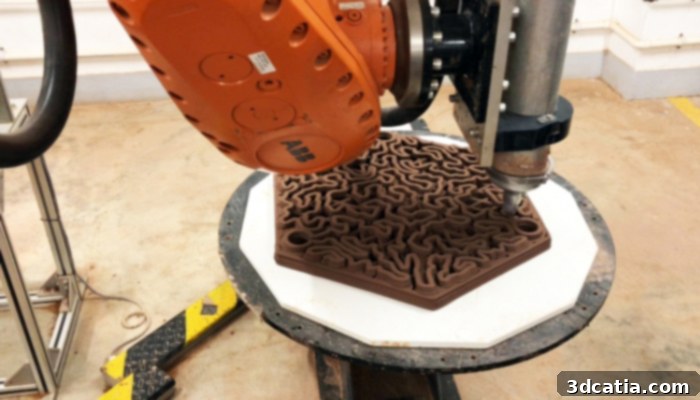
For this groundbreaking initiative, the Robotic Fabrication Lab team leveraged advanced robotic clay 3D printing technology, utilizing readily available generic terracotta clay. This allowed them to precisely manufacture a total of 128 reef tiles, each measuring 600mm in diameter, collectively covering an impressive 40 square meters of the marine floor. The design of these tiles is a marvel of biomimicry and engineering; its intricate patterns were directly inspired by the natural structures and textures characteristic of healthy corals. More than just aesthetic, these designs integrated several performative aspects specifically engineered to address the unique environmental conditions prevalent in Hong Kong waters, such as currents, sedimentation, and nutrient flow, thus optimizing the environment for coral recruitment and long-term survival. This fusion of natural inspiration and advanced manufacturing represents a significant step forward in designing effective artificial reef structures.
A crucial aspect that sets this project apart is the careful selection of materials, which are significantly more eco-friendly than conventional methods relying on concrete or metal structures typically used in reef restoration. The tiles were initially 3D printed from raw clay, a naturally abundant and biodegradable material. Following this, they were meticulously hardened at a high temperature of 1125 degrees Celsius in a kiln, transforming them into durable terracotta ceramic. This process ensures the tiles are robust enough to withstand the marine environment while minimizing their ecological footprint. The use of terracotta is particularly advantageous due to its porous nature, which can facilitate microbial growth and provide a suitable substrate for marine organisms, enhancing the chances of successful coral attachment and growth. This commitment to sustainable material science underscores the project’s holistic approach to environmental conservation. The team harbors ambitious plans to broaden their collaboration, exploring new designs with enhanced functionalities specifically tailored for wider seabed restoration efforts across the region, further solidifying the potential of additive manufacturing in marine ecology.
The success of such restoration missions hinges on tangible, measurable improvements in coral reef health and biodiversity. Once the efficacy of this innovative technique is thoroughly proven, and scientists observe noticeable positive changes in the well-being and growth of the coral reefs in Hong Kong, the potential for its global implementation becomes immensely exciting. Hundreds, if not thousands, of kilometers of vital coral reefs around the world are facing existential threats and are in urgent need of intervention. Adapting and deploying this terracotta 3D printing method in diverse marine environments could offer a scalable, sustainable, and highly effective tool for global coral conservation. The customizability inherent in 3D printing allows for designs to be adapted to specific local conditions, from water currents to target coral species, making it a versatile solution for varying restoration challenges. This project serves as a powerful testament to how interdisciplinary collaboration, cutting-edge technology, and a deep understanding of marine science can converge to create impactful solutions for some of our planet’s most pressing environmental issues.
All image credits: University of Hong Kong
Beyond the immediate environmental benefits, the Hong Kong project highlights the broader transformative potential of additive manufacturing. It demonstrates how advanced robotic fabrication can be harnessed to address complex ecological problems, offering scalable and precise solutions that would be challenging, if not impossible, with traditional construction methods. The intricate designs achieved through 3D printing not only mimic natural coral structures but also provide optimal micro-habitats for various marine species, promoting a faster return of biodiversity to degraded areas. This innovative approach offers hope for reversing the tide of marine degradation and fostering resilient ecosystems capable of withstanding future environmental pressures. Continued research and development in this field are crucial to refine materials, optimize designs, and broaden the applicability of 3D printed reef structures to diverse global marine environments, further solidifying the role of technology in ecological restoration.
Do you believe that such advanced 3D printed reef tiles made from sustainable clay materials can genuinely contribute to preserving and enhancing coral biodiversity on a global scale? We invite you to share your thoughts and perspectives by leaving a comment below or by engaging with us on our Facebook and Twitter pages! Stay informed about the latest developments and breakthroughs in the exciting world of 3D printing by signing up for our free weekly Newsletter, delivered straight to your inbox. Join the conversation and become part of the movement towards a more sustainable and technologically advanced future for our planet’s precious marine life.