

Redwire Acquires Made In Space: Pioneering the Future of In-Orbit Manufacturing and Space 3D Printing
Made In Space has long stood as a trailblazer in the nascent but rapidly evolving field of in-space manufacturing and assembly technologies. The company has consistently pushed the boundaries of what is possible beyond Earth’s atmosphere, developing groundbreaking solutions that promise to revolutionize how humanity operates in space. A prime example of their innovative spirit was their announcement last October, detailing plans to send the first commercially-developed plastic recycling facility, dubbed the Braskem Recycler, to the International Space Station (ISS). This ingenious machine is designed to address one of the critical challenges of long-duration space missions: waste management. By converting plastic waste and 3D printed objects into smaller, reusable pieces, which can then be heated, extruded, and spooled into fresh feedstock, the Braskem Recycler enables continuous processing by additive manufacturing systems directly in orbit. This not only minimizes the need for costly resupply missions from Earth but also fosters a more sustainable and self-sufficient space presence. Beyond this specific project, Made In Space has established itself as a leading developer of advanced 3D printers specifically engineered for the unique demands of zero-gravity environments, solidifying its status as a trusted supplier to NASA for critical in-space fabrication capabilities. Now, in a significant development signaling a new era for the company, Made In Space is being acquired by Redwire, an ambitious new venture strategically consolidating a portfolio of cutting-edge space companies to forge a powerhouse in advanced space solutions.
Redwire itself officially made its debut on the global stage on June 1, 2020. Its emergence was the result of a strategic combination of two recent acquisitions by AE Industrial Partners (AEI): Adcole Space and Deep Space Systems (DSS). Both Adcole Space and DSS boast extensive experience and stellar reputations within the aerospace industry, primarily known as reliable suppliers of sophisticated spacecraft components and providers of critical engineering services. These companies bring decades of heritage, proven reliability, and deep technical expertise in traditional space systems. Peter Cannito, the Chief Executive of Redwire, articulated the strategic vision behind this consolidation in an insightful interview: “What we wanted to do with Redwire is take some of the traditional space heritage from the small, agile and innovative companies out there like Adcole and DSS and combine them with a true innovator.” This statement perfectly encapsulates Redwire’s ambition: to blend the foundational strength and legacy of established space players with the dynamic, forward-thinking capabilities of disruptive innovators, creating an entity uniquely positioned to drive the future of space exploration and commercialization. The strategic combination aims to leverage the robust infrastructure and deep engineering talent of Adcole Space and DSS, complementing them with the revolutionary technologies and visionary approach of a company like Made In Space, thereby creating a diversified and highly capable aerospace enterprise. This synergistic approach promises to accelerate the development and deployment of next-generation space solutions, from satellite components to orbital manufacturing platforms, under a unified and formidable brand.
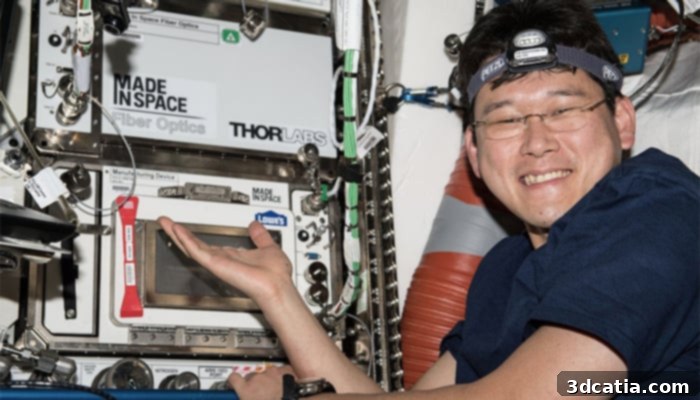
At the core of Made In Space’s operational philosophy lies a profound mission: to integrate in-space manufacturing into the global space economy. This objective is not merely about technological advancement; it aims to trigger transformational effects on two pivotal fronts: humanity’s capacity to maintain a sustained and enduring presence in space, and the overall health and vitality of the global space economy itself. The company articulates a compelling argument that in-space manufacturing and assembly are not just advantageous but indispensable steps toward achieving profitability in space endeavors and, crucially, enabling a sustained human presence beyond Earth’s protective embrace. The ability to fabricate, repair, and even construct entirely new systems in orbit drastically reduces the logistical and financial burdens associated with launching everything from Earth. Furthermore, the unique microgravity and vacuum conditions prevalent in space offer unprecedented opportunities for materials science. Processing various materials in space, for instance, can yield novel properties and structures that are simply unattainable or incredibly difficult to replicate under terrestrial gravity. This opens up entirely new avenues for innovation, leading to the creation of advanced alloys, unique composites, and specialized components with unparalleled performance characteristics. Consequently, the market for these singularly manufactured-in-space products is inherently distinct and promises high value. Since its inception in 2010, Made In Space has masterfully leveraged the extraordinary environment of space to develop cutting-edge manufacturing solutions. Their innovations have effectively addressed a diverse array of challenges across the commercial, industrial, research, and defense sectors, providing bespoke solutions for everything from producing vital replacement parts for satellites to enabling complex research experiments and supporting national security initiatives. Their pioneering work has demonstrated the tangible benefits of orbital fabrication, proving that localized production can enhance mission resilience, reduce lead times, and unlock entirely new possibilities for scientific discovery and economic growth in the cosmos.
This is precisely why Made In Space is perceived as the quintessential innovator within Redwire’s grand strategy. Peter Cannito elaborated on this critical aspect, stating: “The things that they’re doing are things that have never been done and really have the potential to change the economics of space. That filled a key gap in our strategy.” This highlights the profound impact Made In Space’s technologies are expected to have. By developing the capability to manufacture and assemble objects directly in orbit, Made In Space is not just advancing technology; it is fundamentally altering the cost-benefit analysis of space operations. Traditionally, every component, tool, and structure needed in space had to be designed, built, and rigorously tested on Earth, then launched at immense expense and risk. In-space manufacturing mitigates these challenges by enabling on-demand production, recycling of materials, and even the construction of structures too large or complex to be launched in a single piece. This capability promises to unlock unprecedented efficiency and flexibility, drastically reducing reliance on Earth-based supply chains and opening the door to more ambitious and cost-effective space missions, from large-scale orbital infrastructure to deep-space exploration. Made In Space’s expertise in additive manufacturing, robotics, and advanced materials for space environments positions Redwire at the forefront of this paradigm shift. Initially, Made In Space and the other Redwire companies, Adcole Space and Deep Space Systems, will maintain their separate operational structures, leveraging their established brands and specialized expertise. However, the long-term vision is clear: over time, these distinct entities will progressively combine and integrate under the unified Redwire name. This consolidation will foster greater synergy, streamline operations, and present a cohesive front to the market, allowing Redwire to offer a comprehensive suite of end-to-end space solutions, from traditional components to revolutionary in-orbit manufacturing capabilities. This strategic integration is anticipated to accelerate innovation, enhance competitive advantage, and solidify Redwire’s position as a dominant force in the global space industry, ready to tackle the challenges and seize the opportunities of the new space age. You can learn more about the profound impact of in-space manufacturing on the global space economy HERE.
The acquisition of a pioneering company like Made In Space by an ambitious new entity such as Redwire marks a pivotal moment in the trajectory of advanced space technologies. This strategic move signifies a growing recognition within the aerospace industry of the critical importance of in-space manufacturing, additive manufacturing, and sustainable orbital operations for future endeavors. The combined strengths of Redwire’s constituent companies – the established heritage and engineering prowess of Adcole Space and Deep Space Systems, coupled with Made In Space’s unparalleled innovation in zero-gravity fabrication – create a formidable force ready to redefine the boundaries of space exploration, commercialization, and defense. This new chapter promises exciting developments, from enhanced capabilities for the International Space Station and future lunar gateways to groundbreaking advancements in deep-space missions and orbital resource utilization. The synergies generated by this merger are expected to accelerate research and development, streamline the adoption of cutting-edge technologies, and ultimately pave the way for a more accessible, sustainable, and profitable future in space for all. We’re keen to hear your thoughts on this significant acquisition and what it could mean for the future of space technology and manufacturing. Share your insights and predictions in a comment below, or join the discussion on our vibrant Facebook and Twitter pages! Don’t miss out on the latest advancements and news from the dynamic world of 3D printing and space innovation – remember to sign up for our free weekly Newsletter to get all the cutting-edge updates, research breakthroughs, and profiles of leading entrepreneurs delivered straight to your inbox!