
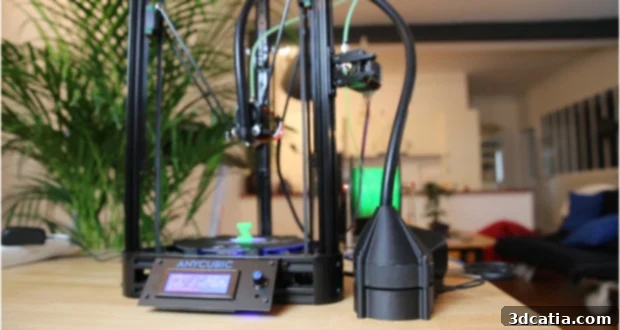
Zimpure: Revolutionizing 3D Printing Safety with Advanced Emission Filtration for All Desktop 3D Printers
The world of desktop 3D printing has grown exponentially, bringing rapid prototyping and creative manufacturing to homes, workshops, and offices globally. However, alongside this innovation comes a growing concern: the emission of toxic gases and ultrafine nanoparticles during the printing process. Addressing this critical issue, Nicolas and Antoine, the visionary founders of Zimple, recently launched a highly successful Kickstarter campaign for their groundbreaking 3D printer filtration system, the “Zimpure.” This innovative device is poised to become an indispensable accessory for every 3D printer user, promising a significantly safer and healthier printing environment. The campaign quickly surpassed its initial goal of €15,000, raising an impressive €23,453 with mere days left, a testament to the urgent market demand for such a solution. We had the distinct pleasure of sitting down with Nicolas and Antoine to delve deeper into the origins, technology, and future of this transformative project.
3DN: Could you please introduce Zimple and yourselves to our readers?
Absolutely, it’s our pleasure! Zimple is the culmination of a long-standing friendship and shared passion between two individuals. We’ve been friends since our high school days and reconnected in Paris during our university studies, where our complementary skills and mutual interests truly aligned. Our collective journey began with a shared observation about the untapped potential and unaddressed challenges within the rapidly evolving 3D printing landscape.
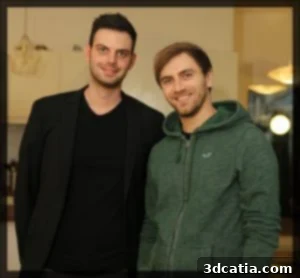
Antoine and Nicolas, the innovative minds behind Zimple
My name is Nicolas, and I’ve always considered myself a maker at heart. From a young age, I’ve been driven by the desire to create and build. Discovering 3D printing and digital design felt like a profound return to that childhood fascination, a true creative outlet. I particularly enjoy projects that intertwine electronics and mechanics, allowing me to apply the knowledge gained during my engineering studies in embedded systems. This background has been instrumental in the technical development and hardware design of the Zimpure system.
And I’m Antoine. My journey into 3D printing is more recent, but I was immediately captivated by the technology’s immense potential and diverse applications. Simultaneously, my lifelong passion for entrepreneurship and web development has always driven me. My academic path led me to Data Science, a field that perfectly complements Nicolas’s engineering expertise, enabling us to approach product development and business strategy from a well-rounded perspective. Our combined skill set forms the backbone of Zimple, allowing us to tackle complex problems with both technical prowess and strategic vision.
Together, we recognized that while desktop 3D printers offer incredible versatility, they often present users with numerous unaddressed weaknesses and practical difficulties, particularly concerning health and environmental impact. Manufacturers frequently overlook or downplay these aspects. With Zimple, our core mission is to empower users by providing innovative, effective, and accessible solutions to the various challenges they encounter when integrating 3D printing into their daily lives or workplaces, ensuring a safer and more enjoyable experience for everyone.
3DN: Can you elaborate on how your innovative project came into being?
The Zimpure project was directly born out of a very personal and rather unpleasant first-hand experience with the emissions produced by a 3D printer. This wasn’t just a theoretical concern; it was a tangible, uncomfortable reality that highlighted a significant problem in the 3D printing community.
My initial encounter with 3D printer emissions occurred about three years ago. I had just acquired a Prusa i3, which came with a spool of ABS filament. Eager to dive into printing, I set it up conveniently on my desk, right beside me. Within a mere 20 minutes of starting my first print, I began experiencing a severe headache, a burning sensation in my eyes, and a noticeable irritation in my throat. This wasn’t just a minor discomfort; it was a clear physical reaction. I soon realized I wasn’t alone; many in the maker community have shared similar experiences. Further research confirmed that the extrusion of thermoplastics, especially materials like ABS, releases a considerable amount of toxic gases, including Volatile Organic Compounds (VOCs), and an alarming quantity of ultrafine nanoparticles into the air. My immediate, albeit temporary, solution was to relocate the printer away from my immediate workspace, next to an open window. While this provided some relief, it quickly proved impractical during colder winter months, on rainy days, or when I needed to print late at night. The necessity of ventilation became a constant logistical challenge, often conflicting with optimal printing conditions or even personal comfort.
Frustrated by this recurring issue, I began searching for existing solutions offered by various retailers and manufacturers. What I found was disheartening: filtering covers often priced around €250 (approximately $265 USD). These solutions were typically designed for a single, specific machine, offered questionable air-tightness, and frequently incorporated HEPA filters primarily designed for household vacuum cleaners, not for industrial-grade particle and gas filtration. The prospect of investing such a significant amount of money for a product that was both limited in compatibility and questionable in efficacy was simply unacceptable. This glaring gap in the market—a need for an effective, affordable, universally compatible, and scientifically validated filtration system—became the catalyst for Zimple and the Zimpure project.
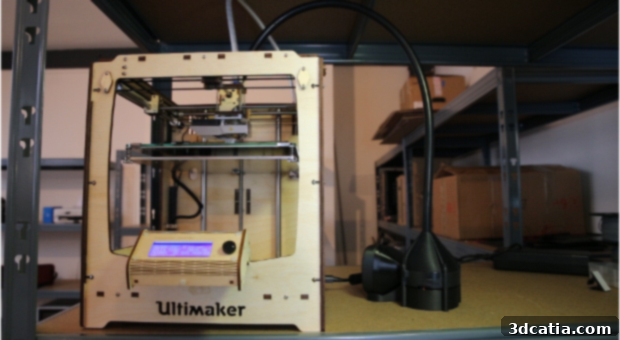
The Zimpure filtration system seamlessly integrated with an Ultimaker 3D printer
It was precisely for these reasons that we committed ourselves to developing a superior filtration system. Our aim was to create a device that would be universally compatible with virtually all desktop 3D printers, highly efficient in capturing harmful emissions, and, crucially, affordable for the everyday user. Furthermore, we insisted that our solution should not drastically increase the overall footprint of the printer, ensuring it remained practical for various environments. The Zimpure was engineered from the ground up to meet these rigorous criteria, offering a truly practical and effective answer to the pervasive problem of 3D printing emissions.
3DN: What are the unique and specific features of your Zimpure filtration system?
With Zimpure, our overarching goal was to provide 3D printer users with a genuinely effective and accessible solution. This meant developing a system that boasts universal compatibility, rigorously proven efficacy through qualified laboratory certifications, and an affordable price point, all while maintaining a compact design that doesn’t significantly alter the printer’s original dimensions. We are proud to say we have achieved these ambitious objectives with the Zimpure.
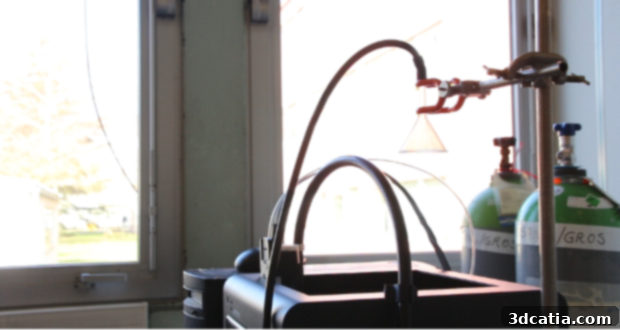
Unlike conventional approaches that often involve encasing the entire 3D printer in a bulky enclosure, our innovative design focuses on a more direct and efficient method. We decided to target the source of the pollution itself: the extrusion nozzle. This is precisely where the filament melts and where the majority of toxic gases and nanoparticles are generated and ejected. By capturing emissions at this critical point, we ensure maximum filtration efficiency without the need for large, space-consuming enclosures.
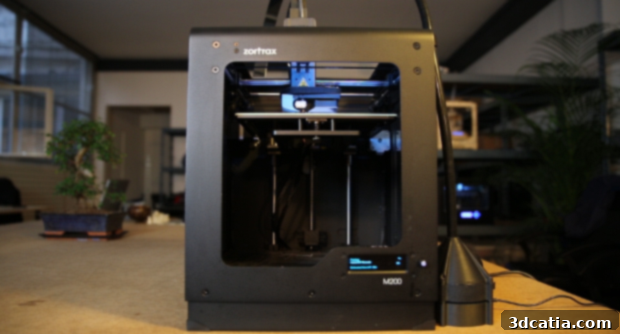
The Zimpure system seamlessly attached to a Zortrax 3D printer
To achieve this targeted suction, we devised a clever attachment method: a flexible silicone hose connected directly to the extruder assembly. One end of this hose leads to the Zimpure unit, which houses the powerful suction mechanism and the multi-stage filtration system. At the other end, we engineered a custom 3D-printed tip, meticulously designed to bring the suction flow as close as possible to the printer’s hot end and nozzle. The brilliance of this design lies in its adaptability: by simply swapping out the 3D-printed fastener and tip—which are tailored to specific printer models—we have made Zimpure compatible with an incredibly wide range of 3D printers on the market. This universal compatibility ensures that users don’t need to purchase a new system for every different printer they own, making Zimpure a versatile and cost-effective solution.
Scientific validation was absolutely paramount to us. We needed precise, quantifiable data on the types and quantities of particles and gases emitted by 3D printers, as well as undeniable proof of Zimpure’s effectiveness against them. To this end, we actively sought out specialized laboratories equipped with the sophisticated instrumentation necessary for such measurements. Our collaboration with the CEA of Saclay, a renowned French research institution, was a significant milestone. They conducted extensive experiments and rigorous testing on Zimpure. After numerous iterations, tests, and continuous improvements, we achieved remarkable results: the Zimpure system successfully filters an astounding 99.9% of ultrafine nanoparticles and over 90% of harmful gases, including Volatile Organic Compounds (VOCs). These results underscore Zimpure’s superior performance and its ability to significantly enhance air quality in 3D printing environments, protecting users’ health and ensuring a safer creative space.
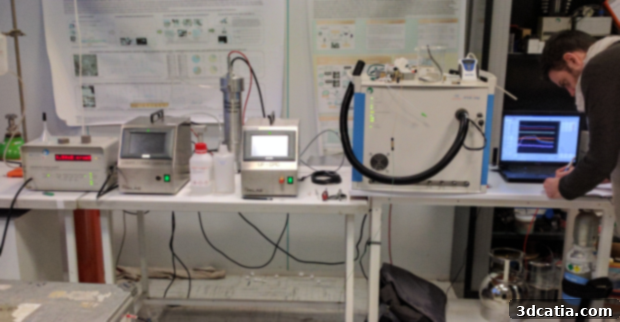
Preliminary tests delivered excellent results, confirming high filtration efficiency
3DN: What are your exciting plans for the future of Zimple and Zimpure?
Our vision for Zimple extends far beyond just the Zimpure filtration system. Immediately following the successful Kickstarter campaign, one of our key priorities is to establish a comprehensive platform on our website. This platform will serve as a central hub, providing easy access to a vast library of 3D-printable suction tips for an ever-growing array of 3D printers. We are committed to continuously expanding this library, actively designing new printer-specific tips, and fostering a collaborative environment. We intend to engage closely with the thriving maker community, inviting other passionate creators to contribute their own tip designs. This community-driven approach will not only maximize Zimpure’s compatibility across virtually all existing and future 3D printers but also leverage the collective ingenuity of the global maker movement.
More broadly, our ambition is to systematically identify and solve the myriad of problems that currently plague the user experience in modern 3D printing. We recognize that emissions are just one facet of a larger landscape of challenges, including issues related to material handling, print reliability, environmental controls, and user interface complexities. We are dedicated to pioneering and developing innovative solutions that effectively eliminate these obstacles, thereby making 3D printing more accessible, reliable, and enjoyable for everyone. Our ultimate goal is to contribute significantly to the advancement of this transformative technology, ensuring that its full potential can be realized safely and efficiently across all applications, from hobbyist projects to professional prototyping. We envision Zimple as a leader in creating a more streamlined, healthier, and robust 3D printing ecosystem, pushing the boundaries of what’s possible with additive manufacturing.
3DN: Do you have any final message or words of wisdom for our dedicated readers?
We understand that 3D printer emissions represent a sensitive and often debated topic within the community. The intense discussions and varying opinions found across countless online forums and social media platforms are clear indicators of this concern. Despite some skepticism, numerous credible studies have been conducted by independent research bodies and universities, unequivocally demonstrating that the problem of airborne particles and volatile organic compounds released during 3D printing is very real and poses legitimate health risks. These risks range from immediate irritations like headaches, burning eyes, and throat irritation, as experienced personally, to more serious long-term respiratory issues and potential systemic health impacts due to prolonged exposure to ultrafine nanoparticles and various chemical compounds.
Bringing it back to Zimpure, we made a conscious and resolute decision to approach this challenge with the utmost scientific rigor and transparency. Our collaboration with the CEA of Saclay, a highly respected and independent scientific institution, was not a mere formality but a foundational element of our development process. This partnership allowed us to conduct exhaustive, peer-reviewed testing to obtain official, external certification for Zimpure’s performance. Our goal was not just to build a product, but to provide verifiable proof of its effectiveness. We sincerely hope that the global community of makers, hobbyists, and professionals will appreciate this commitment to scientific validation. We want them to understand that the “smells” and perceived issues they experience are backed by scientific evidence, and that Zimpure is a meticulously engineered solution developed through serious scientific inquiry, not just anecdotal claims. By offering a transparent, certified, and effective solution, we aim to empower users to enjoy the incredible possibilities of 3D printing without compromising their health or indoor air quality. We believe that informed users are safer users, and Zimpure is our contribution to fostering a healthier, more sustainable 3D printing future.
For those interested in learning more about our journey and the successful crowdfunding effort, you can check out the original Kickstarter campaign details here.
What are your thoughts on the Zimpure filtration system and its potential impact on 3D printing safety? Share your insights and comments below, and don’t forget to connect with us and the broader 3D printing community on social media by following us on Facebook and Twitter!