
The Future of Energetic Materials: How 3D Printing Unlocks Unprecedented Safety and Performance in Defense and Aerospace
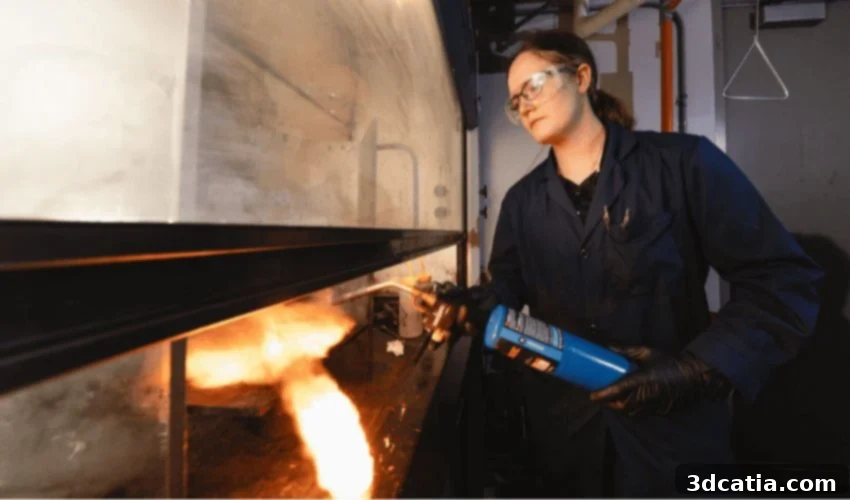
In a groundbreaking initiative at the Purdue Energetics Research Center, scientists are pioneering novel methodologies to significantly enhance the capabilities of energetic materials through the innovative application of 3D printing. These critical compounds, characterized by their capacity to release substantial amounts of energy during chemical reactions, encompass a wide spectrum of substances including powerful explosives, efficient propellants, and intricate pyrotechnic devices. Their vital importance extends across numerous high-stakes sectors, most notably in defense and aerospace, where precision, reliability, and safety are paramount.
The ongoing research, spearheaded by Diane Collard, a distinguished researcher at the Purdue Energetics Research Center, is driven by a multifaceted objective: to render energetic materials not only safer and more efficient but also precisely tailored to meet highly specific operational requirements. The ability to customize these materials is deemed absolutely essential. This is because critical characteristics such as blast power, sensitivity to external stimuli, precise burning rate, and the overall energy release profile are not static; they must be meticulously adapted to the unique context and demanding application of each scenario. The central question guiding this endeavor is profound: How can the transformative power of 3D printing fundamentally improve these complex and hazardous materials, pushing the boundaries of what is currently possible?
Traditionally, the manufacturing of energetic materials has relied on methods that offer limited flexibility. Conventional processes often involve bulk mixing, pressing, or casting, leading to homogenous structures with fixed properties. While these methods are effective for mass production of standardized components, they inherently restrict the ability to fine-tune material performance for specialized applications. This limitation has long presented a challenge for defense and aerospace engineers who often require bespoke solutions to complex problems, ranging from optimizing missile propulsion to controlling fragmentation patterns in defensive munitions. The inherent danger associated with handling and processing these materials further compounds the challenge, making any innovation that enhances safety during both manufacturing and deployment highly desirable.
Customizing Energetic Materials with 3D Printing for Enhanced Performance and Safety
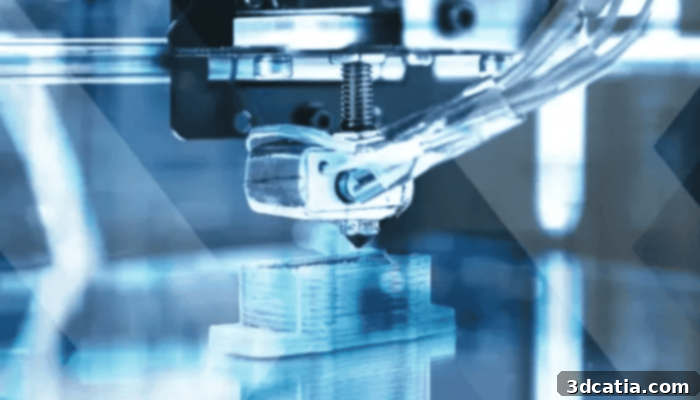
Diane Collard’s pioneering project is centered on a sophisticated approach: optimizing the destructive power and controlled energy release of explosions by ingeniously integrating reactive casings around energetic materials that possess varying, intricately designed internal structures. This revolutionary concept, developed in close collaboration with experts from the Air Force Research Laboratory (AFRL), leverages advanced 3D printing techniques to combine multiple distinct materials within a single, streamlined manufacturing step. This capability represents a significant leap forward, as it paves the way for the creation of unique, previously unattainable configurations. These configurations are capable of fundamentally altering material behavior, influencing everything from their fragmentation patterns upon detonation to the precise manner and timing of their energy release. Collard eloquently explains the core advantage, stating, “These materials are tailorable for different use cases, which is the great thing about additive manufacturing. It’s really meant for a case-by-case basis.” She further emphasizes the practical implications of this flexibility: “If you have a specific mission set in mind or a specific performance requirement, traditional or standardized manufacturing may not be the best fit, as it is better for pumping out parts and designs at volume.” This highlights how additive manufacturing offers a paradigm shift from mass production of identical parts to the precise creation of highly specialized components.
The ability of 3D printing to create intricate internal geometries and multi-material constructs is truly transformative for energetic materials. By precisely controlling the microstructure, density variations, and composition at a microscopic level, researchers can dictate how an energetic material reacts. For instance, designing porous internal structures can influence the burning rate, while incorporating different materials in specific layers can modify the blast wave propagation or the initiation sensitivity. This level of granular control is impossible with conventional manufacturing, which typically produces bulk materials with uniform properties. The strategic placement of reactive components within the casing, combined with tailored internal architectures, allows for an unprecedented level of control over the material’s energetic output. This not only optimizes performance but also critically enhances safety by enabling more predictable and contained reactions, reducing the risk of accidental detonations or uncontrolled energy release during handling and deployment.
A significant aspect of this research involves the development of functionally graded materials (FGMs) for energetic applications. Kelsea Miller, a mechanical research engineer at AFRL and a key collaborator with Diane Collard, is actively engaged in fabricating energetic materials that exhibit variable properties throughout their entire structure. This means that instead of a uniform composition, different regions of the material can have distinct characteristics – such as varying densities, chemical compositions, or structural elements – all precisely designed to meet specific performance requirements at different points within the material. For example, one section of a propellant could be optimized for initial thrust, while another section could be designed for sustained burn, creating a more efficient and powerful system overall. Miller firmly believes that Collard’s pioneering work will be instrumental in enabling AFRL to establish an efficient and scalable methodology for both the design and large-scale manufacturing of these highly advanced, functionally graded energetic materials. This collaboration between Purdue and AFRL underscores a concerted effort to translate cutting-edge academic research into practical, deployable solutions for national security and technological advancement.
While the specific 3D printing technologies employed to achieve these remarkable improvements in energetic materials are not explicitly detailed, it is unequivocally clear that additive manufacturing plays an indispensable role. Its inherent capability for intricate customization and precise optimization of material properties is the lynchpin of this innovation. The layer-by-layer fabrication approach allows for unparalleled control over material deposition, enabling the creation of complex internal structures, multi-material interfaces, and spatially varying compositions that are simply unachievable with conventional manufacturing techniques. This control empowers researchers to meticulously tailor the performance of energetic materials, ensuring they are perfectly suited to the unique and often extreme demands of each specific application, whether it’s for advanced propulsion systems in space exploration or for next-generation defensive armaments. The precision offered by 3D printing also contributes significantly to reducing material waste, streamlining the manufacturing process, and potentially mitigating risks associated with handling dangerous substances by automating and isolating critical steps.
The implications of this research extend far beyond mere performance enhancements. The ability to precisely control the behavior of energetic materials through 3D printing has profound consequences for safety, efficiency, and adaptability in critical sectors. In defense, this means developing munitions with unprecedented accuracy and controlled effects, minimizing collateral damage, and enhancing the effectiveness of various weapon systems. For aerospace, it translates into lighter, more powerful, and safer propellants for rockets and spacecraft, pushing the boundaries of exploration and satellite technology. Furthermore, the ability to rapidly prototype and iterate designs using 3D printing significantly accelerates the research and development cycle, allowing for faster innovation and deployment of new technologies. This collaborative effort between academic institutions like Purdue and governmental research facilities like AFRL exemplifies the synergistic approach needed to tackle the complex challenges and seize the opportunities presented by advanced manufacturing techniques in the realm of energetic materials.
What are your thoughts on the transformative potential of using 3D printing for the design and manufacturing of energetic materials? We invite you to share your insights and opinions in a comment below or engage with our community on ourLinkedIn,Facebook, andTwitter pages! Don’t miss out on the latest advancements in additive manufacturing—sign up for our free weeklyNewsletter here, delivering the most current 3D printing news directly to your inbox! You can also explore all our insightful videos and interviews on our dedicatedYouTube channel.
*Cover Photo Credits: Purdue University