
ProtoCycler: Revolutionizing 3D Printing Through Sustainable Plastic Recycling and Filament Manufacturing
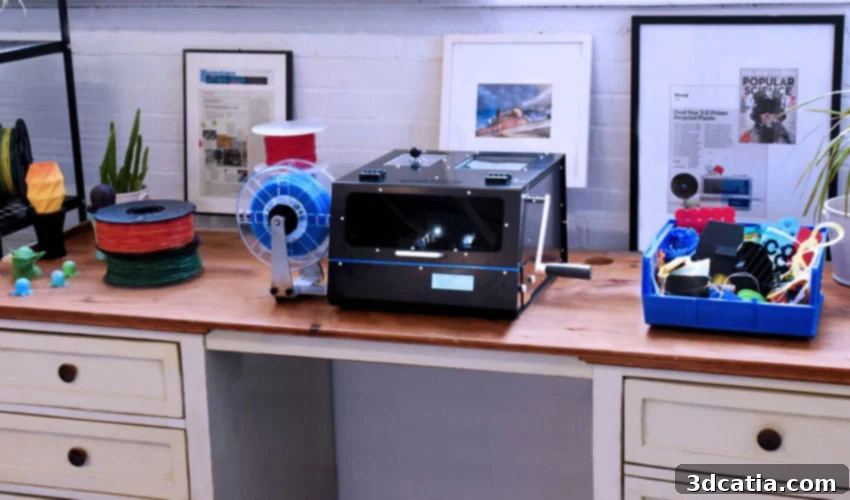
The conversation around 3D printing often centers on its transformative environmental benefits. This innovative technology inherently generates less material waste compared to conventional manufacturing processes, offers avenues for recycling specific waste products, and promotes localized production, thereby minimizing the need for extensive physical transportation and its associated carbon footprint. These advantages are significant, leading a growing number of companies to develop advanced solutions that accelerate awareness and foster the adoption of more sustainable practices. One notable area of focus is the recycling of various materials, including unconventional sources like paper waste, into usable 3D printing resources. Among the pioneers in this space is the dynamic Canadian startup, ReDeTec. This company has engineered a compact yet powerful machine, aptly named ProtoCycler, designed to convert plastic waste into high-quality 3D printing filaments. This ingenious device breathes new life into discarded plastic objects, transforming what would otherwise be landfill-bound waste into valuable raw material, thereby creating significant value in unexpected ways. We had the distinct opportunity to speak with Dennon Oosterman, the visionary founder of ReDeTec, to delve deeper into the ProtoCycler’s operational mechanics and his broader market outlook for sustainable additive manufacturing.
The Vision Behind ProtoCycler: Dennon Oosterman’s Journey to Sustainable 3D Printing
From Engineering Challenges to Eco-Innovation: Dennon Oosterman’s Link to 3D Printing
 “My name is Dennon Oosterman, and my initial immersion into the world of 3D printing began during my Engineering degree at the University of British Columbia, Canada,” Dennon explains. “Our curriculum extensively integrated 3D printing into various projects and classes, enabling us to fabricate an astonishing array of devices—from intricate wall-climbing robots and sophisticated drones to complex air hockey physics simulators. However, a persistent and increasingly concerning issue we encountered was the sheer volume of 3D prints that ultimately ended up in the waste bin. These were predominantly obsolete or outdated prototypes that had been superseded by improved iterations, and the financial outlay for new printing materials was becoming prohibitively expensive. This pervasive problem served as the critical impetus for the conception and development of ProtoCycler.” This firsthand experience with material waste and associated costs ignited Oosterman’s passion for finding a more sustainable and economically viable solution for the burgeoning 3D printing industry. He recognized a significant gap in the market for a closed-loop system that could transform waste into a resource, thus minimizing environmental impact and maximizing cost efficiency for users.
Unveiling the ProtoCycler System: Transforming Waste into Valuable Filament
How ProtoCycler Works: An All-in-One Solution for Filament Production
“ProtoCycler stands as a truly all-in-one recycling system specifically engineered for 3D printers, empowering users to produce their own high-quality filament directly from recycled plastic waste and virgin plastic pellets,” Dennon elaborates. The machine’s comprehensive design integrates several key functionalities into a single, compact unit. At its core, ProtoCycler features a robust grinder, meticulously designed to shred 3D printer waste—such as failed prints, support structures, or old prototypes—into small, manageable pellets. Following the grinding process, these pellets are fed into a class-leading extruder, which melts the plastic and forces it through a precisely engineered nozzle to form a continuous strand of filament. What truly sets ProtoCycler apart is its advanced, full computer control system. This intelligent system constantly monitors and adjusts various parameters to ensure optimal filament tolerance, resulting in consistent diameter and quality, which is crucial for reliable 3D printing. The operation is largely automatic, simplifying the process for users. Furthermore, ProtoCycler includes a built-in spooler with distributed spooling capabilities, neatly winding the freshly extruded filament onto spools, ready for immediate use. Beyond its automated features, the system also offers a unique manual mode, a functionality not commonly found in competing products. This mode, accessible via included software, allows users to manually operate and monitor all aspects of the filament extrusion process. This unparalleled control opens up exciting opportunities for experimentation with new plastic types, additives, and colorants, enabling users to create entirely custom filaments tailored to specific project requirements.
Expanding Horizons: Plastic Compatibility and Future Growth
Recycling Capabilities: Current Status and Future Innovations
Addressing the question of plastic versatility, Dennon notes, “Currently, we can automatically process a few of the primary 3D printing plastics, but we are actively engaged in extensive research and development to automate the recycling of as many plastic types as possible.” The goal is to expand compatibility to include popular engineering plastics such as Nylon, PET, HIPS, HDPE, and many others, offering a truly versatile recycling solution. Automating the extrusion process for each plastic type requires fine-tuning numerous parameters, including temperature profiles, extrusion speed, and cooling rates, which can vary significantly between different polymers. This process is complex and demands rigorous testing to ensure consistent filament quality. It’s important to highlight that ProtoCycler’s manual mode provides a crucial bridge during this development phase. “It’s worth noting that with manual mode, if users feel comfortable and possess some expertise, they are able to begin extruding some of these more challenging plastics right now,” Dennon clarifies. “We just haven’t fine-tuned the automatic settings for them quite yet.” This feature empowers advanced users and researchers to experiment with a broader range of materials, pushing the boundaries of what’s possible with desktop filament extrusion and contributing valuable data to ReDeTec’s ongoing automation efforts.
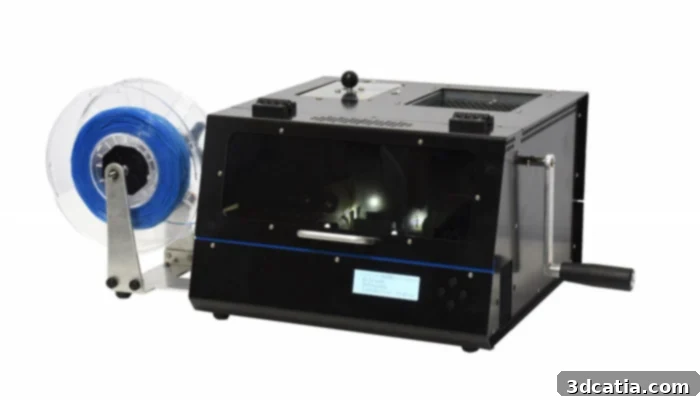
The ProtoCycler machine in action
Impact and Reach: ProtoCycler’s Diverse Clientele
Who Benefits Most? ProtoCycler’s Global Footprint and Future Projects
“Our primary clientele today encompasses a broad spectrum of educational institutions, businesses, and organizations that actively utilize 3D printing,” Dennon explains, highlighting the diverse applicability of ProtoCycler. This includes educational settings from K-12 schools, where it fosters early exposure to engineering and sustainable practices, to universities and colleges, where it supports advanced research and prototyping while significantly reducing material costs. Businesses of all sizes and across various sectors, from agile small design firms to multinational conglomerates, leverage ProtoCycler to iterate rapidly, reduce waste, and incorporate sustainable practices into their product development cycles. Public libraries have also become key adopters, offering community access to advanced manufacturing tools and promoting environmental stewardship. Government agencies and research institutions further utilize the system for various applications. Essentially, any entity with significant 3D printing operations finds immense value in the ability to create their own filament on demand. “We’re also immensely proud to report that ProtoCycler has been successfully sold in over 30 countries, establishing its presence on every major continent except Antarctica!” This impressive global reach underscores the universal appeal and practical utility of ProtoCycler as a solution for sustainable 3D printing material management, transcending geographical and sectoral boundaries. ReDeTec’s future projects include not only expanding plastic compatibility but also exploring more streamlined integration with existing 3D printing workflows and potentially developing larger-scale commercial recycling solutions.
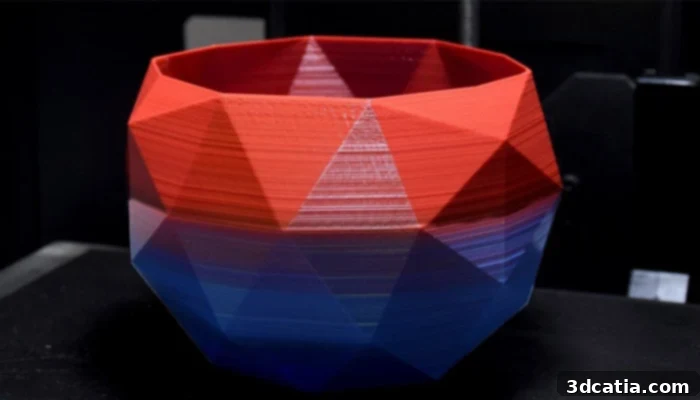
A piece printed with filaments from the ProtoCycler machine, demonstrating recycled material quality
Shaping Tomorrow: The Circular Economy in 3D Printing
Envisioning a Sustainable Future with Additive Manufacturing
“To me, the future integration of a circular economy within 3D printing is not merely a possibility; it’s an absolute given,” Dennon asserts with conviction. He envisions a paradigm shift where individuals and organizations possess the unprecedented ability to take raw materials, or even existing plastic waste, and transform them into functional objects right on their desktops. This localized, on-demand manufacturing capability inherently minimizes the environmental footprint associated with traditional supply chains. When the critical element of recycling is seamlessly introduced into this ecosystem, the power magnifies exponentially. “Once you add recycling into the mix, now you can take anything you’ve 3D printed and remake it into anything else,” he explains. This creates a truly closed-loop system where discarded prototypes or finished products can be endlessly reimagined and repurposed. The beauty of this process lies in its efficiency: it can be executed with minimal additional cost or time, offering the incredible convenience of immediate, localized production and recycling. While Dennon acknowledges that “it will take a while for this thought process and ethos to fully penetrate into the everyday home,” he remains optimistic. “With a new generation growing up experiencing this transformative ability in their classroom, it’s bound to happen sooner or later, and I think it will be incredibly empowering for everyone.” This shift represents a fundamental change in how we perceive resources, consumption, and creativity, fostering an era of unprecedented sustainable innovation and individual empowerment.
For a dynamic demonstration of how the ProtoCycler transforms plastic waste into usable filament, watch the insightful video below:
Embracing Innovation: A Final Message to Makers
The Importance of Experimentation and Learning in 3D Printing
Concluding our conversation, Dennon offers a poignant piece of advice to the burgeoning community of 3D printing enthusiasts and innovators: “Don’t be afraid to fail with 3D printing!” He laments the prevalent negativity often seen online, where comments criticize failed prints, question the quality of a user’s printer based on imperfect results, or lament the perceived uselessness of numerous designs. “That’s all okay – to me the whole point of 3D printing is that you can draft ideas quickly and easily, so it doesn’t matter if they don’t work out the first time, or even the fifth!” This philosophy is particularly relevant in the context of ProtoCycler. By providing an affordable and sustainable way to produce filament from recycled materials, ProtoCycler significantly lowers the barrier to experimentation. Users are less hesitant to print and iterate when the material cost is minimal and the environmental impact is reduced, fostering a culture of boundless creativity and continuous learning. “What matters is that you’re learning, growing your skill set, and having tons of fun making awesome stuff,” Dennon emphasizes. This encouragement to embrace trial and error is fundamental to innovation and mastery in any creative or technical field. For those inspired to explore the possibilities of sustainable filament production and iterative design, further information about the ProtoCycler and ReDeTec’s mission can be found HERE.
What are your thoughts on the ProtoCycler machine and its potential to reshape the landscape of sustainable 3D printing? We invite you to share your perspectives and engage with our community by leaving a comment below or by connecting with us on our Facebook and Twitter pages! And for all the latest developments, innovations, and news in the world of 3D printing, remember to sign up for our free weekly Newsletter, delivered straight to your inbox!