

Precious Plastic: Empowering Global Communities to Transform Plastic Waste into Valuable Resources
The escalating global crisis of plastic pollution presents one of the most formidable environmental challenges of our time. With vast quantities of plastic waste accumulating in landfills, oceans, and natural ecosystems, urgent action is imperative. It’s against this backdrop that Precious Plastic emerged – a pioneering initiative originating in the Netherlands with a singular, ambitious goal: to combat plastic pollution through innovative, accessible, and community-driven solutions. By fostering a worldwide network of dedicated workspaces, Precious Plastic equips individuals and communities with the essential tools and machinery needed to give plastic waste a vital second life, transforming it directly into new, functional products or repurposing it as filament for advanced 3D printing technologies.
The statistics paint a stark picture: humanity has generated an estimated 8 billion tons of plastic waste, yet a dismal fraction – less than 8% – is successfully recycled. This alarming disparity underscores the critical necessity for alternative approaches to waste management and resource utilization. Precious Plastic was born from this urgent need, championing the principles of the circular economy. This approach stands in stark contrast to the traditional linear “take-make-dispose” model, instead focusing on keeping materials in use for as long as possible. Exemplifying this philosophy, projects like the Australian micro-factory demonstrate the tangible impact of localized recycling efforts. To gain deeper insights into the origins, operational mechanics, and future aspirations of this impactful project, we had the privilege of speaking with Mattia Bernini, one of its visionary developers.
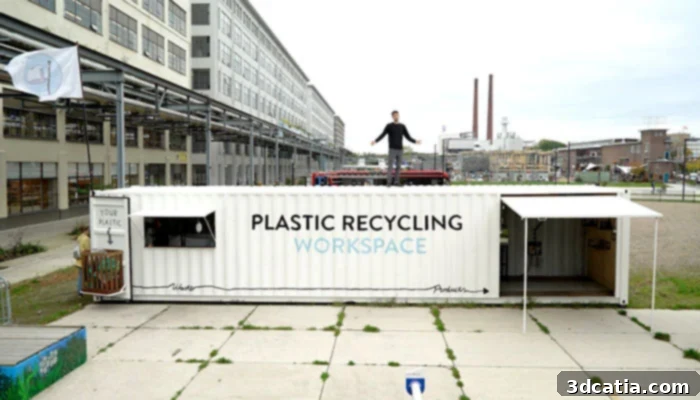
3DN: Can you introduce yourself and tell us how the idea of Precious Plastic came to be?
Hello, I’m Mattia Bernini, and my role at Precious Plastic involves both design and strategy. Our journey with this project began from a deeply concerning realization: globally, less than 10% of plastic waste is actually recycled. This statistic highlighted a massive disconnect and an urgent need for a more effective, decentralized solution. We observed that while large industrial recycling companies exist, they often operate at a scale and complexity that makes them inaccessible to the average person or small community. This left a significant gap between the vast amount of plastic waste being generated and the limited capacity for individuals to contribute to its solution.
It was this understanding that spurred us to action. We decided to create an accessible solution – one that could bridge the gap between large-scale, often opaque, recycling operations and everyday people. Our vision was to empower individuals, communities, and small businesses with the tools and knowledge to work with plastic waste directly. The goal wasn’t just to recycle, but to transform this “disaster” of plastic pollution into an opportunity for creativity, education, and economic benefit. By making recycling manageable and local, we aim to put the power to combat plastic waste directly into the hands of those who generate it, fostering a sense of ownership and responsibility that larger systems often fail to cultivate.
3DN: Can you explain how the Precious Plastic project works?
Precious Plastic is more than just a project; it’s a comprehensive ecosystem designed to offer practical, tangible solutions in the fight against plastic pollution. At its core, our mission is multifaceted: we aim to valorize plastics, transforming them from perceived waste into valuable resources. This strategic shift is crucial for completely eliminating plastic waste, significantly reducing the global demand for virgin plastics, and ultimately closing material loops to foster a truly sustainable relationship with this versatile material. Beyond the practical aspects of recycling, a key objective is to educate and inspire people worldwide, raising awareness and promoting active participation in sustainable practices.
Our strategy is built on accessibility and empowerment. We achieve this by making essential equipment, invaluable knowledge, and the blueprints for establishing local recycling facilities available to anyone, anywhere in the world. This includes providing open-source designs for compact, functional machines such as shredders, extruders, injectors, and sheet presses. These machines are designed to be relatively easy to build and operate, democratizing the recycling process. We then complement this hardware with extensive open-source knowledge – detailed tutorials, guides, and community forums that teach individuals and groups how to effectively collect, sort, clean, and process various types of plastic waste.
The next crucial step involves training people to confidently use these machines and master the techniques required to convert plastic waste into a diverse range of new, useful products. This can range from aesthetically pleasing household items and furniture to practical building materials and even specialized components. A particularly exciting application is the transformation of recycled plastic into high-quality filament for 3D printing. This not only provides a sustainable material source for additive manufacturing but also opens up new avenues for creative expression and localized production, showcasing the incredible potential of recycled plastic and further closing the loop on material usage.

Machines used by the community to recycle plastic and create new products.
3DN: What do you think is the importance of promoting the circular economy today?
The importance of promoting the circular economy today cannot be overstated. Whether you call it circular economy, sustainability, biomimicry, or zero waste, it fundamentally represents the same critical fight. We are at a pivotal moment in human history where we are consuming resources and generating waste at an unprecedented and unsustainable rate. Our current linear economic model, which extracts resources, manufactures products, uses them briefly, and then disposes of them, is pushing our planet’s ecological boundaries to their breaking point. If we continue on this path without a fundamental shift in our production and consumption patterns, we risk catastrophic environmental consequences and a direct collision with our planet’s limits.
The circular economy offers a viable, regenerative alternative. Instead of focusing on finite consumption, it emphasizes designing out waste and pollution, keeping products and materials in use, and regenerating natural systems. For Precious Plastic, this means recognizing that plastic is not inherently “bad,” but rather its linear lifecycle of single-use and disposal that is problematic. By embracing circular principles, we can rethink our relationship with materials, viewing them as valuable assets to be continuously circulated rather than waste to be discarded. This approach not only reduces environmental impact but also fosters innovation, creates new economic opportunities, and builds more resilient local economies. It is, quite simply, essential for the long-term health of our planet and the well-being of future generations.
3DN: How do you see Precious Plastic in 10 years?
Looking ahead 10 years, our vision for Precious Plastic is transformative and deeply hopeful. We aspire to fundamentally rethink how society perceives plastic, moving away from the prevailing notion of it as a cheap, disposable commodity and instead recognizing its true potential as a precious, versatile material that deserves to be endlessly reused and valued. We envision a future where plastic waste is no longer seen as a problem to be discarded, but as a readily available, local resource waiting to be transformed.
We foresee the emergence of a vibrant, interconnected global network of small-scale plastic recyclers. This network won’t be driven primarily by profit margins, but by a shared passion for sustainability and a collective commitment to environmental stewardship. These local recycling initiatives – whether they are individual workshops, community centers, schools, or small businesses – will be collaborating actively, sharing invaluable knowledge, exchanging innovative tools and techniques, and collectively developing new solutions. It will be a dynamic ecosystem of open-source innovation, where discoveries and best practices are freely shared to accelerate progress.
This vision is about building a truly collaborative, global family. A family united by a common purpose, where each member cares not only for their immediate environment but also for the collective well-being of the planet. Imagine thousands of small nodes around the world, each contributing its part to systematically cleaning up the mess we’ve created, while simultaneously fostering local economies and empowering individuals with new skills and a sense of purpose. This interconnected network will collectively process a significant portion of plastic waste, creating a tangible impact on reducing pollution and inspiring countless others to join the movement towards a more sustainable future.
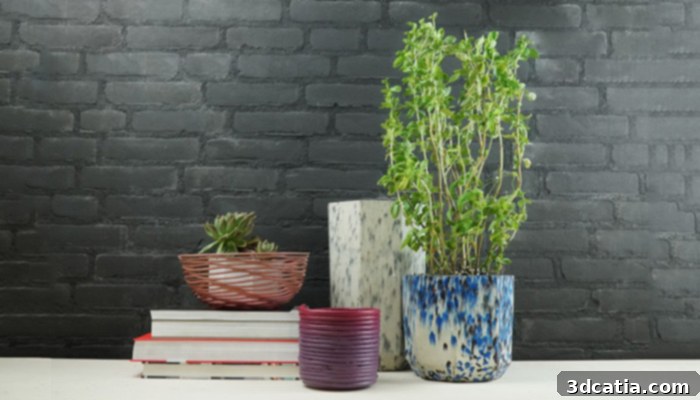
Plastic can be transformed into beautiful and valuable objects, demonstrating its potential.
3DN: A last word for our readers?
My final message to your readers is one of urgency and empowerment. It is paramount that everyone becomes acutely aware of the pervasive problem of plastic pollution and its profound implications for our planet and future generations. Awareness is the first step, but action is where true change begins. You don’t need to be an expert or have extensive resources to make a difference. The simplest, yet most powerful, actions start with your daily habits: strive to reduce your consumption of single-use plastics wherever possible, and consciously reuse materials you already possess. Embrace the principles of the circular economy in your everyday life.
The next step is to actively engage. If you don’t have the time or specialized skills to build your own recycling machines, that’s perfectly fine. Simply talking about this issue with friends, family, and colleagues costs nothing, but its impact is immeasurable. Spreading awareness, sharing knowledge, and advocating for change can inspire others to act and amplify the collective effort. Education and dialogue are powerful catalysts for shifting mindsets and fostering a culture of responsibility. And if your interest has been piqued, and you feel a call to get more directly involved, I wholeheartedly encourage you to visit our website. There, you’ll find a wealth of open-source information, community forums, and resources that can help you start your own Precious Plastic journey or connect with existing initiatives in your area. Every effort, no matter how small, contributes to the larger goal of a cleaner, more sustainable world.
What do you think of the Precious Plastic initiative? Your thoughts and feedback are invaluable! Let us know in a comment below or connect with us on our Facebook and Twitter pages! And don’t forget to sign up for our free weekly Newsletter, to get all the latest news in 3D printing sent straight to your inbox!