
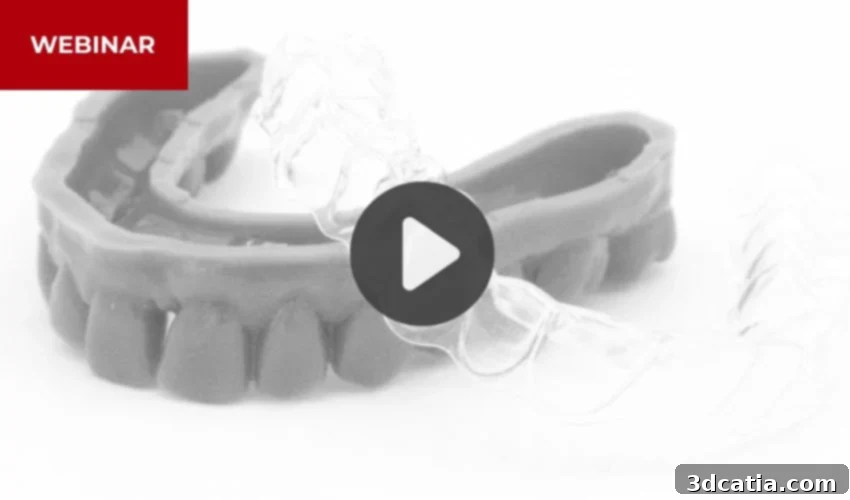
Unlocking the Future of Digital Dentistry: Essential Trends in Dental 3D Printing for Modern Practices
The landscape of dentistry is undergoing a profound transformation, driven by the relentless pace of technological innovation. At the heart of this revolution lies digital dentistry, a paradigm shift that integrates cutting-edge technologies to enhance every aspect of patient care, from diagnosis to treatment and restoration. Amongst these advancements, dental 3D printing, also known as additive manufacturing in dentistry, stands out as a particularly disruptive force. Its ability to create highly precise, customized dental appliances and models with unprecedented speed and efficiency is fundamentally reshaping dental practices and laboratories worldwide. This burgeoning sector is experiencing exponential growth, with market research from Persistence Market Researcher indicating a valuation of $4.2 billion in 2021, projected to soar to an impressive $16.3 billion. This meteoric rise underscores the critical importance for dental professionals and lab owners to not only stay abreast of the latest trends but to actively embrace and integrate these innovations into their operations. The time to upgrade and modernize is now, ensuring your practice remains competitive and future-ready in this dynamic environment.
To navigate this rapidly evolving landscape, 3Dnatives hosted a crucial webinar titled “2023’s Must-Know Tech Trends in Dental 3D Printing and How to Implement Them in Your Lab.” This comprehensive session was designed to equip attendees with invaluable insights into the key trends and innovations poised to redefine digital dentistry in 2023 and beyond. The webinar delved into a spectrum of critical topics, ranging from the emergence of novel materials and diverse applications to significant improvements in existing technologies and streamlined workflows. Furthermore, it explored how transformative future trends, such as Artificial Intelligence (AI), are set to integrate seamlessly into the industry, offering new frontiers for efficiency and precision. Attendees gained actionable knowledge on how to swiftly adopt and integrate these cutting-edge digital solutions into their dental labs, thereby enhancing their competitiveness and securing their position at the forefront of this swiftly changing market. If you missed the live event, the replay offers an equally rich learning experience.
Deep Dive into Key Trends Shaping Dental 3D Printing
The webinar highlighted several pivotal areas that are currently driving innovation and will continue to shape the future of dental 3D printing. Understanding these core insights is essential for any practice or lab looking to optimize its digital capabilities and deliver superior patient outcomes.
1. Expanding Applications and Advanced Materials for 2023 and Beyond
The versatility of dental 3D printing is continuously expanding, leading to a proliferation of new applications that were once deemed challenging or impossible with traditional methods. Today, 3D printers are routinely used to produce highly accurate dental models, surgical guides for implantology, orthodontic aligners, custom trays, and even temporary crowns and bridges. Looking ahead, the focus is shifting towards direct printing of permanent restorations, including biocompatible crowns, inlays, onlays, and full dentures, using increasingly robust and aesthetically pleasing materials. The innovation in materials science is a critical enabler of these new applications. We are seeing the development of advanced resins that mimic the properties of natural teeth, offering improved strength, durability, and aesthetics. Biocompatible photopolymer resins for direct intraoral applications are becoming more sophisticated, allowing for the chairside production of custom devices. Furthermore, the ability to print with ceramics and metals, either directly or through indirect methods, is opening doors for more complex and durable restorations. This expansion means dental professionals can offer a wider range of high-quality, personalized treatments, significantly improving patient satisfaction and clinical efficiency.
2. Strategies for Efficiently Scaling Up 3D Printing Usage
Adopting 3D printing is one step; effectively scaling its usage within a lab or practice is another. The webinar provided valuable strategies for optimizing 3D printing workflows to maximize efficiency and output. This includes streamlining the entire digital chain, from intraoral scanning and CAD/CAM design to post-processing and finishing. Key to scaling is the implementation of automated processes wherever possible, such as automated resin dispensing, washing, and curing units, which significantly reduce manual labor and human error. Investing in multiple 3D printers or larger-format machines can also increase production capacity, allowing labs to handle a higher volume of cases without compromising turnaround times. Furthermore, comprehensive training for staff on software proficiency, printer operation, and material handling is crucial. By integrating 3D printing seamlessly into existing workflows and optimizing each stage, dental labs can achieve higher throughput, reduce operational costs, and ultimately enhance profitability, making the most of their digital investment.
3. Building an All-Digital Workflow for Enhanced Precision and Efficiency
The concept of an “all-digital workflow” represents the pinnacle of modern dental practice, where every step of the patient journey, from initial diagnosis to final restoration, is managed digitally. This eliminates traditional analog processes like physical impressions, plaster models, and wax-ups, which are prone to inaccuracies and time-consuming. An all-digital workflow typically begins with intraoral scanning, capturing highly precise 3D data of the patient’s oral cavity. This data is then transferred to CAD (Computer-Aided Design) software for designing restorations, orthodontic appliances, or surgical guides. The digital designs are then sent to CAM (Computer-Aided Manufacturing) devices, such as 3D printers or milling machines, for fabrication. The benefits of this approach are manifold: superior precision, faster treatment times, enhanced patient comfort (no gooey impressions), reduced material waste, and improved communication between clinicians and labs. It allows for meticulous planning, simulation, and customization, leading to predictable and highly aesthetic outcomes. Embracing an all-digital workflow is not just about adopting individual technologies, but about creating a cohesive, integrated system that optimizes efficiency and quality across the entire practice.
4. Leveraging Digital Processes for Sustainable Manufacturing
Beyond efficiency and precision, digital dentistry, particularly 3D printing, offers significant environmental advantages, contributing to more sustainable manufacturing practices. Traditional subtractive manufacturing methods, such as milling from solid blocks, often generate substantial material waste. In contrast, 3D printing is an additive process, meaning it builds objects layer by layer, using only the necessary amount of material. This inherently reduces material consumption and waste generation. Furthermore, the ability to produce highly customized devices on-demand minimizes the need for inventory and storage space. Digital workflows also reduce the reliance on physical shipping of impressions and models, thereby lowering carbon emissions associated with transportation. The localization of production, where labs can print restorations in-house, further contributes to a greener footprint. By optimizing material usage, reducing waste, and streamlining supply chains, digital dental processes offer a clear path towards more environmentally responsible and economically viable manufacturing within the dental industry.
5. Long-Term Trends: The Transformative Power of Increased Connectivity and AI Evolutions
Looking further into the future, two long-term trends are set to revolutionize digital dentistry: increased connectivity and the exponential evolution of Artificial Intelligence. Enhanced connectivity will foster seamless data exchange between different digital devices and platforms – from intraoral scanners and CAD software to 3D printers and patient management systems. Cloud-based platforms will enable remote collaboration, tele-dentistry, and efficient sharing of patient data and designs between clinics, labs, and specialists, regardless of geographical location. This interoperability will create a truly integrated digital ecosystem. Parallel to this, AI is poised to play an increasingly critical role. AI algorithms can assist in diagnostic imaging analysis, identifying pathologies and anomalies with greater accuracy. They can also automate and optimize design processes within CAD software, suggesting ideal tooth shapes, occlusion, and aesthetics based on vast databases of dental anatomy and patient-specific parameters. AI will power predictive analytics for treatment planning, assess potential risks, and even aid in quality control during the manufacturing process. The synergy between advanced connectivity and AI will lead to smarter, more personalized, and highly efficient dental solutions, fundamentally transforming how dentistry is practiced and how patient care is delivered.
These key insights, thoroughly discussed during the webinar, underscore the profound impact digital dentistry and 3D printing are having on the industry. Understanding and acting upon these trends is no longer optional but essential for staying at the forefront of dental innovation. For those who missed the live broadcast, the full replay offers an invaluable opportunity to catch up on these critical discussions and empower your practice or lab for future success.
We were joined by esteemed experts and thought leaders from the digital dentistry sector, including representatives from Prodways Machines and 3Shape. The webinar took place on June 15th at 10:00 AM EDT/4:00 PM CEST, where these distinguished speakers delved into these exciting topics and provided practical guidance on how to elevate dental practices to the next level in 2023 and beyond. You can access the full replay below to gain these expert perspectives firsthand:
Meet Our Distinguished Speakers
Our webinar featured a panel of leading experts whose insights are invaluable for anyone looking to understand and implement the latest in dental 3D printing and digital dentistry. Their diverse backgrounds and profound knowledge provided a comprehensive overview of the current landscape and future directions of the industry.
-

- Alban D’Halluin
-
- Rune Fisker
-
- Madeleine Prior

Alban d’Halluin is the visionary CEO of Prodways Machines, a leading industrial 3D printing solutions company headquartered in France. Since assuming his role in 2015, d’Halluin has been a pivotal force in orchestrating the company’s remarkable growth and success within the additive manufacturing sector. Under his astute leadership, Prodways has significantly expanded its sophisticated range of 3D printing solutions, catering to a diverse array of demanding industries, including aerospace, intricate jewelry design, and crucially, the rapidly evolving dental and medical fields. His expertise provides invaluable insights into the industrial applications and scalability of 3D printing in dentistry.
Rune Fisker is recognized as a key architect and driving force behind 3Shape’s renowned solution-oriented innovations. His presentations are consistently enriched with concrete, actionable CAD/CAM technology methods and his profound, forward-thinking vision for the future of “Digital Dentistry.” Rune has been an integral part of 3Shape since its very beginnings, contributing significantly to its ascent as a global leader in digital dental solutions. Currently, he is responsible for steering 3Shape’s product strategy and charting its innovation roadmap. Rune holds an impressive academic background with a Ph.D. from Denmark’s Technical University and an executive MBA from Copenhagen Business School, equipping him with both deep technical understanding and strategic business acumen.
Madeleine Prior serves as the English Content Specialist at 3Dnatives, which stands as the leading international online media platform dedicated to 3D printing and additive manufacturing. As a vital member of the 3Dnatives team, Madeleine is responsible for meticulously defining the content topics covered for its extensive English-speaking audience. Her role involves meticulously tracking the latest news, breakthrough innovations, and significant implications within the additive manufacturing sector, ensuring that readers receive timely, accurate, and insightful information to stay informed about this dynamic industry.
We encourage you to register for free for future webinars HERE to continue your journey in digital dentistry. Are you planning to attend our upcoming sessions? Are you deeply interested in the transformative potential of dental 3D printing for your practice or lab? We would love to hear your thoughts and experiences! Please share your insights and questions in a comment below, or connect with us on our vibrant social media platforms: find us on LinkedIn, Facebook, and Twitter. Don’t miss out on the latest advancements and breaking news in additive manufacturing – be sure to sign up for our free weekly Newsletter here, delivering the most relevant 3D printing news directly to your inbox! Additionally, you can explore a wealth of video content, including past webinars and industry insights, on our official YouTube channel.