
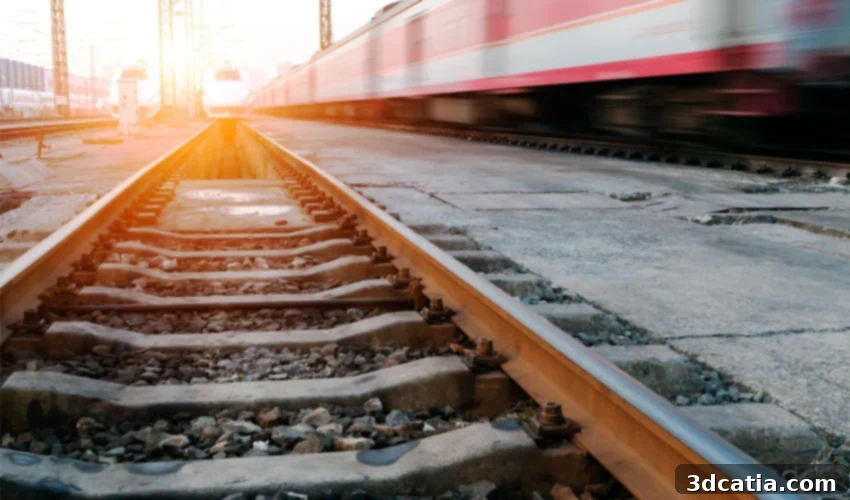
Additive Manufacturing Transforms Railway: Germany Certifies First Safety-Critical 3D Printed Part
The German Mobility Goes Additive (MGA) network, a pioneering collaborative platform dedicated to exploring and accelerating the adoption of additive manufacturing across various mobility sectors, has achieved a monumental milestone. For the first time, a 3D printed safety-related component has received full operational approval for use within the highly regulated railway sector. This groundbreaking achievement involves a metal brake suspension link, which has been successfully installed and is now fully operational on a metro train operated by the esteemed German company Hamburger Hochbahn AG. This represents a profound success for the MGA Approval Working Group, an entity specifically established in 2017 with the ambitious goal of securing the very first certification for a critically important and safety-relevant 3D printed component in an operational railway environment. This validation marks a pivotal moment, ushering in a new era of possibilities for the integration of advanced manufacturing techniques in transportation infrastructure, particularly emphasizing enhanced safety and efficiency through industrial 3D printing.
Within the dynamic railway sector, additive manufacturing has been steadily gaining momentum, evolving from a niche prototyping tool into a viable solution for functional components. We are increasingly witnessing a surge of projects coming to fruition that showcase the immense potential of this technology. For instance, just recently, reports highlighted how Bombardier, a global leader in rail transportation, leveraged Stratasys’ advanced high-temperature additive manufacturing solutions to design and produce a custom ventilation system. This application demonstrated the technology’s ability to create complex, optimized geometries tailored to specific operational needs, improving air quality and passenger comfort. Similarly, Angel Trains, another significant player in the rail leasing market, has successfully equipped some of its trains with a range of 3D printed interior components, including durable armrests, versatile tables, and ergonomic handles. These examples typically represent less critical parts, primarily focused on interior aesthetics, passenger comfort, or non-essential functionality, which, while important for the overall passenger experience, do not play a decisive role in the fundamental safety or proper functioning of the train’s core mechanical systems. However, this long-standing observation is now undergoing a significant transformation with the momentous announcement from MGA, which has not only approved but officially certified a 3D printed part that is unequivocally essential to operational safety, thereby setting a new benchmark for the entire industry and opening doors for more critical applications of 3D printing in the railway industry.
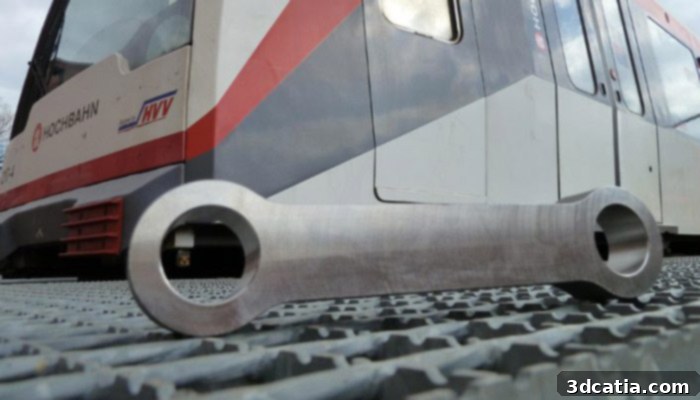
The approved 3D printed part, a metal brake suspension link, demonstrating a significant leap in additive manufacturing for railway safety. | Credits: Mobility goes Additive e.V., 2019
A Collaborative Engineering Triumph: The Journey to Additive Manufacturing Approval
The journey to obtain approval for this pioneering 3D printed brake suspension link was not a solitary effort but a remarkable testament to cross-industry collaboration and engineering excellence. The German Mobility Goes Additive (MGA) network spearheaded this initiative, engaging a consortium of leading partners, each bringing unparalleled expertise to the table. Siemens Mobility, a global powerhouse in transport solutions known for its innovation in train design and operation, took on a crucial leadership role, heading the Approval Group and providing invaluable technical guidance and project management throughout the complex certification process. Deutsche Bahn AG, Germany’s national railway company and one of the largest in Europe, contributed its vast operational experience and insights into the practical demands of railway infrastructure, ensuring the component met real-world operational challenges. The Fraunhofer Institute, renowned for its applied research and development, offered critical scientific support, potentially in material characterization, process validation, or advanced testing methodologies, ensuring the highest standards of engineering rigor were met. The rigorous evaluation of necessary quality assurance procedures, comprehensive testing protocols – which likely included fatigue testing, static load testing, and material property verification – and the exhaustive review of all corresponding documentation fell under the purview of TÜV SÜD. As an independent and globally respected technical service provider, TÜV SÜD’s certification is synonymous with safety, security, and sustainability, making their approval an indispensable step in validating the component’s integrity and reliability for safety-critical applications. Finally, after successfully navigating these stringent assessments and obtaining the official operational approval from the Hamburg Technical Supervisory Authority in accordance with BOStrab – the authoritative German body that meticulously defines the rules for the design and operation of light rail vehicles – the component was confidently put into service in August 2019. This multi-faceted collaboration underscores the complexity and high stakes involved in introducing innovative technologies into safety-critical applications within the public transportation domain, paving the way for future advancements in industrial metal 3D printing for rail.
While the specific additive manufacturing technology and metallic material utilized for this ground-breaking brake suspension link have not been publicly disclosed, its successful certification represents a transformative leap for the entire railway sector. Given the component’s nature as a brake suspension link – a part critical for transmitting braking forces and ensuring the stability of brake components – it is highly probable that a robust metal additive manufacturing process such as Selective Laser Melting (SLM) or Electron Beam Melting (EBM) was employed, using high-performance alloys like stainless steel or titanium, known for their strength, durability, and resistance to fatigue. This pivotal development could ignite a significant increase in the adoption of 3D printed parts across various applications, fundamentally enhancing the performance, efficiency, and sustainability of modern trains. The implications are far-reaching, particularly in areas such as maintenance and logistics. Imagine a scenario where maintenance operations become vastly more efficient: instead of stocking vast inventories of conventional spare parts, railway operators could leverage on-demand 3D printing for spare parts. This means manufacturers and operators could digitally store designs and produce certified components precisely when and where they are needed, drastically reducing lead times, minimizing storage costs, and mitigating issues related to part obsolescence, especially for older fleets. This paradigm shift offers immense economic and operational advantages, ensuring trains spend more time in service and less time waiting for critical components. Furthermore, the design freedom inherent in additive manufacturing allows for the optimization of component geometries, potentially leading to lighter parts, improved structural integrity, and enhanced functional performance. This could translate into reduced energy consumption, lower wear and tear on other systems, and ultimately, a more reliable and cost-effective railway network. The future role of BOStrab will be crucial in this evolution; the successful certification of this component is expected to pave the way for the establishment of a standardized framework for future approvals of 3D printed railway parts. Such a framework is vital for fostering broader industry confidence and facilitating the widespread integration of additive manufacturing into rail operations, ensuring consistency, safety, and regulatory compliance. This landmark achievement is detailed further in the official press release, which can be accessed HERE for a comprehensive understanding of the project’s scope and impact.
Beyond maintenance, the potential applications of additive manufacturing in the railway industry extend to numerous other areas that promise to revolutionize various aspects of train design, construction, and operation. Consider the rapid prototyping of new designs, allowing engineers to iterate and test components much faster than traditional methods. This accelerates innovation cycles, bringing new and improved train systems to market more quickly and efficiently. Furthermore, specialized tooling, jigs, and fixtures can be 3D printed on demand, significantly enhancing manufacturing and repair processes within workshops, reducing reliance on external suppliers for custom tools. Even in the realm of customized interior elements, while not safety-critical in the same vein as a brake component, additive manufacturing offers unparalleled flexibility for passenger experience enhancements, catering to specific design requirements or accessibility needs with greater ease and cost-effectiveness. The ability to produce complex geometries that are impossible or cost-prohibitive with conventional manufacturing methods opens up vast avenues for lightweighting initiatives, where every gram saved contributes to fuel efficiency, reduced track wear, and lower operational costs over the train’s lifecycle. Moreover, for legacy systems where original spare parts are no longer manufactured, 3D printing offers a vital lifeline, allowing operators to reverse-engineer and produce replacement parts, thereby extending the lifespan of valuable assets and preventing costly premature decommissioning. This capability is particularly significant for aging fleets, ensuring their continued safe and efficient operation for many years to come and addressing critical obsolescence issues. The MGA network’s success with the brake suspension link is therefore not just about one part, but about demonstrating the maturity of additive manufacturing to handle the most demanding applications, inspiring confidence across the entire value chain and encouraging further investment and research into this transformative technology for rail transportation worldwide. It sets a powerful precedent for industrial 3D printing to become a standard in high-stakes environments.
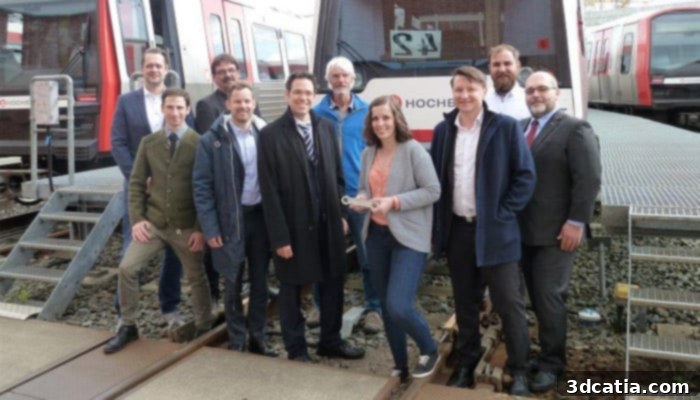
The dedicated team behind this pivotal certification project, showcasing the collaborative spirit driving innovation in the railway sector through additive manufacturing. | Credits: Mobility goes Additive
The certification obtained for a safety-critical 3D printed component in the railway sector marks a monumental step forward, not just for Germany but for global transportation infrastructure. It signifies a profound shift in how industries perceive and integrate additive manufacturing, moving it squarely into the realm of mission-critical applications. This achievement validates years of rigorous research, dedicated development, and stringent testing, demonstrating unequivocally that modern 3D printing technologies are mature enough to meet and exceed the demanding safety and performance standards required by the rail industry. This success will undoubtedly accelerate the broader adoption of additive manufacturing, encouraging other manufacturers and railway operators worldwide to explore its benefits for a vast array of components, from structural elements to intricate electrical enclosures, and even bespoke design features. It sets a clear precedent, proving that with thorough collaboration between industry leaders, meticulous quality assurance processes, and strict adherence to established regulatory frameworks, the perceived barriers to using 3D printing for vital, safety-critical parts can be effectively overcome. The implications for sustainable mobility, highly efficient operations, and innovative design are immense, promising a future where railway systems are not only safer and more reliable but also more adaptable, resilient, and cost-effective. This truly is a game-changer for the future of rail transportation globally. We invite you, our readers, to share your thoughts on this groundbreaking certification and what you believe it means for the future of the railway sector and additive manufacturing as a whole. Let us know your valuable insights in a comment below or join the vibrant conversation on our Facebook and Twitter pages! Additionally, to stay at the forefront of all the latest advancements, news, and breakthroughs in the rapidly evolving world of 3D printing, remember to sign up for our free weekly Newsletter, delivering essential updates straight to your inbox.