
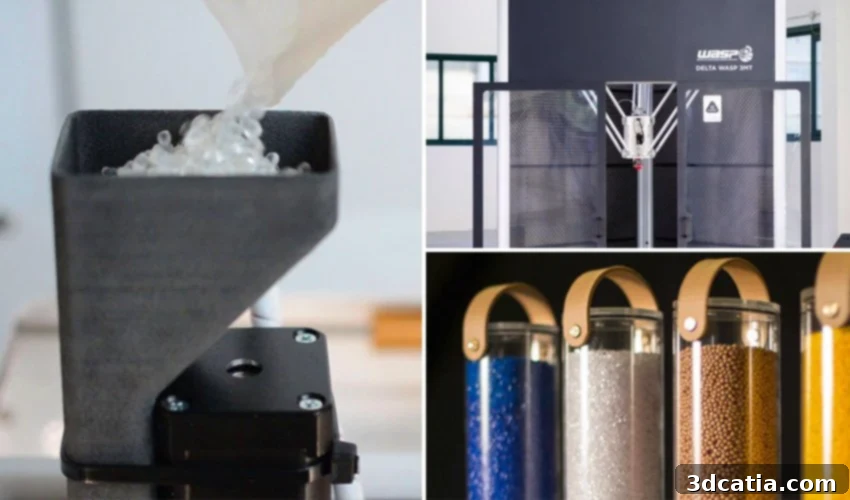
Unlocking Industrial Potential: A Comprehensive Guide to Leading Pellet 3D Printers and Granule Extrusion Technology
When delving into the realm of extrusion-based additive manufacturing, Fused Deposition Modeling (FDM) using traditional filaments often comes to mind first. However, the landscape of 3D printing materials is rapidly evolving, with a significant shift towards pellet extrusion. Pellets, also known as granules, are the raw material form predominantly used in conventional manufacturing processes like injection molding. Their increasing adoption in 3D printing is driven by compelling advantages, including substantial cost savings and a vastly expanded range of compatible materials compared to their filament counterparts. This transformative technology is manifesting in various forms: as complete, dedicated pellet 3D printing solutions, or as versatile pellet extrusion head add-ons designed to upgrade existing systems. This in-depth article will explore some of the most innovative and impactful pellet 3D printers and hybrid systems currently shaping the market, providing a clearer understanding of how these machines are pushing the boundaries of industrial additive manufacturing.
The transition from filaments to pellets represents a pivotal step towards more sustainable, efficient, and cost-effective 3D printing. By utilizing raw material forms readily available in bulk, manufacturers can drastically reduce material expenses, often by factors of 10 or more. Furthermore, the ability to process a wider array of engineering-grade, high-performance, and even recycled plastics opens new avenues for applications across diverse industries. From automotive and aerospace to consumer goods and medical devices, pellet-based 3D printing is enabling the creation of stronger, larger, and more functional parts with unprecedented flexibility. As we examine the cutting-edge solutions below, it becomes clear that pellet extrusion is not just an alternative but a vital progression in the journey of additive manufacturing.
Leading Pellet 3D Printers and Solutions
Pollen AM P Series: Multi-Material Precision for Demanding Applications
Pollen AM stands as a pioneer in the pellet 3D printing arena, having been one of the first manufacturers to champion this innovative technology. Their P Series machines embody this commitment, offering advanced capabilities for industrial users. The Pollen AM P Series features an impressive configuration with four independent extruders, enabling complex multi-material printing within a generous build volume of Ø 300 x H 300 mm. This unique multi-extrusion capability allows for the simultaneous processing of various materials, from standard thermoplastics to advanced elastomers, opening up possibilities for functionally integrated parts and complex assemblies. The printer boasts exceptional resolution, achieving 40 microns on the Z-axis and an even finer 5 microns on the X and Y axes, ensuring high-quality surface finishes and intricate detail. This level of precision, combined with its material versatility, makes the Pollen AM P Series a compelling choice for sectors such as automotive, aerospace, and consumer goods, where robust performance and diverse material properties are critical for advanced prototypes and end-use components.
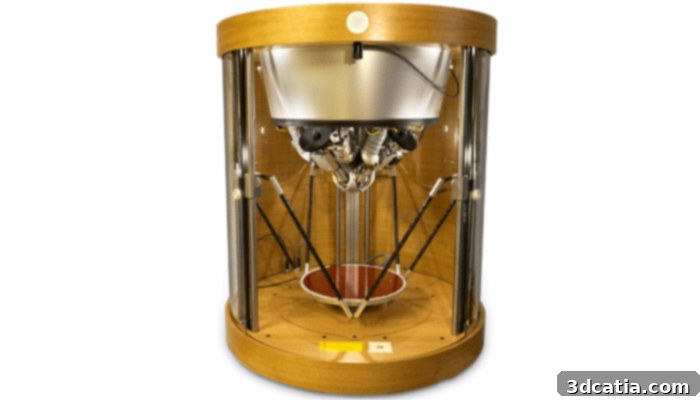
The Pollen AM P Series machine features four extruders for versatile multi-material additive manufacturing (photo credits: Pollen AM)
Titan Robotics Atlas: The Apex of Hybrid Pellet and Filament Extrusion
Titan Robotics continues to be a formidable presence in the industrial 3D printing market, and their flagship Atlas printer exemplifies their commitment to high-performance solutions. The Atlas is a truly hybrid machine, offering unparalleled flexibility with configurations for pellet extrusion, traditional filament extrusion, or a combined hybrid pellet/filament extrusion system. This adaptability empowers users to choose the optimal material form for their specific application, balancing cost, speed, and material properties. A core benefit of the Atlas, particularly with its pellet extrusion system, is its ability to print significantly faster than traditional filament machines while drastically reducing material costs—often by a factor of 10x. This efficiency is coupled with a 10x higher deposition rate, accelerating production cycles for large-scale parts. Furthermore, the Atlas, with its industrial heated enclosure and advanced pellet extrusion capabilities, can process high-temperature and high-performance materials such as Carbon Fiber-reinforced PEI (CF-PEI), Glass Fiber-reinforced PEKK (GF-PEKK), and Glass Fiber-reinforced PC (GFPC). These materials are crucial for demanding industrial applications requiring exceptional strength, heat resistance, and chemical inertness, making the Atlas a go-to solution for manufacturing ready, end-use parts across various industries.
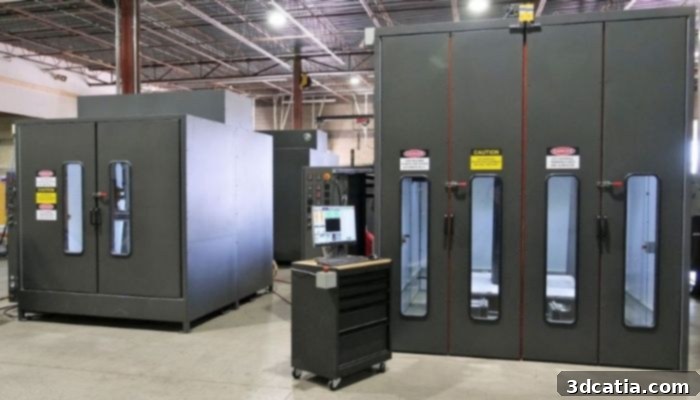
The versatile Atlas industrial 3D printer from Titan Robotics, configured for pellet extrusion (Photo Credits: Titan Robotics)
Everplast EM3-1504-D: Accelerating Production with Unmatched Material Diversity
From Taiwan, Everplast Machinery Co., LTD, a renowned specialist in plastic extruders, has leveraged its extensive expertise to enter the additive manufacturing market with a compelling pellet extrusion 3D printer. Their EM3-1504-D model is engineered for high-speed production, claiming a significant reduction in printing time—between 30% to 70%—compared to conventional filament-based 3D printers. This accelerated printing speed translates directly into increased throughput and efficiency for industrial operations. What truly distinguishes the EM3-1504-D is its extraordinary material compatibility. It can adeptly process a wide spectrum of plastics, including rigid materials like PVC, ABS, PC, PA, and HDPE, as well as flexible and soft plastics such such as TPU and EVA. Beyond standard polymers, this printer is capable of working with alloy plastics like PA+fiber composites and even inorganic materials like cement, showcasing its immense versatility. This broad material handling capacity makes the Everplast EM3-1504-D an incredibly flexible tool for a wide array of industrial applications, from construction and prototyping to specialized part manufacturing.
Cosine Additive AM1: Large-Scale Production with Cost-Effective Pellet Printing
The Spanish manufacturer Cosine Additive has made a strong statement in the industrial 3D printing sector with its Cosine AM1 pellet 3D printer. This formidable machine is characterized by its large, fully enclosed, and heated build chamber, essential for processing high-performance thermoplastics and minimizing warping. Equipped with two extruders, the AM1 offers a dual manufacturing approach, providing users with ultimate flexibility. It can produce parts using traditional filaments (ABS, PLA, PETG, TPU, etc.) via its Filament Feed System, catering to a broad range of common applications. However, its true strength lies in its Pellet Feed System, which enables the production of components using plastic pellets. This pellet-based option is lauded for being significantly faster and more cost-effective—up to 10 times faster and 10 times cheaper—than filament printing. When operating with pellets, the Cosine AM1 boasts an impressive printing volume of 1,100 x 850 x 620 mm, allowing for the creation of very large parts or batches of smaller components. This combination of size, speed, material versatility, and cost efficiency positions the Cosine AM1 as a powerful solution for industrial users looking to scale up their additive manufacturing capabilities.

The Cosine AM1 pellet 3D printer offers an exceptionally large printing volume for industrial applications (photo credits: Cosine Additive)
Epeire 3D T-600 Pellet Printer: Embracing Sustainability and Precision
Another innovative French company making waves in the pellet 3D printing space is Epeire 3D, with its meticulously designed T-600 pellet printer. This machine is engineered for broad compatibility with plastics commonly employed across various manufacturing industries, including ABS, PS, TPE, PC, PA, and PPS. Beyond standard industrial polymers, a key highlight of the Epeire 3D T-600 is its capability to process regenerated, recycled, and bio-based thermoplastics. This feature positions the T-600 as an excellent choice for companies prioritizing sustainable manufacturing practices and seeking to incorporate environmentally friendly materials into their production workflows. With a substantial printing volume of 500 x 450 x 500 mm, the T-600 can handle a wide range of part sizes. Furthermore, it delivers impressive precision with a resolution of 0.01mm in the X and Y axes, and an even finer 0.002mm in the Z-axis, ensuring detailed and accurate prints suitable for functional prototyping and production.
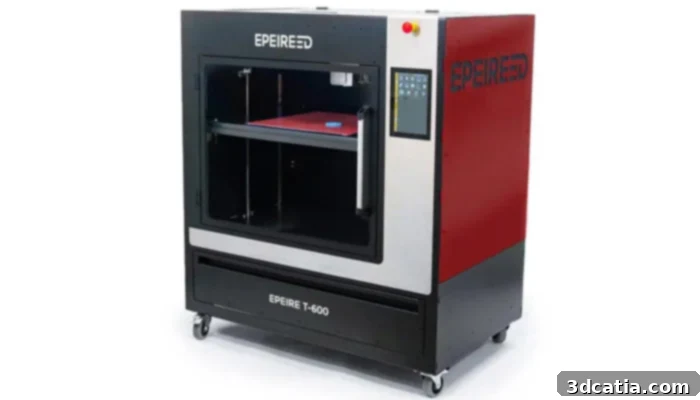
The Epeire 3D T-600 offers precision and material versatility for sustainable industrial manufacturing (Photo Credits: Epeire 3D)
re3D Gigabot X Line: Driving a Circular Economy with Large-Scale Pellet Printing
re3D, a collaborative Puerto Rican and American printer manufacturer, offers its Gigabot X line as a robust solution for large-format pellet 3D printing. Comprising the Gigabot X and Gigabot X XLT models, re3D’s commitment to pellets stems from a desire to foster a more circular economy in additive manufacturing. By enabling the use of recycled pellets, flake, or regrind, these machines directly contribute to reducing waste and promoting sustainable material usage. The Gigabot X is adept at printing with 3-5mm plastic granules, accommodating a variety of materials including PC, PET, PLA, and other specialty pellets that melt below 270ºC. Users can customize their extrusion setup with a choice of 0.8mm, 1.75mm, or 2.85mm nozzles, allowing for flexibility in print speed and detail. re3D emphatically highlights the inherent advantages of pellet printing: significant cost savings, considerably faster print times, and greater material versatility compared to traditional filament-based methods. With prices for the Gigabot X starting from $16,950, re3D provides an accessible entry point for industrial users seeking to harness the power of large-scale, cost-effective, and environmentally conscious additive manufacturing.
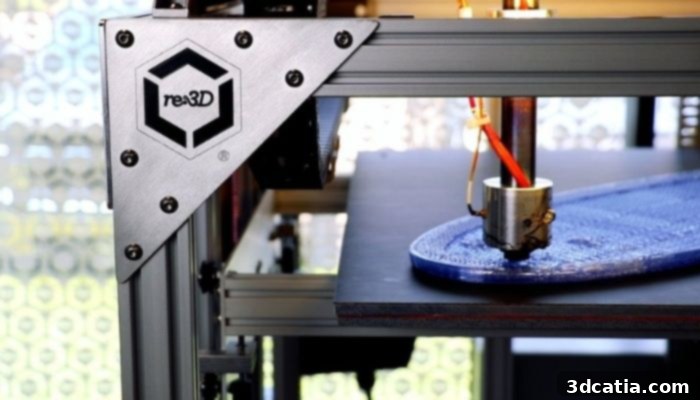
The Gigabot X from re3D, a large-format pellet 3D printer designed for cost-effective and sustainable manufacturing (Photo Credits: re3D)
AIM3D ExAM 510: The Future of Industrial Pellets, Metals, and Polymers
The ExAM 510 from AIM3D represents a significant leap forward in industrial additive manufacturing, designed to bridge the gap between traditional injection molding materials and 3D printing. This machine stands out as one of the first industrial 3D printers capable of processing pellets conventionally used for injection molding, thereby offering an unparalleled range of materials compared to many existing offerings. Its innovative approach is rooted in the Composite Extrusion Modeling (CEM) process, which ingeniously combines principles from metal injection molding with additive manufacturing technologies. This allows users to print not only with a vast array of polymers but also with metal materials, expanding its application potential enormously. The ExAM 510 integrates the advantages of typical FDM or FFF printers, including an automatic material feeder system that can hold up to one liter of material per extruder, with the convenience of on-the-fly refilling during the printing process. This ensures continuous operation and minimizes downtime. With a substantial footprint of 1831 x 1051 x 745 mm and a generous build chamber of 255 x 255 x 255 mm (10 x 10 x 10 inches), the ExAM 510 is built for robust industrial applications requiring precision, material diversity, and high throughput. This printer truly embodies the future of multi-material additive manufacturing.
Colossus and WEBER ADDITIVE’s XS Series: High-Performance FGF for Industrial Scale
The strategic partnership between Colossus and WEBER Additive has culminated in the development of the innovative XS series, a testament to collaborative expertise in large-format additive manufacturing. This collaboration has yielded a high-performance Fused Granulate Fabrication (FGF) printer designed for industrial applications. The XS series offers a standard build volume of 1600 x 1200 x 1300 mm, making it suitable for printing very large parts or batches of components. Leveraging WEBER’s proven extrusion technology, the device achieves impressive printing speeds of up to 200 mm/s, significantly reducing production times. According to the manufacturers, the XS series is optimally suited for small to medium volume production runs, offering an efficient and flexible solution for various industrial needs. Standard features include a 60 L drying system with an integrated conveyor belt, a vacuum-heated print bed capable of reaching up to 115 degrees Celsius to ensure excellent adhesion and minimize warping, and comprehensive software with an integrated slicer. Furthermore, Colossus emphasizes the customizable nature of the FGF printer, allowing it to be tailored precisely to specific customer requirements and applications, ensuring maximum utility and return on investment.
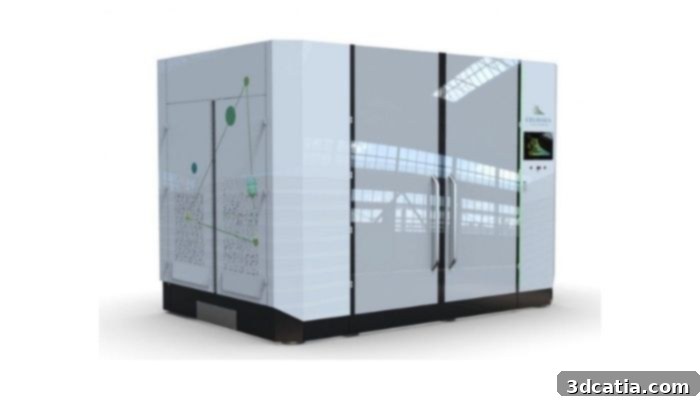
The Colossus XS Series, developed in partnership with WEBER Additive, offers high-performance FGF printing for industrial applications (Photo Credits : Colossus)
Arburg Freeformer 200-3X: Precision Plastic Freeforming with Standard Pellets
Arburg, a well-established name in injection molding machinery, brings its profound materials expertise to additive manufacturing with the Freeformer series, featuring its patented AKF (Arburg Plastic Freeforming) process. This open system offers users unparalleled control by allowing them to freely program slice and process parameters, adapting the printing process to highly specific individual requirements. The Freeformer models operate by melting conventional granules, identical to those used in injection molding, and generating tiny plastic droplets that precisely build the component layer by layer. This direct use of standard industrial pellets significantly expands material options. The Freeformer 200-3X model, equipped with three axes, provides a build area of 200 cm². It is compatible with virtually any qualified standard pellets, making it incredibly versatile. For example, it can process PC approved for aerospace applications or medical-grade TPE with FDA approval, highlighting its suitability for highly regulated industries. For larger-scale industrial practice, Arburg also offers the Freeformer 300-3X, which provides an even larger build volume, catering to a broader spectrum of production demands.
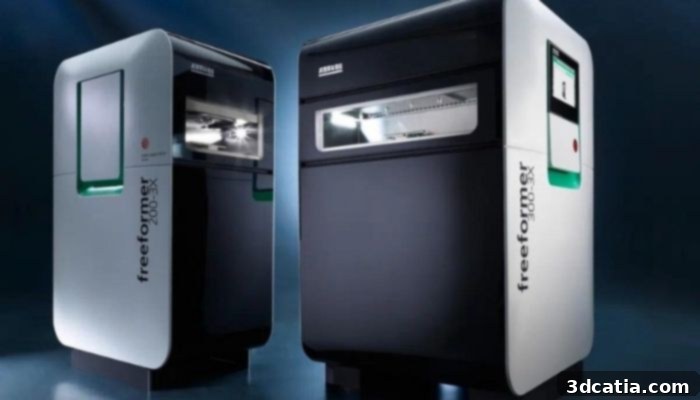
The Arburg Freeformer 200-3X utilizes standard industrial pellets for precision plastic freeforming (Photo Credits: Arburg)
CEAD’s E25 and E50 Printer Heads: Revolutionizing Large-Scale Additive Manufacturing
CEAD, a leading innovator in large-scale additive manufacturing, specializes in powerful print heads designed for integration with robotic arms or CNC machines. Their E25 and E50 models are exemplary of their commitment to high-speed, high-performance pellet extrusion. The E50, as the latest iteration, represents a significant upgrade over its predecessor, the E25. It dramatically increases extrusion speed, jumping from 12 kg/hr to an astonishing 84 kg/hr. This monumental increase in deposition rate allows for exceptionally fast printing of large structures, transforming the economic viability of industrial additive manufacturing. These robust print heads are utilized by prestigious institutions such as ETH Zurich, the University of Stuttgart, and the University of Tampere, which have long relied on CEAD’s technology for advanced research and large-scale prototyping. The new E50 further accelerates their printing processes, enabling higher throughput and efficiency. Capable of operating at temperatures up to 400 °C, it can process a wide array of high-performance thermoplastics. The E50 also offers a variable die size, ranging from 8 to 20 millimeters in diameter, providing flexibility in bead width and print resolution. It is equipped with a sophisticated thermoplastic pellet feeder and a PLC-based control system from Siemens, ensuring precise and reliable operation. Driven by a powerful 15 kW motor, the E50 print head is a powerhouse for modern industrial additive manufacturing.
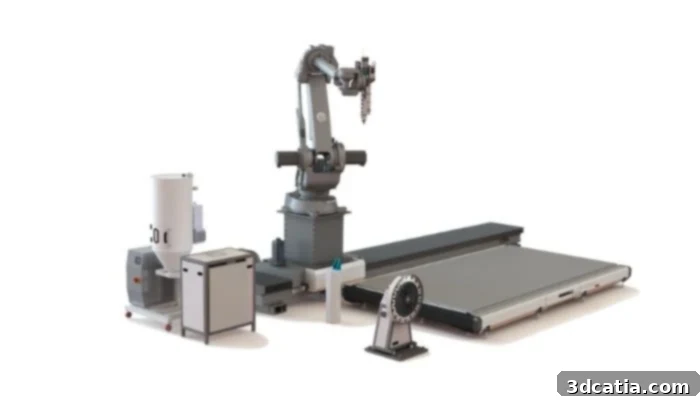
CEAD’s E50 print head, an advanced solution for high-speed, large-scale pellet extrusion (Photo Credits: CEAD)
TUMAKER BIGFoot Pro Range: Professional Pellet Printing Tailored to Your Needs
Tumaker, a distinguished brand under the Spanish IT3D group, specializes in the development and global distribution of cutting-edge additive manufacturing equipment. Their BIGFoot Pro range of 3D printers is meticulously designed for professional use, offering three distinct machines—the 200, 350, and 500—each varying in manufacturing volume to cater to diverse user requirements. These solutions are specifically engineered to work seamlessly with pellet materials, providing immense flexibility in material choice. The BIGFoot Pro printers can process an extensive range of pellet materials, including common plastics like PLA, ABS, PETG, and Polypropylene, as well as advanced engineering polymers such as Ultem and PEEK. This broad material compatibility is facilitated by Tumaker’s proprietary designed print head, which features a dual-temperature sensor and is capable of reaching temperatures up to 350 degrees Celsius. This precise temperature control is crucial for successfully extruding high-performance materials. The BIGFoot Pro Pellets series stands out in the market as a unique and robust solution, specifically tailored to the rigorous demands of professional industrial applications, offering reliability and versatility for advanced manufacturing processes.
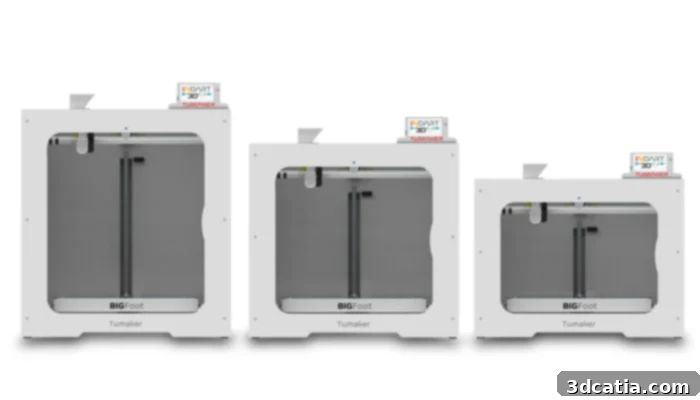
The Tumaker BIGFoot Pro range offers three different models, providing versatile solutions for professional pellet 3D printing (photo credits: Tumaker)
Discovery 3D Printers Super Discovery: Large-Format Industrial Excellence
Discovery 3D Printers, a division of the Spanish CNC Barcenas Group, presents the Super Discovery, an industrial 3D printer engineered for large-format applications using pellet materials. This formidable machine boasts a standard print volume of 1.3 x 2.5 x 1 meter, offering ample space for significant parts or batch production. One of its standout features is the ability to customize the work area, allowing users to redesign and adjust the build volume to their specific dimensional needs. The Super Discovery integrates high-performance components, including Panasonic servomotors for precise and reliable motion control, automatic bed leveling to ensure print accuracy, and an enclosed build chamber designed to maintain optimal temperature conditions and compensate for any unevenness during the manufacturing process. From a technical perspective, this 3D printer is compatible with an extensive range of materials, such as ABS, PC, PPE, CF (Carbon Fiber), ASA, and more, catering to diverse industrial requirements. It also leverages industry-standard Simplify3D software for advanced slicing and control, and offers Ethernet connectivity for seamless integration into networked environments. In addition to the standard Super Discovery, the company has expanded its offerings with two specialized variants: the Super Discovery 3D Printer Compact, for slightly smaller footprints, and the Super Discovery 3D Printer Hybrid, which likely incorporates multi-material capabilities, further enhancing its versatility in the industrial landscape.
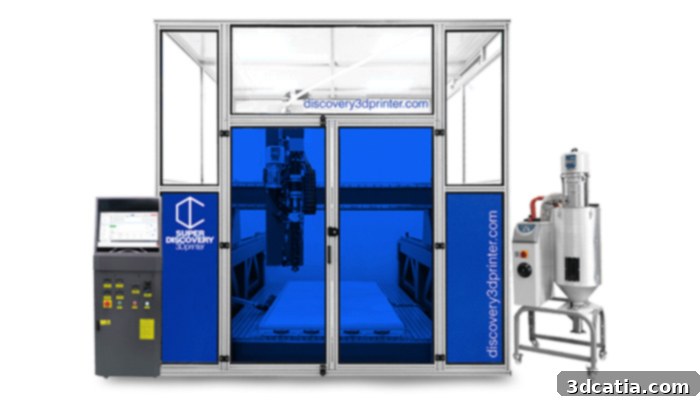
The Super Discovery from Discovery 3D Printers, an industrial-grade machine for large-format pellet printing (Photo Credits: Discovery 3D Printers)
Delta WASP 3MT Industrial 4.0: Sustainable and Efficient Large-Scale Production
The Delta WASP 3MT Industrial 4.0 is a leading large-format industrial 3D printer from the Italian manufacturer WASP, renowned for its innovative and sustainable additive manufacturing solutions. This machine is equipped with a fully enclosed build chamber and an impressive print volume of 1000 mm x 1000 mm x 1200 mm, making it ideal for large-scale prototypes, tools, and end-use parts. A key design philosophy behind the Delta WASP 3MT Industrial 4.0 is its ability to directly print with pellets and recycled plastics in granular form. Its High Deposition Rate (HDP) extruder is specifically engineered to process these cost-effective materials, thereby significantly reducing both material expenses and overall printing time. To ensure continuous and uninterrupted operation, the 3D printer features a self-feeding pellet tank and an intelligent end-of-pellet sensor, which collectively prevent print failures due to material depletion and minimize waste. WASP has integrated several patented technologies to enhance print quality and reliability: the Firecap system generates a localized hot chamber directly on the printing area, maintaining temperatures up to 250°C to optimize material flow and part adhesion, while the innovative VAC (Vacuum Active Control) system for the printing plate allows for quick plate changes and ensures the total absence of micro-movements during printing, even at high temperatures. This combination of size, efficiency, and advanced features positions the Delta WASP 3MT Industrial 4.0 as a top-tier choice for sustainable, high-performance industrial additive manufacturing.
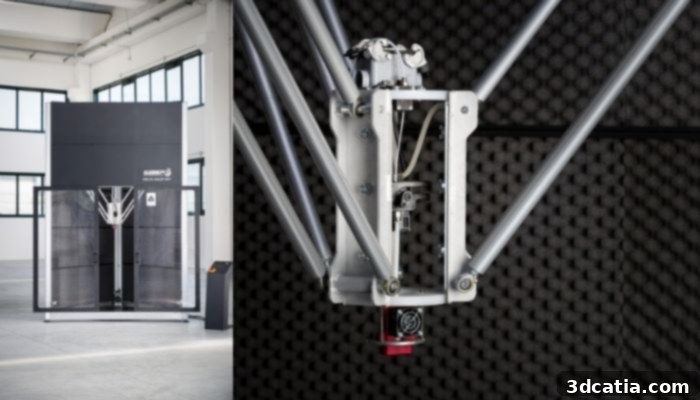
Photo Credits: WASP
Juggerbot 3D Tradesman Series P3-44: High-Speed, Large-Scale FGF with Precision
The Tradesman Series P3-44 from Juggerbot 3D is a formidable large-format 3D printer that utilizes Fused Granular Fabrication (FGF), commonly known as pellet extrusion technology. Designed for robust industrial applications, it offers a substantial print volume of 36 inches x 48 inches x 48 inches (915 mm x 1,220 mm x 1,220 mm). A standout feature of the P3-44 is its remarkable print speed, capable of reaching 1 meter per second, enabling rapid production of large components. Juggerbot 3D, a U.S.-based company, collaborated with Rockwell Automation to optimize the machine’s performance and significantly reduce the margin of error, ensuring high reliability and consistent output. The P3-44 boasts exceptional material versatility, capable of processing a wide array of thermoplastic pellets, including commodity/bulk plastics, flexible materials, high-performance polymers, engineering-grade plastics, high-temperature compounds, and even high-fill composites. To further enhance its adaptability, the machine features interchangeable extruders. Users can select the 14L model for maximized productivity and deposition rates, or opt for the 14S model when finer detail and more precise printing are required. This flexibility allows the Tradesman Series P3-44 to meet diverse manufacturing demands, from rapid prototyping to final part production, across various industries.
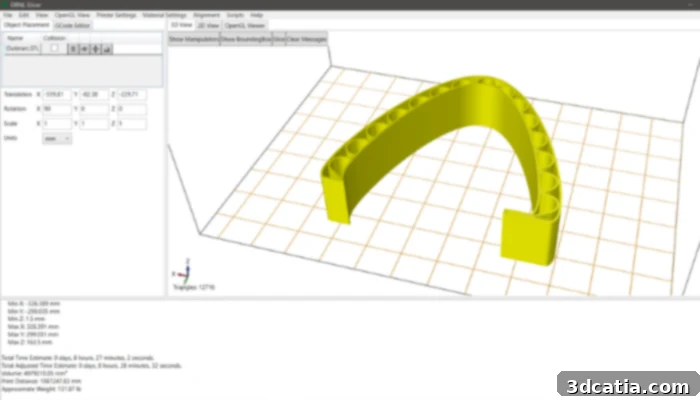
Slicing Software for the P3-44 by Juggerbot 3D, showcasing its capability for large-scale Fused Granular Fabrication (photo credits: Juggerbot 3D)
Millebot’s Pellet 3D Printer: Containerized Industrial Manufacturing on Demand
The American company Millebot is recognized for its unique approach to industrial 3D printing, offering large-scale machines housed within transportable shipping containers. Among their impressive lineup, the MILLE-300 and MILLE-500XL models are specifically designed to utilize pellets, providing a robust solution for on-demand, large-format additive manufacturing. These versatile machines can process an extensive range of materials, including standard industrial polymers, various thermoplastics, hybrid composite pellets, and even recycled plastics, along with traditional filaments. Key printable materials encompass popular choices such as ABS, PLA, HIPS, TPU, TPE, and high-performance engineering plastics like ULTEM and PEEK, demonstrating their broad applicability. Millebot’s systems offer multi-extruder options, allowing for complex geometries and multi-material parts. Optional features like a heated platen, advanced thermal insulation, and an automatic pellet feeding and drying system are available to optimize print quality and material handling. According to Millebot, leveraging plastic pellets in their systems significantly increases production efficiency while substantially reducing 3D printing costs, making large-scale manufacturing more accessible and economical. Integrated slicing and monitoring software, combined with a high degree of automation, greatly simplify the entire printing process, making these containerized solutions ideal for flexible industrial deployment, remote operations, and rapid manufacturing needs.
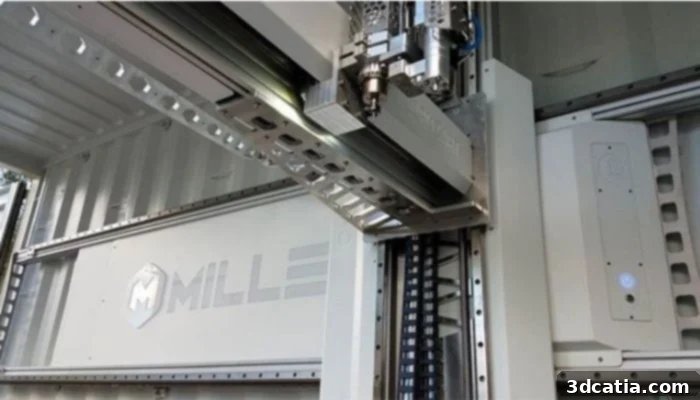
Millebot’s innovative containerized pellet 3D printer offers industrial-scale manufacturing with unparalleled mobility (Photo Credits: Millebot)
The Future is Granular: Why Pellet 3D Printing is Gaining Momentum
The rising prominence of pellet 3D printers marks a significant evolutionary step in additive manufacturing. As this comprehensive overview demonstrates, these machines offer a multitude of advantages over traditional filament-based systems, primarily centered around cost efficiency, material versatility, and higher deposition rates. By leveraging materials already widely available and more affordable in granular form, companies can dramatically reduce their operational expenses. Furthermore, the ability to process a broader spectrum of polymers, including industrial-grade, recycled, and high-performance plastics, unlocks new possibilities for complex applications across diverse sectors. From rapid prototyping of large components to the direct manufacturing of end-use parts, pellet extrusion is empowering industries to achieve greater flexibility, speed, and sustainability in their production workflows.
The innovations from manufacturers like Pollen AM, Titan Robotics, Everplast, Cosine Additive, Epeire 3D, re3D, AIM3D, Colossus, Arburg, CEAD, Tumaker, Discovery 3D Printers, Delta WASP, Juggerbot 3D, and Millebot highlight the dynamic and competitive landscape of this evolving technology. Each system brings unique features, whether it’s multi-material capability, hybrid extrusion, massive build volumes, advanced thermal management, or a focus on circular economy principles. As the technology continues to mature, we can expect further advancements in material science, extrusion speed, and machine intelligence, solidifying pellet 3D printing’s role as a cornerstone of future industrial manufacturing. This shift towards granular materials is not merely a trend but a fundamental change that promises to make additive manufacturing more accessible, sustainable, and powerful than ever before.
Are there any other notable pellet 3D printers or granule extrusion solutions that you believe should be on this list? We’d love to hear your insights! Share your thoughts in a comment below or connect with us on our Linkedin, Facebook, and Twitter pages. Don’t forget to sign up for our free weekly Newsletter here to get the latest 3D printing news delivered straight to your inbox! You can also find all our engaging videos on our YouTube channel for more in-depth content.