

Advancing Aerospace: Nikon, AP&C, and University of Waterloo Partner for Titanium Part Repair with DED Additive Manufacturing
The global aerospace industry is experiencing an unprecedented phase of innovation and growth, largely propelled by transformative advancements in additive manufacturing (AM). This revolutionary technology is redefining possibilities in design, production, and repair of critical components, making aircraft lighter, more efficient, and more sustainable. To further accelerate this evolution and address the complex challenges of modern aerospace, strategic collaborations are becoming increasingly vital. In a significant move, Nikon Corporation, a world leader in precision optics and imaging, has formalized a funded research partnership with Advanced Powders and Coatings Inc (AP&C), a renowned producer of high-quality metal powders, and the esteemed University of Waterloo. This ambitious project is specifically designed to pioneer innovative techniques, with a strong focus on advanced additive manufacturing processes, for the intricate repair of aerospace parts predominantly fabricated from high-performance titanium alloys.
This cutting-edge research initiative will extensively utilize Nikon’s sophisticated Directed Energy Deposition (DED) metal additive manufacturing solutions. Central to this deployment will be Nikon’s advanced Lasermeister LM300A and Lasermeister SB100 systems, renowned for their precision and reliability in metal processing. Complementing this hardware, the project will incorporate the use of specialized metal powders, including Ti-Al and the widely recognized Ti64 (Titanium 6Al-4V), meticulously supplied by AP&C. These materials are crucial for achieving the desired mechanical properties and performance in repaired components. But what are the deeper implications and intricate details of this tripartite agreement? Let’s delve into the core aspects of this groundbreaking partnership and its potential impact on the aerospace sector.
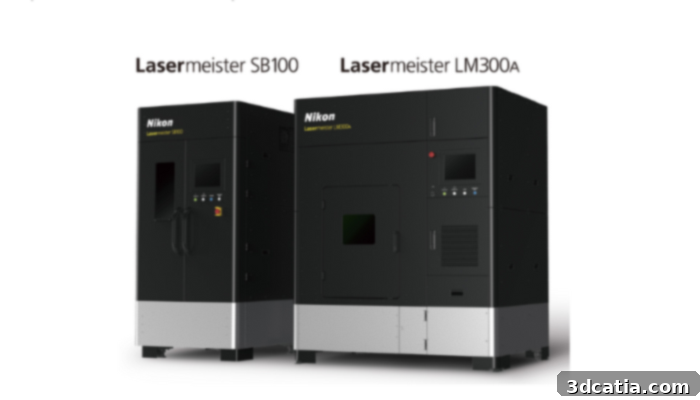
Photo Credits: Nikon
A Pivotal Partnership for Advanced Aerospace Part Repair through Additive Manufacturing
The installation of the “Lasermeister LM300A” and “Lasermeister SB100” systems marks a significant milestone, as these will be the first of their kind deployed in Canada. These state-of-the-art DED systems were officially launched in April 2024 and are specifically engineered to restore damaged or worn metal parts with exceptional precision and efficiency. They will find their new home within the Multi-Scale Additive Manufacturing (MSAM) laboratory at the University of Waterloo, a facility globally recognized for its pioneering research in advanced manufacturing. The complementary nature of these two systems is a key advantage; the LM300A is designed for high-precision deposition and repair, while the SB100 offers robust capabilities for larger-scale applications. This synergy enables the efficient automation of complex repair processes, making them particularly valuable in sectors where component integrity is paramount, such as the demanding automotive industry and critical turbine maintenance, in addition to aerospace. The ability to automatically scan, detect damage, and precisely deposit new material promises to revolutionize maintenance and repair operations, significantly reducing downtime and operational costs.
Professor Ehsan Toyserkani, the esteemed Director of the MSAM Laboratory, a Professor of Mechanical and Mechatronics Engineering, and Canada Research Chair in Multi-Scale Intelligent Additive Manufacturing, articulated the profound importance of this collaborative endeavor with AP&C and Nikon. He emphasized, “We are unequivocally confident that Nikon’s advanced repair solutions, combined with AP&C’s superior metal powders, offer cutting-edge answers to some of the most pressing industry-relevant additive manufacturing technology challenges. This strategically formed partnership will not only enable us to effectively develop invaluable intellectual property in advanced repair methodologies but also critically empower us to train the next generation of highly skilled engineers and researchers. This training will be delivered through a robust, industry-focused research and development (R&D) framework, ensuring our graduates are prepared to meet future demands.” This statement underscores the dual benefit of the partnership: pushing technological boundaries and nurturing future talent essential for sustaining innovation in the AM sector.
Beyond providing critical materials, AP&C is also committed to supplying high-quality Ti-Al and Ti64 titanium alloys, which are indispensable for aerospace applications due to their exceptional strength-to-weight ratio and corrosion resistance. Furthermore, AP&C is providing substantial financial support for the duration of the research project, demonstrating their deep commitment to advancing the field. Frédéric Larouche, CEO of AP&C, passionately highlighted the importance of fostering strong partnerships between industry and universities to accelerate progress in metal additive manufacturing. He remarked, “We have always recognized the immense potential of dynamic industry-academic ecosystems in propelling the advancements of metal AM. Our long-standing relationship with the University of Waterloo, marked by several successful initiatives, stands as a testament to this belief. We now eagerly look forward to expanding this collaborative success by working closely with Nikon as an integral part of this innovative three-way research agreement. This synergy of expertise and resources is crucial for unlocking new possibilities.” This collaborative spirit is foundational to bridging the gap between theoretical research and practical industrial application, a common hurdle in rapidly evolving technological fields.
The overarching objective of this ambitious project is to meticulously adapt Nikon’s highly automated repair technology – a system already recognized for its exceptional efficiency and unparalleled precision – for use with critical aerospace components. The ultimate goal is to significantly optimize their durability, enhance their performance under extreme conditions, and extend their operational lifespan. Behrang Poorganji, Vice President of Technology at Nikon, concluded with an optimistic outlook: “The additive manufacturing (AM) sector is currently experiencing a period of profound and significant growth, particularly with the escalating involvement and investment from major aerospace companies. For us, establishing strong partnerships with leading industry players and academic pioneers in AM is not just beneficial, it is absolutely key in accelerating the successful adoption and integration of AM technologies across various critical applications. We are incredibly excited about the immense potential of this partnership and eagerly anticipate contributing to the growing demand for Nikon’s advanced technology in this rapidly expanding field. This collaboration represents a strategic step towards a more sustainable and efficient future for aerospace manufacturing and maintenance.”
The implementation of high-quality titanium powders from AP&C will be instrumental in ensuring optimum performance and structural integrity of the repaired parts, meeting the stringent standards required by the aerospace industry. Concurrently, the sophisticated combination of Nikon’s advanced digitizing capabilities and state-of-the-art DED technology will guarantee tailor-made repairs, each precisely engineered to the specific damage and requirements of individual components. This personalized approach is crucial for increasing the safety and extending the longevity of high-value aerospace parts, reducing the need for costly replacements. By integrating lighter, more durable materials through precise additive repair, component life will be substantially extended while simultaneously realizing significant reductions in maintenance costs and waste generation. This approach also contributes to a more sustainable lifecycle for aerospace components. For more comprehensive details directly from the source, you can find additional information HERE.
This collaborative venture between Nikon, AP&C, and the University of Waterloo is poised to make a significant impact on the aerospace industry, not just in Canada but globally. It promises to deliver more robust, efficient, and cost-effective solutions for the repair and maintenance of critical aircraft components. The fusion of cutting-edge DED technology, advanced material science, and leading academic research creates a powerful synergy that will undoubtedly push the boundaries of what is possible in aerospace manufacturing and repair. This initiative is a testament to the power of interdisciplinary collaboration in driving innovation and addressing real-world industrial challenges. The benefits extend beyond economic gains, fostering a culture of sustainable practices by extending the life of valuable parts and reducing the environmental footprint of the industry. It also strengthens the foundation for future advancements in metal additive manufacturing, ensuring that the aerospace sector continues to evolve with the most advanced technologies available.
What are your thoughts on this groundbreaking agreement between Nikon, AP&C, and the University of Waterloo, focusing on enhancing repair capabilities for the aerospace sector? We invite you to share your insights in a comment below or join the conversation on our LinkedIn, Facebook, and Twitter pages! Don’t forget to sign up for our free weekly Newsletter here, ensuring you receive the very latest 3D printing news straight to your inbox! You can also find all our engaging videos and deeper dives on our YouTube channel. For more specialized 3D printing news within the dynamic aerospace and defense sectors, we encourage you to explore our dedicated page HERE.