
Nestlé Embraces 3D Printing: Revolutionizing Industrial Maintenance and Sustainability Across UK Operations
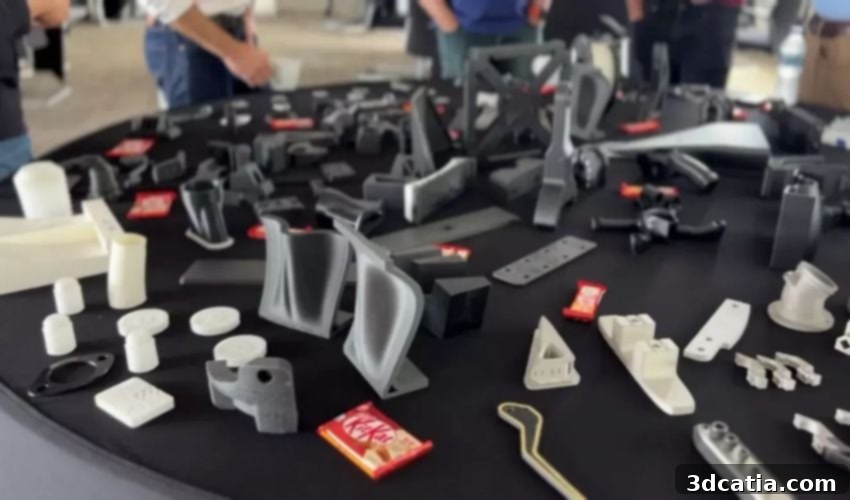
When envisioning the operations of a global food and drink giant like Nestlé, it’s unlikely that 3D printing comes immediately to mind. (And no, this isn’t about innovating with 3D printed confectionery.) Yet, Nestlé has quietly but effectively integrated advanced additive manufacturing technology into the very heart of its industrial maintenance strategies for its factories across the UK. Over the past year, a dedicated team of three specialists based in York has been at the forefront of this transformation, producing essential replacement components and spare parts. These crucial 3D printed parts are then distributed to various key sites, including the vital factories in Tutbury, Halifax, and York itself. This strategic adoption of 3D printing is yielding a multitude of benefits for the corporation, impacting several critical areas: significantly saving both time and money, drastically reducing dependence on external suppliers, and making substantial progress towards its ambitious sustainability goals.
The establishment of a central 3D printing workshop in York stands as a testament to Nestlé’s commitment to innovation and operational efficiency. This facility has empowered the company to diminish its reliance on third-party suppliers for specialized components, a move with far-reaching implications. By bringing production in-house, Nestlé minimizes the extensive logistical chains typically associated with procuring parts from external vendors. This directly translates into fewer transportation needs, a reduction in the associated fuel consumption, and, consequently, a measurable decrease in carbon emissions. Furthermore, the ability to 3D print parts on demand fosters a more agile and responsive manufacturing environment. This approach inherently reduces material waste, as components are produced precisely when and where they are needed, eliminating the need for large inventories of seldom-used parts. The inherent flexibility of additive manufacturing also allows for the creation of highly customized parts, perfectly tailored to specific machinery or operational requirements, thereby contributing to a greener, more efficient, and more responsive supply chain overall.
Traditional industrial maintenance often grapples with challenges such as long lead times for proprietary parts, the obsolescence of older machinery components, and the environmental footprint of global sourcing. 3D printing offers a compelling solution to these issues. For Nestlé, leveraging this technology means that critical spare parts can be designed, iterated, and produced rapidly, often within hours or days, circumventing weeks or months of waiting for external suppliers. This agility is vital in preventing costly downtime on production lines, ensuring continuous operation, and safeguarding product availability. Moreover, for older machinery, where original spare parts may no longer be manufactured, 3D printing provides a lifeline, allowing Nestlé engineers to reverse-engineer and produce bespoke replacements, extending the lifespan of valuable assets and preventing premature capital expenditure on new equipment. This strategic shift not only optimizes operational uptime but also reinforces a circular economy approach by repairing and reusing rather than replacing.
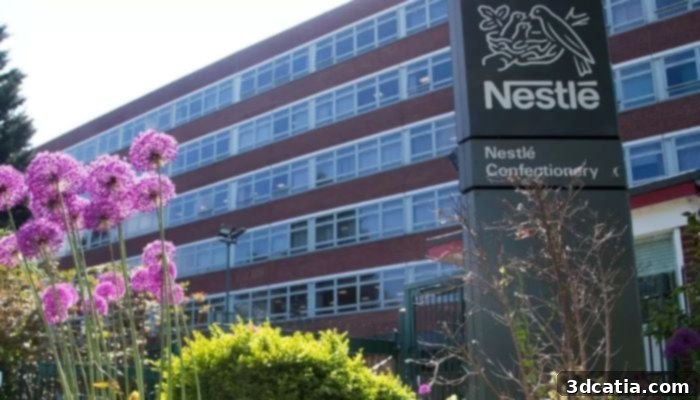
Nestlé’s York location (Photo Credits: Nestlé UK)
Nestlé has articulated a clear and ambitious objective for its additive manufacturing initiative: to produce over 5% of its site inventory using 3D printing. This target is far more than just a number; it represents a profound commitment to leveraging cutting-edge innovation and embedding it within the core of its operational strategy. Achieving this goal would signify a substantial integration of 3D printing into Nestlé’s everyday maintenance and manufacturing processes, underscoring its belief in the technology’s transformative potential. The dedicated team spearheading this endeavor expresses considerable optimism regarding the ongoing implementation and future expansion of this technology. Simon Billington, Head of Technical & Production at Nestlé UK and Ireland, eloquently summarized this forward-thinking vision: “As we continue to embrace 3D printing technology, we are not only enhancing our operational efficiency but also paving the way for sustainable manufacturing practices that will define the future of our industry.” His statement highlights a dual benefit: immediate gains in efficiency coupled with a long-term strategic advantage in sustainable industrial practices, aligning perfectly with global demands for more environmentally responsible manufacturing.
To further solidify its leadership in additive manufacturing adoption, Nestlé recently hosted a significant workshop at its York campus, in collaboration with industry leader Markforged. This event served as a crucial platform, convening a diverse group of stakeholders including prominent industry leaders, skilled engineers, and digital transformation teams. The primary objective was to engage in in-depth discussions and share insights on the scalable implementation of 3D printing, particularly within high-volume production environments typical of Nestlé’s operations. Attendees had the invaluable opportunity to witness live demonstrations of cutting-edge AM technologies and participate in robust discussions focused on best practices in modern manufacturing. This collaborative spirit underscores Nestlé’s dedication not just to internal innovation but also to fostering an ecosystem of knowledge sharing and technological advancement across the industry. Alan Yu, Senior Application Engineer at Markforged, lauded Nestlé’s methodical approach to incorporating AM: “Nestlé has advanced its use of additive manufacturing in production line maintenance by creating a clear, standardized process to evaluate and scale its impact. It’s been great to support their team along the way and see how they laid the foundation for Nestlé’s broader adoption.” This recognition from an industry expert highlights Nestlé’s exemplary strategy in moving beyond mere experimentation to truly embedding AM into its operational DNA through structured, repeatable processes.
Looking ahead, Nestlé’s vision for its in-house 3D printing operations is one of continuous advancement and strategic expansion. The immediate future plans involve extending the application of this transformative technology to include the production of food-safe components. This particular frontier presents unique challenges and opportunities, requiring stringent adherence to health and safety regulations, the use of specialized, certified materials, and meticulous process controls to ensure hygienic and compliant parts for food processing machinery. This move demonstrates Nestlé’s dedication to maintaining the highest standards of product safety and quality while simultaneously leveraging AM’s benefits. Over the next two to five years, the company aims to significantly enhance autonomy in 3D printing across its various sites. The goal is to empower each factory to independently meet its specific demand for parts, ensuring rapid response times, minimizing logistical complexities, and further decentralizing production. This decentralized model will be underpinned by a steadfast commitment to maintaining the high standards of quality and efficiency that are synonymous with the Nestlé brand. This future-focused strategy positions Nestlé at the forefront of industrial innovation, leveraging technology not just for competitive advantage but also for a more resilient, sustainable, and responsive global operation. Further details about Nestlé’s comprehensive plan can be explored here.
What are your thoughts on Nestlé’s progressive adoption of additive manufacturing in its industrial operations? Share your insights and opinions in a comment below or join the conversation on our LinkedIn or Facebook pages! Moreover, ensure you stay informed by signing up for our free weekly Newsletter to receive the latest 3D printing news directly in your inbox. For a visual perspective, all our compelling videos are available on our dedicated YouTube channel.
*Cover Photo Credit: Nestlé