
MakerBot METHOD: Revolutionizing Industrial 3D Printing with Advanced Materials and Experimental Extrusion
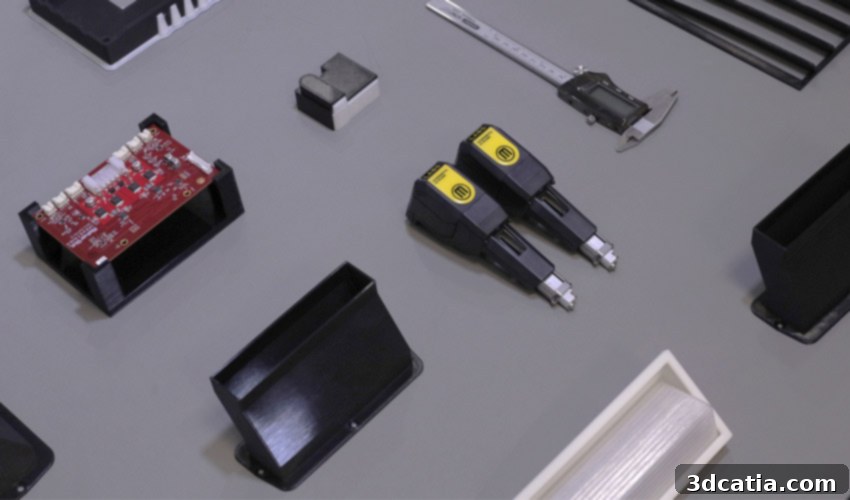
MakerBot, a prominent American manufacturer in the additive manufacturing space, marked a significant comeback with the introduction of its METHOD 3D printer. This innovative machine, initially unveiled as a desktop solution, quickly positioned itself as a professional-grade system designed to bridge the gap between traditional desktop convenience and industrial-level performance. This strategic move signaled MakerBot’s ambition to cater to more demanding applications, moving beyond its roots in consumer-focused 3D printing. The company’s commitment to professional users was further solidified during Formnext 2019, where it launched a groundbreaking experimental extruder developed by MakerBot LABS and initiated a comprehensive METHOD materials development program. These initiatives collectively underscore MakerBot’s dedication to expanding the range of technical materials compatible with its machines, empowering users to tackle more complex and industrial-scale applications with greater confidence and versatility.
The core objective behind these advancements is clear: to enable users to explore a broader spectrum of engineering-grade materials, pushing the boundaries of what’s achievable with Fused Deposition Modeling (FDM) technology. By fostering an ecosystem of advanced materials, MakerBot aims to empower engineers, designers, and manufacturers to move beyond mere prototyping into functional part production, tooling, and end-use applications. To realize this vision, the 3D printer manufacturer has strategically partnered with leading material producers, including KIMYA, Jabil, Polymaker, and Mitsubishi Chemical. These collaborations are crucial for certifying high-performance filaments, ensuring optimal printing results, and guaranteeing reliability for demanding professional environments.
In the realm of FDM 3D printing, particularly for professional and industrial applications, the choice of material often proves to be the ultimate differentiator. The landscape of additive manufacturing materials has witnessed an unprecedented surge in recent years, with a growing number of companies actively seeking specialized polymer solutions tailored to their stringent requirements. This demand has fueled an explosion in the availability of high-performance thermoplastics, such as PEEK, ULTEM, and carbon fiber reinforced composites. These advanced materials offer superior mechanical properties, including enhanced strength, stiffness, heat resistance, and chemical stability, making them indispensable for critical applications. Composite materials, incorporating elements like carbon fiber or glass fiber, have also gained immense popularity due to their exceptional strength-to-weight ratios, enabling the creation of lightweight yet highly robust components.
Recognizing the pivotal role of materials, machine manufacturers are increasingly forging strategic partnerships with material developers. This collaborative approach allows them to certify a diverse range of filaments for their 3D printers, providing users with a crucial guarantee of quality, consistency, and optimal performance. Leading industry players like Ultimaker, Raise3D, and more recently MakerBot, have adopted this model to enhance user experience and expand the utility of their platforms. These partnerships not only streamline the material selection process for users but also ensure that the printer hardware and software are finely tuned to extract the best possible results from specialized filaments. This holistic approach is essential for scaling additive manufacturing from prototyping to reliable, production-ready workflows.
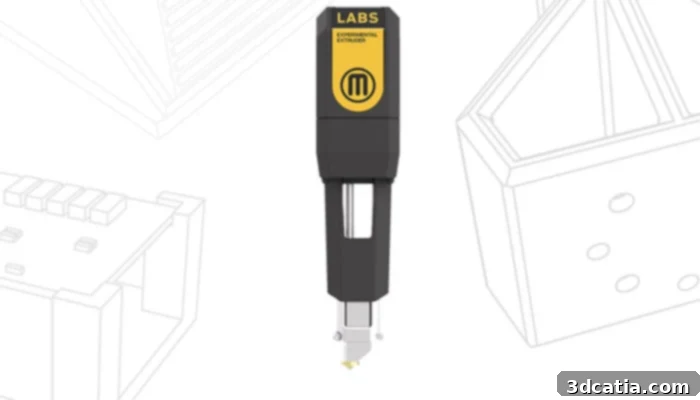
MakerBot’s experimental extruder | Credits: MakerBot Labs
Introducing the MakerBot LABS Experimental Extruder: Unlocking Material Versatility for METHOD and METHOD X
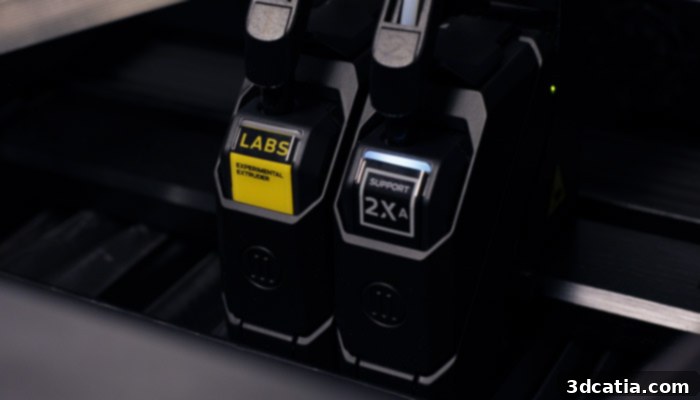
At the forefront of MakerBot’s material expansion strategy is the innovative experimental extruder, meticulously developed by MakerBot LABS. This groundbreaking component is engineered with a new hot end design that facilitates effortless nozzle changes, thereby dramatically broadening the spectrum of compatible materials. The ability to quickly swap nozzles empowers users to adapt their METHOD and METHOD X printers for a diverse array of filaments, from standard prototyping plastics to highly abrasive or flexible engineering-grade materials. Looking ahead, MakerBot envisions this solution becoming fully customizable, offering extensive printing settings that will be seamlessly integrated and supported by the robust MakerBot Print software. This level of customization is crucial for fine-tuning print parameters to meet the specific requirements of various advanced materials, ensuring optimal part quality and reliability.
The experimental extruder offers a range of specialized nozzle models, each designed for specific material characteristics and application needs. These include a standard 0.4 mm nozzle, ideal for general-purpose printing and fine detail; a 0.6 mm brass nozzle, specifically engineered for efficiently printing flexible materials without clogging or tangling; and a robust 0.6 mm stainless steel nozzle, which is indispensable for handling abrasive materials like carbon fiber reinforced filaments without incurring premature wear. This selection of nozzles provides a comprehensive toolkit for users, allowing them to confidently experiment with and process a wider array of technical materials. By providing this hardware flexibility, MakerBot is actively removing barriers to material innovation, enabling users to push the boundaries of their 3D printing applications.
Nadav Goshen, CEO of MakerBot, articulated the company’s vision behind this development, stating: “We know that many of our customers want to experiment with different materials to explore new 3D printing applications. With the MakerBot LABS experimental extruder, we are adding more advanced customization settings, which allow users and our development partners to print and certify a wider range of technical materials for the METHOD platform.” This statement highlights MakerBot’s commitment to empowering its user base and fostering collaborative innovation. By providing an accessible platform for experimentation, MakerBot aims to accelerate the adoption of advanced materials in industrial settings. The new experimental extruder was initially made available in December 2019 as part of an exclusive beta program, granting early access to select MakerBot customers and development partners. This phased rollout strategy ensures valuable feedback can be gathered and incorporated, further refining the product before a broader release.
The introduction of the experimental extruder signifies a pivotal moment for the METHOD platform. It transforms the METHOD from a high-performance desktop printer into a versatile research and development tool, capable of handling materials previously restricted to more expensive, industrial-grade systems. This democratization of advanced material capabilities opens up new possibilities for product development, custom manufacturing, and specialized tooling, offering a significant competitive advantage to businesses leveraging the METHOD ecosystem. Furthermore, the commitment to open-source customization for printing settings through MakerBot Print software ensures that users have the granular control needed to achieve optimal results with even the most challenging materials, further enhancing the platform’s utility and appeal to professional users.
Credits: MakerBot Labs
Strategic Partnerships Driving Material Innovation for MakerBot METHOD
Beyond hardware innovation, MakerBot has strategically focused on building a robust materials ecosystem to offer its customers certified, high-quality solutions. This led to the creation of the METHOD materials development program, an initiative centered around fostering strong collaborations with leading material manufacturers. Key partners in this endeavor include KIMYA, a renowned producer of advanced filaments; Polymaker, known for its innovative materials and engineering plastics; Jabil, a global manufacturing services company with expertise in material science; and Mitsubishi Chemical, a diversified chemical company with extensive experience in high-performance polymers. These initial partnerships are just the beginning, with MakerBot indicating that additional material collaborations will be announced in the months to come, further expanding the METHOD’s material compatibility. To date, seven distinct filaments have already been rigorously tested and certified for seamless use on both the METHOD and METHOD X platforms, providing immediate value to users seeking reliable and high-performance printing options.
These strategic alliances are born from a shared understanding among MakerBot and its partners: technical materials represent the future of additive manufacturing. This vision emphasizes a shift from purely rapid prototyping applications towards more production-oriented uses, where material performance, durability, and consistency are paramount. Dick C. Hoogerdijk, Director of Marketing and Business Development at Mitsubishi Chemical, reinforced this sentiment, stating: “Mitsubishi Chemical is constantly working to create new technical material solutions for industrial 3D printing and is very proud to cooperate with MakerBot, one of the leading manufacturers of high-end printers.” This statement underscores the mutual benefits of such partnerships, combining MakerBot’s expertise in professional 3D printing systems with Mitsubishi Chemical’s deep knowledge in advanced polymer development. The collaboration aims to accelerate the introduction of cutting-edge materials that meet the stringent demands of industrial applications.
The benefits of these partnerships extend directly to the end-user. By certifying materials, MakerBot and its partners ensure that users can confidently select filaments knowing they will perform as expected on the METHOD platform. This eliminates guesswork, reduces print failures, and ultimately saves time and resources. For industrial applications, where reliability and repeatable performance are critical, having certified materials is an invaluable asset. It allows businesses to integrate 3D printing into their production workflows with greater assurance, opening doors to custom tooling, jigs and fixtures, functional prototypes, and even low-volume manufacturing of end-use parts. We eagerly anticipate the growth of these critical partnerships and look forward to the opportunity to test the capabilities of the new experimental extruder firsthand in our 3Dnatives Lab, evaluating its impact on material versatility and print quality.
The concerted effort by MakerBot to enhance both hardware and material capabilities positions the METHOD platform as a formidable contender in the professional 3D printing market. By combining an adaptable experimental extruder with a growing portfolio of certified, high-performance materials, MakerBot is enabling engineers and designers to unlock new possibilities in product innovation and manufacturing efficiency. This strategic direction not only expands the potential applications of the METHOD but also reinforces MakerBot’s commitment to delivering robust, industrial-ready solutions that meet the evolving demands of advanced manufacturing.
What are your thoughts on MakerBot’s strategic move into advanced materials and their innovative experimental extruder? Do you believe these partnerships will significantly impact the adoption of industrial 3D printing? Let us know your insights and opinions in a comment below or connect with us on our Facebook and Twitter pages! Don’t miss out on the latest advancements and news in the dynamic world of additive manufacturing. Sign up for our free weekly Newsletter to receive all of the latest information about 3D printing straight to your inbox!