
Accelerating Innovation: How BMS Circuits Transforms Electronics Manufacturing with Strategic 3D Printing Adoption
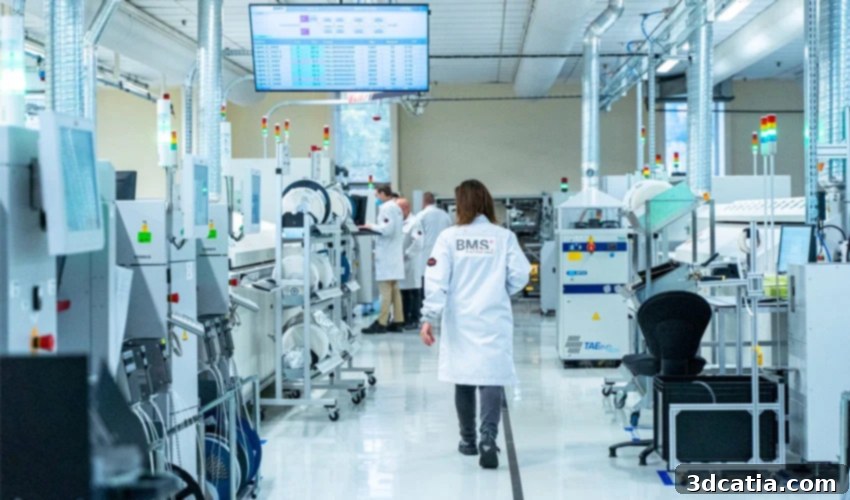
As a prominent electronics subcontractor, All Circuits stands at the forefront of designing sophisticated electronic boards for critical sectors including automotive, medical, and mass-market industries. Its Bayonne site, known as BMS Circuits, is specifically tasked with managing medium to large production runs, demanding efficiency and innovation at every turn. Recognizing the transformative potential of advanced manufacturing, BMS Circuits embarked on a strategic investment in fused deposition modeling (FDM) 3D printing technology in late 2020. This pivotal decision aimed to enhance their capabilities in producing both rapid prototypes and functional, end-use parts that are directly integrated into operators’ workstations on the production floor.
The implementation of 3D printing at BMS Circuits was significantly bolstered by the expert guidance and support of the French distributor, Atome3D. This partnership proved instrumental in navigating the complexities of additive manufacturing, enabling BMS Circuits to realize substantial reductions in manufacturing times and costs. Beyond mere efficiency gains, the technology has also provided an invaluable platform for iterative design, allowing teams to quickly test and trial multiple design iterations with unprecedented agility. Today, 3D printing is not just a supplementary tool; it has become an indispensable, integral part of the company’s operational framework, a core work instrument that the dedicated teams rely on daily for their diverse projects.
The initiative for this transformative investment was spearheaded by the Methods department at the Bayonne site, which is primarily responsible for product industrialization. Jules Cote, the insightful manager of this department, played a pivotal role. Already familiar with the myriad benefits of 3D printing, he quickly became a staunch advocate for its adoption. Cote elaborated on his decision-making process, stating: “I knew Atome3D and I made the choice to invest in a machine for the department. To invest, you have to convince management of the benefits of the technology. It was quite quick because when you look at the prices of what can be done on machining and the prices we will have internally in 3D printing, the machine is quickly profitable.” This clear financial justification highlighted the stark contrast between traditional manufacturing methods and the efficiencies offered by additive manufacturing.
Historically, many of the specialized parts essential to BMS Circuits’ operations were outsourced to external subcontractors. This reliance on third parties often resulted in prolonged manufacturing lead times, creating bottlenecks in the production cycle and limiting the company’s responsiveness. Thanks to the strategic integration of in-house 3D printing capabilities, the teams can now produce many of these crucial components directly within their facility. This shift has dramatically compressed the timeline from initial design conception to the final delivery of a tangible object. For instance, what traditionally took approximately one week to manufacture using conventional machining processes can now be completed in a mere 2 hours and 20 minutes with a 3D printer. The cost implications are equally striking: while machining typically incurred an average cost of around 200 euros per part, 3D printing has slashed this figure to approximately 10 euros per part, representing a staggering reduction that significantly boosts profitability and operational budget efficiency.
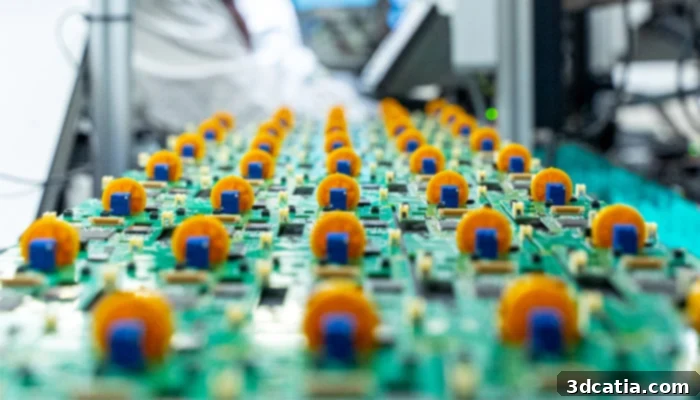
BMS Circuits manufactures electronic cards (photo credits: BMS Circuits)
The process of selecting the ideal 3D printer was greatly streamlined by the profound expertise and tailored advice provided by Atome3D. Their comprehensive understanding of the market, coupled with a thorough assessment of the French group’s specific needs and technical specifications, proved invaluable. A primary consideration for BMS Circuits was the absolute necessity of respecting stringent antistatic constraints within their electronic workshop environments. This meant that any chosen materials had to effectively mitigate electrostatic discharges, a critical factor for protecting sensitive electronic components. Furthermore, the machine itself needed to be user-friendly, ensuring a quick learning curve for the operating personnel. Responding to these precise requirements, Atome3D confidently recommended the M200 Plus from Zortrax, a robust and reliable FDM printer, paired with the specialized PLA-ESD material from 3Dxtech. This particular material is engineered to provide robust protection against electrostatic discharges, making it perfect for electronic manufacturing applications. Jules Cote further highlighted the operational philosophy behind this choice: “To make things easier, once we find a material that works well, we leave it in the machine and only run with that one at 90%. Our goal is for it to work quickly and easily.” Since its installation in October 2020, the printer has been consistently operational in the shop, delivering exceptionally satisfactory and reliable results, consistently meeting the demanding needs of BMS Circuits.
Which Parts Are 3D Printed by BMS Circuits? Driving Design and Production Efficiency
Currently, the applications of 3D printing at BMS Circuits primarily fall into two distinct yet equally critical categories, each demonstrating the technology’s versatile utility. Firstly, a significant portion of the 3D printed output consists of prototypes. These prototypes, which include various sensors and specialized tools, are meticulously created and rigorously tested in-house before the design is finalized for external subcontracting or mass production. This iterative prototyping phase is invaluable; it allows engineers to thoroughly prove designs, identify potential flaws, and implement necessary modifications with minimal cost and time investment. By iterating quickly in plastic, BMS Circuits can mitigate risks associated with expensive final manufacturing processes, such as production in aluminum. The agility provided by 3D printing affords the teams a significantly greater margin of error and experimentation, fostering innovation and reducing costly rework. The designer at the Bayonne site eloquently captures this benefit: “I draw the part and the next day I have the part in my hands. The subcontracting loop is much longer because we have to go through a quote, a manufacturing time, pull out all the detail drawings, it’s much more time consuming.” This direct comparison underscores the profound impact of additive manufacturing on accelerating the design validation cycle.
Secondly, 3D printing enables the direct in-house production of a wide array of end-use parts that are immediately integrated into the manufacturing process or deployed on the factory floor. This includes custom tooling, such as jigs and fixtures, which are vital for ensuring precision and consistency in electronic assembly. The technology is also leveraged for parts where high mechanical resistance is not the primary requirement, but rather a balance of durability, low friction, and reliable long-term performance is needed. These components, despite often experiencing minimal friction, are designed to withstand the rigors of a production environment and maintain their structural integrity over time. A notable example of such critical workplace applications produced by BMS Circuits using 3D printing are “splice clamps.” These ingenious devices facilitate the connection of two electronic component coils much more easily and quickly with a simple clip mechanism, significantly enhancing operator efficiency and streamlining the assembly process. The ability to produce such tailored, functional parts on demand dramatically improves operational flexibility and responsiveness, reinforcing 3D printing’s role as a cornerstone of modern electronics manufacturing.
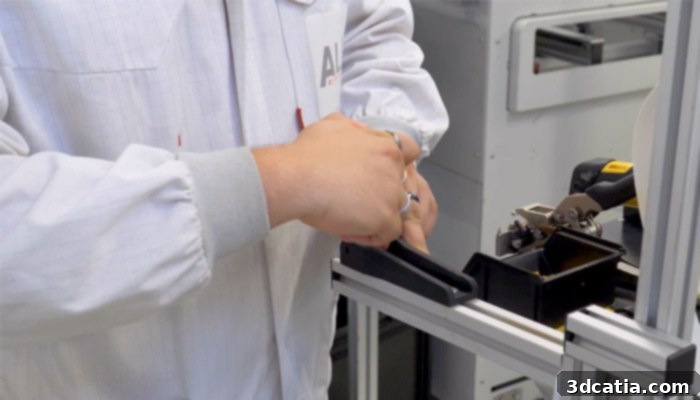
The 3D printed splice clamps (photo credits: Atome3D)
The Seamless Integration of 3D Printing in the Company’s Workflow
The Zortrax M200 Plus 3D printer has become an indispensable asset at BMS Circuits, now operated proficiently by a dedicated team of four in-house personnel. This distribution of responsibility ensures efficient management of printing priorities and scheduling, maximizing the machine’s uptime and utility across various projects. Each team member received comprehensive training directly from Jules Cote, quickly mastering the intricacies of the printing process, from CAD file preparation to post-processing. Beyond in-house expertise, the teams also benefit immensely from the readily available support of Atome3D. In the event of any technical issues or operational challenges, Atome3D’s responsive and knowledgeable support team is just a call away, a service particularly valued by BMS Circuits, who consistently praise the French distributor’s promptness and problem-solving capabilities.
The integration of 3D printing brought about significant internal changes, most notably impacting the role of the designer within the department. What was once a purely conceptual and drafting role expanded to encompass new processes, machine operation, and the nuanced understanding of printing parameters and settings – responsibilities that were previously outside their purview. Consequently, the designer’s approach to product development has evolved considerably, now incorporating specific design rules and considerations inherent to additive manufacturing technologies, often referred to as Design for Additive Manufacturing (DfAM). This evolution highlights a crucial point for any business considering integrating 3D printing: careful planning is required regarding who will manage the tool, how it will alter daily employee routines, and what new skill sets will be necessary. Jules Cote also observes that the teams have developed a significant dependency on the 3D printer. Its continuous operation enables the simultaneous advancement of multiple projects, making it a critical bottleneck if it were to malfunction. As a result, any breakdowns or errors necessitate immediate attention and rapid resolution to maintain seamless production flow and project momentum.
Ultimately, the successful integration of 3D printing at BMS Circuits was largely facilitated by the exceptional partnership with Atome3D, whose responsiveness and consistent presence proved invaluable. One of the key advantages frequently highlighted by the BMS Circuits team is the extraordinary availability of parts from Atome3D’s extensive catalog, with most components delivered within a mere 24 hours. This efficient supply chain eliminates the need for BMS Circuits to maintain a large, space-consuming internal stock of materials and spare parts, further contributing to operational efficiency and cost savings. Jules Cote concludes with a forward-looking perspective on additive manufacturing:
We are convinced of the benefits of additive manufacturing and it is an important technological shift that should not be missed since it is developing and becoming more and more commonplace. It is necessary to arrive at the 3D technology but it is necessary to do it in the good way, that is to say to be accompanied by a partner and not to launch out all alone and to buy a machine and not to know how to use it.
This powerful statement underscores the strategic importance of embracing additive manufacturing as a critical technological evolution, while also emphasizing the indispensable role of expert partnership to ensure successful implementation and maximize the return on investment. BMS Circuits’ journey stands as a testament to how strategic adoption of 3D printing, coupled with strong partnerships, can revolutionize traditional manufacturing processes.
If you want to know more about 3D printing solutions offered by Atome3D, visit Atome3D.com. What do you think of BMS Circuits’ decision to switch to 3D printing? Let us know in a comment below or on our LinkedIn, Facebook, and Twitter pages! Don’t forget to sign up for our free weekly Newsletter here, the latest 3D printing news straight to your inbox! You can also find all our videos on our YouTube channel.
*Cover Photo Credits: BMS Circuits