
The Future of Medicine: Exploring Groundbreaking Bioprinting Projects and 3D Printed Organs
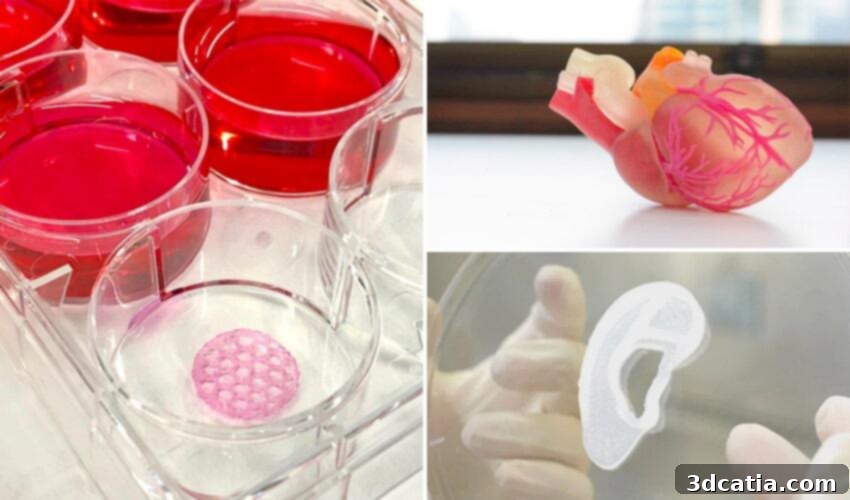
Bioprinting stands as a revolutionary method in regenerative medicine, enabling the layer-by-layer manufacturing of intricate cellular structures. Utilizing specialized bioinks loaded with living stem cells, this cutting-edge technology allows for the precise design and creation of skin, various tissues, and even entire organs. Imagine a future where a patient in need could receive a custom-designed heart, an ear, a lung, or a kidney, all intricately printed using their own cells. This represents an monumental breakthrough with the potential to transform the medical sector. While the development of viable and durable bio-printed organs for human transplantation remains a significant challenge for researchers, progress in this field is accelerating at an unprecedented pace. In the long run, bioprinting could offer a profound solution to the critical shortage of organ donors worldwide, and also provide invaluable tools for a deeper understanding of various complex pathologies. Here, we delve into some of the most prominent and inspiring bioprinting projects globally, showcasing the incredible advancements in creating 3D printed tissues, organs, and body parts.
A 3D Printed Mini Human Heart Which Beats
Pioneering research at Boston University has harnessed the power of 3D printing technology to engineer a miniature, functional replica of a human heart. This remarkable device, dubbed miniPUMP (miniaturized Precision-enabled Unidirectional Microfluidic Pump), was meticulously constructed from a synergistic combination of human stem cell-derived heart cells and microscale 3D printed acrylic components. What makes the miniPUMP truly astonishing is its inherent ability to beat autonomously, mirroring the rhythmic contractions of a natural human heart, thanks to its integrated living tissue.
Researchers envision leveraging this sophisticated heart chamber replica to gain unprecedented insights into the intricate mechanisms of the human heart. This innovative device holds immense promise for various applications, including the study of embryonic heart development, understanding the progression of heart diseases at a cellular level, and rigorously testing the efficacy of novel pharmaceutical compounds. Such a revolution in cardiac research could significantly reduce, or even eliminate, the future need for animal and human testing, accelerating drug discovery and disease comprehension in a more ethical and efficient manner.
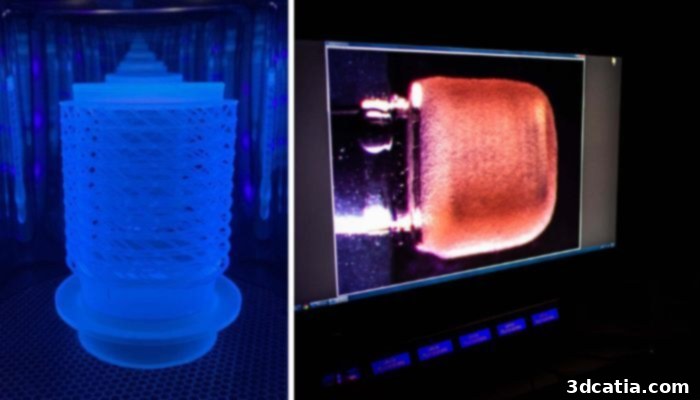
Photo: Left: A large-scale replica of the 3D-printed scaffold that supports heart tissue. (Photo credit: Christos Michas). Right: A side view image of the miniPOMPA taken in the lab. (Photo credit: Jackie Ricciardi).
A 3D-Printed Solution for Kidney Failure
Kidney failure represents a devastating global health crisis, affecting millions worldwide with limited viable treatment options. In response to this urgent need, U.S.-based Trestle Biotherapeutics is spearheading innovative research into 3D bioprinted kidney tissue. Their ambitious goal is to develop fully functional kidney tissue capable of being implanted into patients suffering from end-stage renal disease (ESRD), effectively replacing and supplementing lost kidney function. This groundbreaking therapy ingeniously integrates advanced stem cell biology with state-of-the-art 3D bioprinting techniques.
The vision of the Trestle team extends beyond merely mitigating symptoms. They aim to liberate patients from the arduous and time-consuming regimen of dialysis treatments, providing them with precious time while awaiting a compatible organ transplant. Furthermore, in the long term, this bioprinted kidney tissue holds the potential to evolve into a complete, functional replacement organ, offering a permanent solution to kidney failure and revolutionizing the landscape of renal healthcare. This personalized approach to organ regeneration promises to significantly improve quality of life and outcomes for countless individuals.
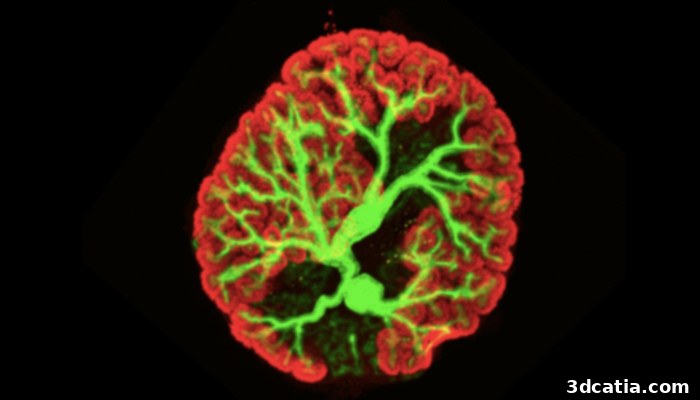
Photo credit: Trestle Biotherapeutics
3D Printing of a Cornea Could Help Eye Disease
Corneal diseases affect over 1.5 million people annually, often leading to severe vision impairment and even blindness. The scarcity of donor corneas presents a significant hurdle in treating these conditions. Addressing this critical need, a dedicated research group in Hyderabad, India, has achieved a monumental milestone by successfully developing the world’s first 3D bioprinted human cornea. This remarkable tissue was meticulously engineered using a bioink derived exclusively from human corneal tissue, without the inclusion of any artificial or synthetic additives. The team behind this initiative asserts that for every single human cornea donated, it is possible to 3D print three new corneas, drastically expanding availability.
These profound advancements in the field of ophthalmology hold immense potential for revolutionizing the treatment of debilitating eye diseases such as corneal scarring and keratoconus. While initial promising results have been demonstrated in rabbit models, signifying the safety and efficacy of the bioprinted cornea, further research and clinical trials are required before this technology can be widely applied to human patients. Nevertheless, the successful development of a bioprinted cornea represents a beacon of hope for countless individuals suffering from corneal problems, offering a future where sight can be restored through personalized, accessible solutions.
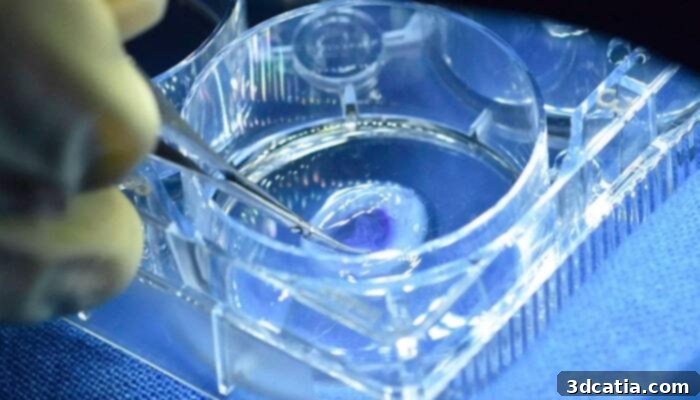
Photo credit: IANS Photo
A 3D Bioprinted Ovary for Insight into Women’s Healthcare
Women’s health has historically been an area of medicine often considered to be under-researched, leading to a significant lack of understanding regarding numerous conditions. However, the application of 3D bioprinting to create components of the reproductive system is poised to change this paradigm, offering scientists unprecedented opportunities to better comprehend cellular behavior and, consequently, various complex diseases impacting women. In 2022, a dedicated group of scientists at Tongji Hospital in China successfully developed a 3D printed artificial ovary. This innovative construct utilized cells from mice, combined with Gelatin methacryloyl (GelMA), a widely recognized hydrogel frequently employed in bioengineering applications.
Their research confirmed GelMA as a viable choice for 3D bioprinting reproductive tissues. While the material proved unsuitable for primary ovarian cells (those harvested directly from tissue), it demonstrated remarkable suitability for the in vitro growth of ovarian follicles—clusters of cells containing an immature egg cell alongside supporting cells. According to the researchers, these profound findings hold significant clinical applicability, particularly in the treatment of female endocrine and reproductive conditions. This advancement paves the way for a deeper understanding of ovarian function, fertility, and hormonal regulation, promising a future of more targeted and effective healthcare solutions for women.
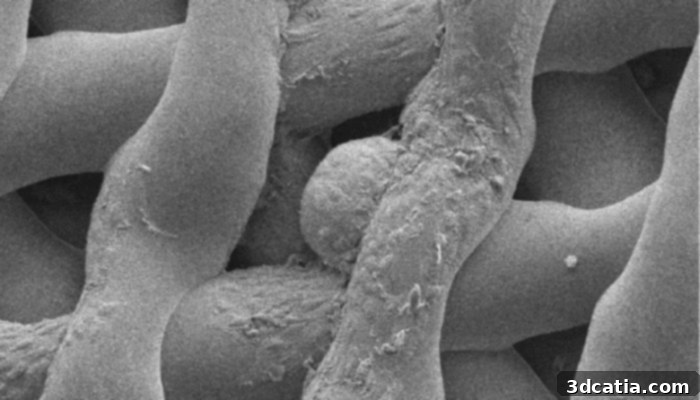
In a similar project at Northwestern University, scientists grew a mouse egg cell in a bioprosthetic ovary scaffold. (Photo credit: Northwestern University)
Bioprinting a Mini Liver in Only 90 Days
The liver, a vital organ responsible for over 500 critical functions, often faces immense challenges due to disease, injury, and the scarcity of donor organs. Addressing this, researchers at the University of São Paulo in Brazil have achieved a remarkable feat: the creation of miniature, functional human livers from readily available blood cells. This astonishing process took a mere 90 days, from the initial collection of a patient’s blood sample to the final production of the sophisticated liver tissue. These bioprinted liver organoids, developed through advanced 3D bioprinting technologies, faithfully integrate the essential functionalities of a natural liver.
These critical functions include the production of vital proteins essential for bodily processes, the storage of essential vitamins, and the secretion of bile, which aids in digestion. To achieve this complex tissue engineering, the team leveraged the Inkredible bioprinter, a product of the highly recognized manufacturer CELLINK, a leader in the bioprinting industry. The ability to rapidly produce functional mini-livers opens up exciting avenues for personalized medicine, drug screening, and disease modeling, potentially reducing the need for animal testing and offering a platform for understanding liver pathologies with unprecedented precision.
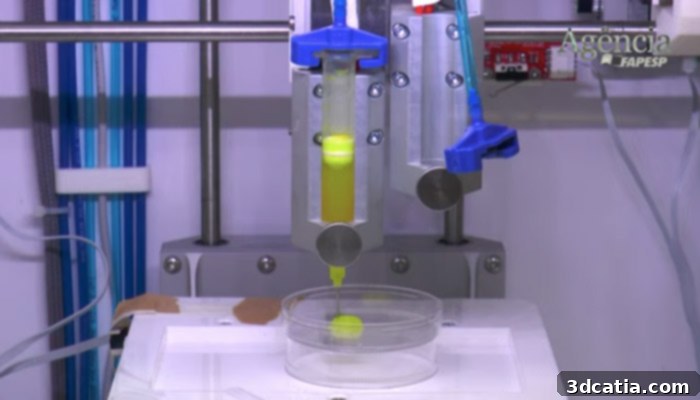
A Bioprinted Ear Project Helps a Young Girl Regain Hearing
In a truly life-changing medical achievement, a young woman in the USA suffering from microtia successfully received a 3D-printed ear transplant. Microtia is a congenital anomaly characterized by the underdevelopment of the outer ear, often leading to hearing impairment and significant psychological distress. The groundbreaking implant was meticulously manufactured by 3DBio Therapeutics, utilizing a collagen hydrogel meticulously combined with cartilage cells harvested from the patient herself. Remarkably, only a small amount of cartilage, as little as half a gram, was sufficient for this process.
The harvested cartilage-forming cells were then cultivated in a patented nutrient mixture, encouraging their rapid multiplication. These expanded cells were subsequently integrated into a specialized bio-ink. Within a mere 10 minutes, a custom-designed ear could be printed for the patient. Following the precise bioprinting process, the ear was carefully shipped in a protective case to the surgeon, who then performed the intricate transplantation. This innovative treatment method offers significant advantages over traditional approaches, which often involve constructing a prosthesis from rib cartilage, a more invasive and costly procedure. Professor Anthony Atala, Director of the Wake Forest Institute for Regenerative Medicine, underscored the immense importance of this project, stating, “This is a major breakthrough for the field of regenerative medicine. 3D printing aims to offer a number of advantages over handmade artificial tissue, including scaling, higher design accuracy and lower cost.” This success highlights the potential of bioprinting to deliver personalized, aesthetically pleasing, and functional solutions for complex congenital conditions.
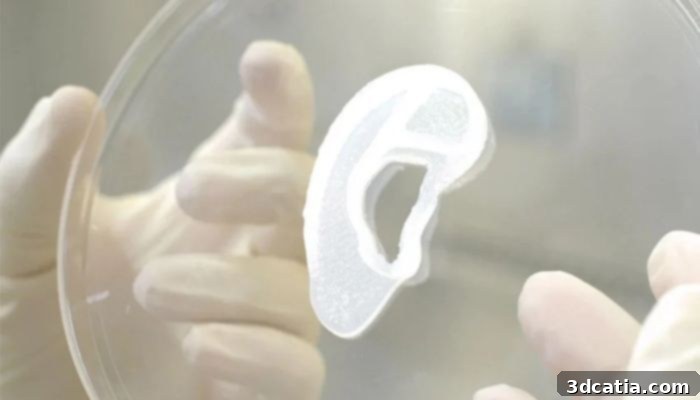
Photo credit: 3DBio Therapeutics
A Bioprinted Pancreas to Help Fight Diabetes
The pancreas is an indispensable organ that plays a crucial role in maintaining blood sugar levels by producing insulin. When this vital function is impaired, it leads to serious health consequences, primarily diabetes. With over 463 million people globally affected by diabetes, the urgent need for more permanent and effective solutions to this chronic disease has never been more pressing. 3D bioprinting is emerging as a critical technology in this fight, offering unprecedented avenues for treatment.
A prime example of this innovation comes from Polbioionica, a Polish company spun out from a multidisciplinary team of scientists from the Foundation for Research and Development of Science. In March 2019, this pioneering team was the first to successfully use bioprinting to create a bionic pancreas complete with a full vascular system. Polbioionica is now dedicated to further developing these fully functional organs using proprietary bioinks, pancreatic islets, and the patient’s own stem cells. Their vision is to create tailor-made solutions that not only address the escalating worldwide organ shortage but also prevent the development of severe complications often associated with diabetes, all while significantly reducing long-term healthcare expenses. This personalized approach to pancreatic regeneration promises a future where diabetes management moves beyond symptom control to actual cure.
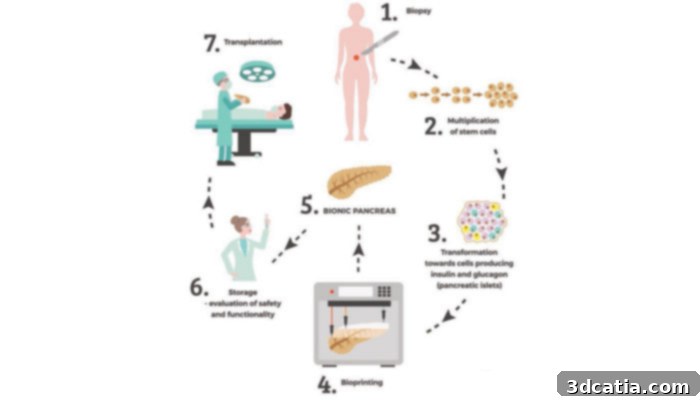
Photo Credits: Fundacja Badań i Rozwoju Nauki
Poietis and its 3D Bio-printed Skin Project
Poietis, a leading French company, specializes in advanced 3D bioprinting solutions, offering a range of innovative 3D bioprinters known as Next Generation Bioprinting. The company has gained particular recognition for its groundbreaking research and development in bioprinted skin. Poietis proudly presents Poieskin, a full-thickness human skin model entirely produced through precise 3D bioprinting technology. In intricate detail, Poieskin comprises a dermal compartment, one of the three primary layers of skin situated between the epidermis and the hypodermis. This dermal layer is composed of fibroblasts, specialized cells of the dermis, embedded within type 1 collagen. It is then meticulously covered by an epidermis arranged in superimposed layers, which collectively form a realistic 3D pattern.
This advanced 3D bioprinted skin holds immense potential for a wide array of medical applications, particularly for individuals who have suffered severe burns, battle skin cancer, or have endured other traumatic injuries. Beyond therapeutic uses, Poieskin also serves as an invaluable model for cosmetic testing and pharmaceutical research, offering a more ethical and accurate alternative to animal testing. According to Poietis, the exceptional precision and high resolution of their 3D bioprinter enable the fabrication of highly controlled 3D cellular structures and reproducible skin tissue models. Recently, the French manufacturer embarked on its first clinical trial utilizing their 3D bioprinter, marking a significant step towards real-world application. Furthermore, Poietis has successfully installed its Next Generation Bioprinting platform within a hospital setting, signaling a future where implantable biological tissues can be manufactured directly at the point of care.
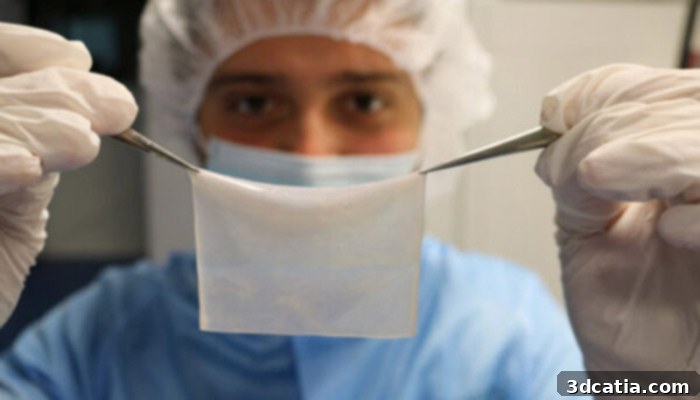
Photo credit: Poeitis
The First 3D Printed Nose Reconstruction
Patients may require prosthetics for a myriad of reasons, particularly following surgeries for various diseases where the loss of a body part is unavoidable. While treating the underlying illness is paramount, the sudden alteration of one’s appearance can have profound psychological effects on patients. Fortunately, bioprinting offers a revolutionary solution to this challenge. A groundbreaking case from the Toulouse University Cancer Institute and CERHUM exemplifies this, involving a patient who had lost a significant portion of her nose and the front part of her palate during treatment for nasal cavity cancer.
Through an innovative bioprinting procedure spearheaded by Dr. Agnes Dupret-Bories and Dr. Benjamin Vairel, the patient was able to effectively “grow” her own nose, achieving a complete and functional reconstruction. The multi-stage process began with the implantation of a 3D printed biomaterial under the skin of the patient’s forearm. This strategic placement encouraged vascularization, the natural process of growing new blood vessels into the tissue, essential for its viability. After a period of two months, the medical device was fully colonized with the patient’s own blood vessels. It was then surgically transplanted to the nasal area and successfully revascularized, resulting in a fully working nose, organically integrated and made entirely from her own cells. This incredible achievement not only restores physical form but also significantly enhances the patient’s quality of life and self-esteem, demonstrating the transformative power of personalized bioprinting in reconstructive surgery.
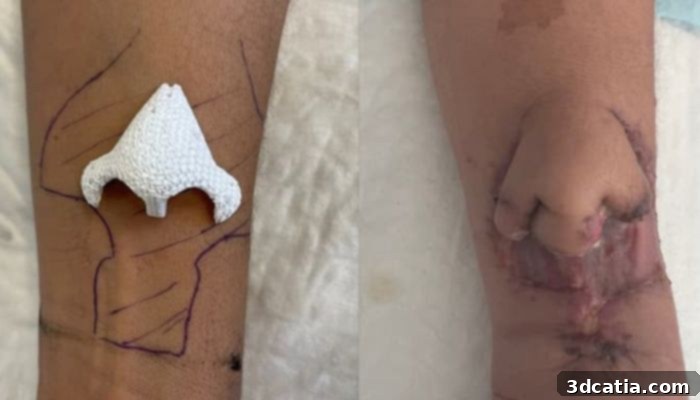
Photo Credits: CERHUM/Toulouse University Hospital
For those who prefer visual content, you can discover more exciting applications of 3D bioprinting and the future of regenerative medicine in our engaging video clip below.
What are your thoughts on these incredible 3D bioprinting projects and the potential for bioprinted organs to revolutionize healthcare? We encourage you to share your insights in a comment below or join the conversation on our LinkedIn, Facebook, and Twitter pages! Don’t forget to subscribe to our free weekly Newsletter here to receive the latest 3D printing news directly to your inbox. You can also explore all our videos and interviews on our YouTube channel for more in-depth content.