Applications
ZSFab Announces First U.S. Clinical Use of 3D Printed Impants in Spinal Surgeries
It seems that every week, there is a new innovative use of 3D printing in the healthcare sector. Whether for implants, bioprinted organs, prostheses & orthoses, dentistry, or any of the innumerable applications for additive manufacturing in the wide medical…
- 3 min read
- Applications
- Six more stories
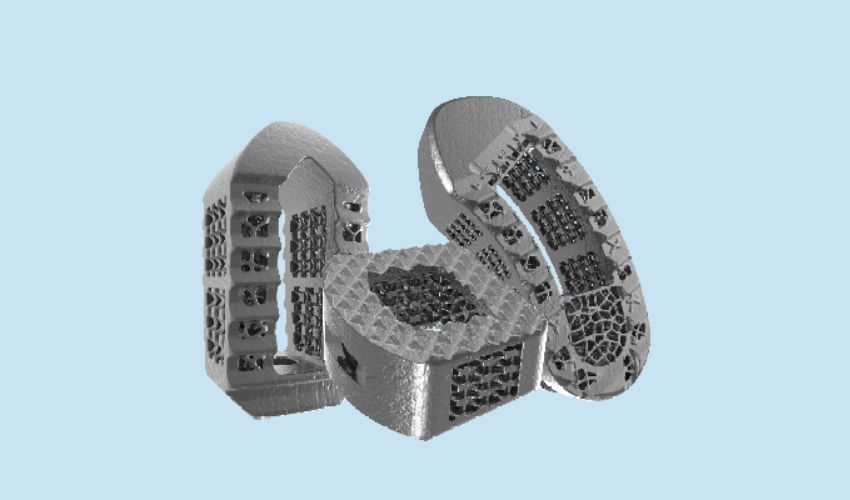
It seems that every week, there is a new innovative use of 3D printing in the healthcare sector. Whether for implants, bioprinted organs, prostheses & orthoses, dentistry, or any of the innumerable applications for additive manufacturing in the wide medical field, it is clear that the technologies have a clear role to play in this sector. Including this latest news! ZSFab has announced the first clinical use of its InterConnect™️ 3D Printed Ti Lumbar Interbody System in the United States.
The Greater Boston-based company is dedicated to the creation of high-performance, patient-matched and customized medical implants, surgical guides and other additively manufactured end-use products. And this is not their first success. Before now, the company has had received FDA 510(k) clearance for its 3D printed lumbar cages and 3D printed cervical interbody systems. With its ZSFab technology, the company employs titanium 3D printing and proprietary algorithms to create orthopedic and spinal devices that are able to promote bone growth while being a better fit to the patient and his or her unique needs.
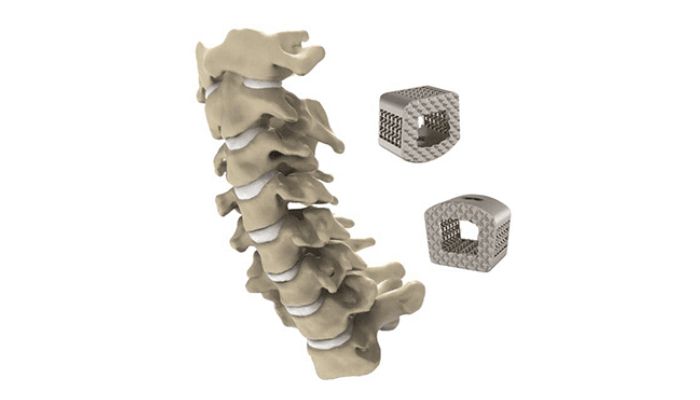
Titanium spinal implant parts made by ZSFab
As Dr. David Ma, Director of Research and Development for ZSFab, describes it, “ZSFab specializes in creating implants that better harmonize with the patient’s biomechanics by addressing issues like load distribution, stress on adjacent segments, and construct stability. To help ensure lasting stability, our optimized designs also help promote beneficial elastic deformation within the lattice structures to induce mechanical stress, activating osteoblasts for new bone growth and achieving a more efficient fusion process.”
More from the desk
Six other notes from the rest of the bench.
 ApplicationsExactech Performs First Ankle Surgeries with 3D Printed Tibial ImplantsIn recent years, 3D printing has taken off in the medical sector, bringing innovations in a variety of fields. From the creation of custom-made prostheses and orthoses to the personalization of drug treatments, this technology is transforming healthcare. Today, we…
 SoftwareWASP Unveils New Parametric Design Software AppWASP holds a significant position within the construction 3D printing sector. The company from Italy has introduced the WASP App, a parametric design software aimed at enhancing the user experience in crafting with clay. Clay has emerged as a primary…
 News3D Printing Meets Tradition: A Look at the Bauhaus University Weimar3D printing is already finding numerous applications in traditionally craft-based and artistic fields. At the intersection of design, technology, and innovation, it is playing an increasingly important role in creative disciplines, including, of course, higher education of those
  NewsTop 5 Videos: Delve Into Faster 3D Printing With 3D ExplainedSunday is finally here! And to help you start your week off on the right foot, we are once again sharing the top 5 3D printing videos that we found. To kick it off, learn from our very own Elliot…
 News3D-TOKEN: 3D Printing Cryptocurrency on the BlockchainIt’s official: the inevitable has happened. The blockchain hype has reached 3D printing, for better or for worse. Perhaps this is an ode to the advancement of 3D printing in the last few years, it is now considered a technology…
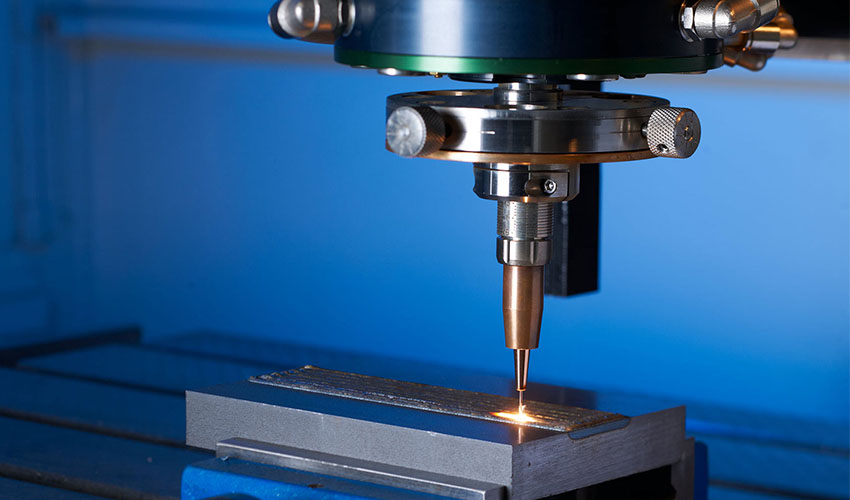 PrintersCHIRON Group launches first metal 3D printer for wire and powderThe CHIRON Group, specialist in the field of CNC equipment such as CNC-controlled vertical milling, has developed the AM Cube. It is the group’s first 3D printer for manufacturing larger and more complex metal components. The AM Cube is based…