Applications
The World’s First 3D Printed Train Station Is Being Made in Japan
Anyone who regularly travels by train will be familiar with the gulf between the high-tech solutions in the city and outdated commuter trains in the countryside. While train stations in the cities can be veritable technological strongholds and hubs for…
- 3 min read
- Applications
- Six more stories
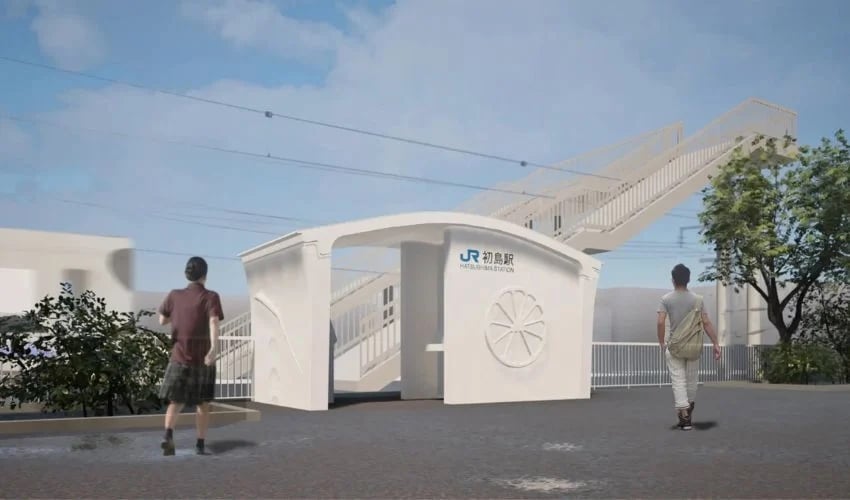
Anyone who regularly travels by train will be familiar with the gulf between the high-tech solutions in the city and outdated commuter trains in the countryside. While train stations in the cities can be veritable technological strongholds and hubs for the latest generation of high-speed trains, in rural areas you can find yourself waiting in run-down shacks for leisurely trains from the last century. This is not only the case in areas like the United States where train infrastructure is outdated, but also in Japan, usually shown as a paragon of fast and convenient rail transportation. Away from Tokyo, the center of modernity, rural train stations are often still made of wood and are particularly prone to decay. In order to renovate these outdated stations, West Japan Railway Co (JR West), one of the major companies running the nation’s famous bullet trains, is now turning to 3D printing and has announced plans for the first 3D printed train station.
This first 3D-printed station is intended to replace the existing wooden structure of Hatsushimo station on the Kisei-Arita line in Wakayama Prefecture. The new single-storey building will measure 2.6 x 6.3 x 2.1 m and cover around 10 square meters. It will be printed from reinforced concrete by Serendix, a company specializing in the 3D printing of affordable houses. The Osaka-based company combines Japanese expertise in the construction of earthquake-proof buildings with modern construction technology and produces new buildings using robotic extrusion.
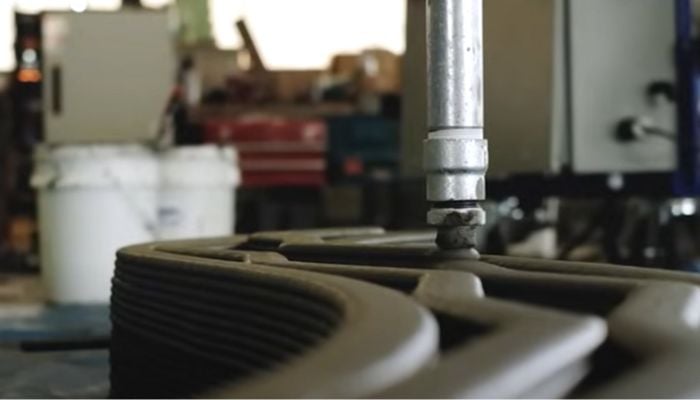
Serendix prints new buildings using concrete extrusion (photo credits: TMA / Serendix)
The individual parts of the 3D-printed station building will first be manufactured and then assembled into a complete building on site using a crane. This will take place at record speed, as according to JR West, the construction will only take six hours and will take place on the night of March 25 – between the last evening train and the first in the morning.
More from the desk
Six other notes from the rest of the bench.
 NewsWEBINAR: Manage Your Production alongside Shopfloor Data—Maximizing OEE with EOS ConnectivityA successful additive manufacturing operation relies on more than just advanced machines or powerful software—it depends on how seamlessly the two work together. Even with the best hardware and most cutting-edge software, productivity can stall if they aren’t properly integrated.
 MaterialsMakerBot expands technical materials compatible with its machinesThe American manufacturer MakerBot made its comeback last year by presenting a new 3D printer called METHOD, it is a desktop machine, yet a professional solution. During Formnext 2019, the company launched an experimental extruder designed by MakerBot LABS and…
 NewsSwarovski Turns to xolo to 3D Print Glass CrystalYou’re probably familiar with Swarovski, the famous jewelry manufacturer renowned for its work in glass crystal. The company has just signed a collaboration with an additive manufacturing player, xolo. This manufacturer has developed a volumetric 3D printing technology that
 GuidesSneakprint Creates the Perfectly Fitted Pair of Sneakers Using 3D PrintingAdditive manufacturing is increasingly making its mark in the fashion industry, particularly appealing for its creative freedom and customization. From 3D-printed clothing by Mark Zuckerberg to 3D-printed silver jewelry and 3D-printed flip-flops by Asics, 3D printing continues to
 PrintersMINGDA 3D Is Paving the Way for Larger-Scale IDEX Printing With the MD-400D 3D PrinterOne of the terms that we have increasingly heard in the 3D printing field is IDEX. Meaning independent dual extruders, the technique allows for two print heads to move independently of each other. Each has a nozzle and can print…
 ApplicationsLazer Sport Unveils 3D Printed Bicycle Helmets With KinetiCore TechnologyIn recent years, the emergence of 3D printing within the cycling realm has become increasingly prevalent. We’ve explored innovations such as more ergonomic saddles, enhanced bike comfort, and even fully customizable bicycles like those created by INTENSE and Aston Martin. T