Materials
MakerBot expands technical materials compatible with its machines
The American manufacturer MakerBot made its comeback last year by presenting a new 3D printer called METHOD, it is a desktop machine, yet a professional solution. During Formnext 2019, the company launched an experimental extruder designed by MakerBot LABS and…
- 3 min read
- Materials
- Six more stories
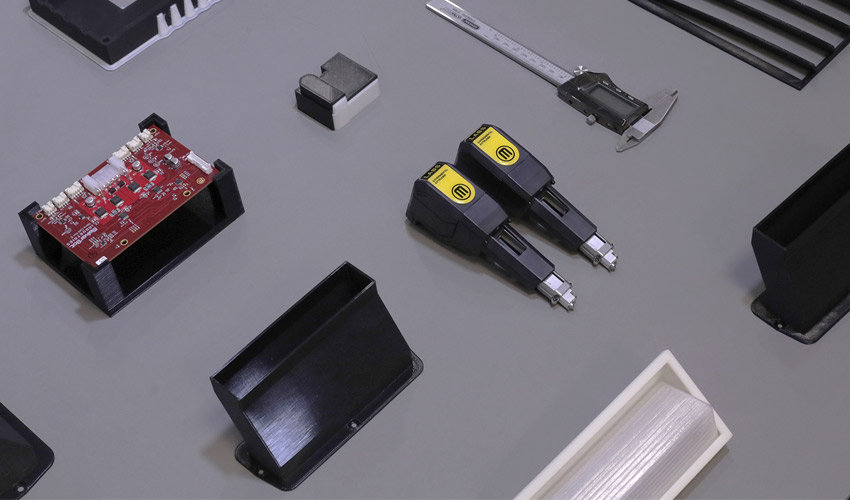
The American manufacturer MakerBot made its comeback last year by presenting a new 3D printer called METHOD, it is a desktop machine, yet a professional solution. During Formnext 2019, the company launched an experimental extruder designed by MakerBot LABS and a METHOD materials development program. The manufacturer’s objective is to expand the technical materials compatible with its machines today so that the user can go further in applications, especially industrial ones. The 3D printer manufacturer has already chosen material manufacturers to partner with: KIMYA, Jabil, Polymaker and Mitsubishi Chemical.
When we talk about FDM 3D printing, it is often the material that makes the difference, especially on more professional machines. In recent years, there has been a real growth of polymers available on the additive manufacturing market, with more companies seeking solutions that are adapted to their requirements. This is why high-performance thermoplastics have exploded, but also composite materials (carbon fibre, glass fibre, etc.), which are lighter but very resistant. We also notice that machine manufacturers are more attentive to creating partnerships with material manufacturers in order to certify several filaments on their 3D printers, thus offering the user a guarantee of quality and a better experience, such as Ultimaker, Raise3D and more recently MakerBot.
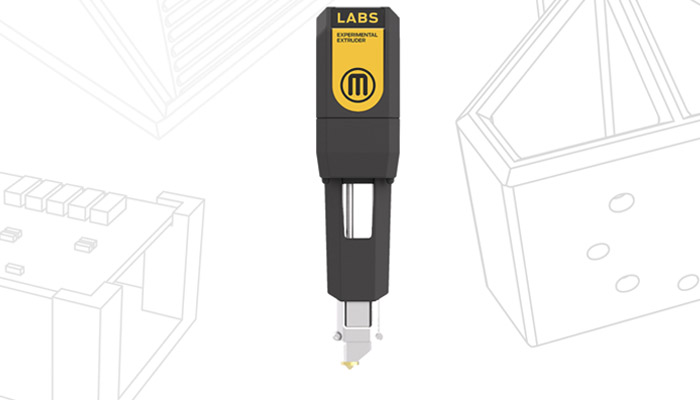
MakerBot’s experimental extruder | Credits: MakerBot Labs
An experimental extruder for the METHOD and METHOD X
MakerBot LABS has developed a new extruder with a new hot end to easily change the nozzles, allowing a wider range of compatible materials. In the future, the solution should be fully customizable, with extensive printing settings supported by MakerBot Print software. Several nozzle models are therefore available: a standard 0.4 mm, a brass 0.6 mm for flexible materials, and a stainless steel 0.6 mm for abrasive materials.
More from the desk
Six other notes from the rest of the bench.
 NewsBentley is Expanding its 3D Printing CapabilitiesUK-based Bentley Motors Limited, a manufacturer of luxury cars and SUVs and a subsidiary of the Volkswagen Group since 1998, has announced a £3 million investment in its 3D printing facility, based in Crewe, England. The ultimate goal of the…
 PrintersThe Lumia X1 Is Overcoming Limitations in Resin 3D Printing With an Innovative Hybrid ProcessSince stereolithography, the first additive manufacturing technology, was invented in the early 80s, there has always been a place for resin 3D printing in the sector. Currently, a number of different variations exist but the two most common remain DLP…
 PrintersImproving 3D Scans with AESUB SpraysThe German company AESUB has developed a variety of 3D scanning sprays that improve the quality of scans, giving them a clear, matte finish. There are currently two products available: AESUB Blue, a mattifying spray that evaporates just a few…
 Materials#3DStartup: From Vases to Facades—Concrete 3D On the Many Possibilities for 3D Printing With ConcreteWe are hearing more and more often about projects in which concrete 3D printing is being implemented. Most of these projects are in the construction sector. In the past, we have reported on a 3D-printed parking lot, a concrete tower,…
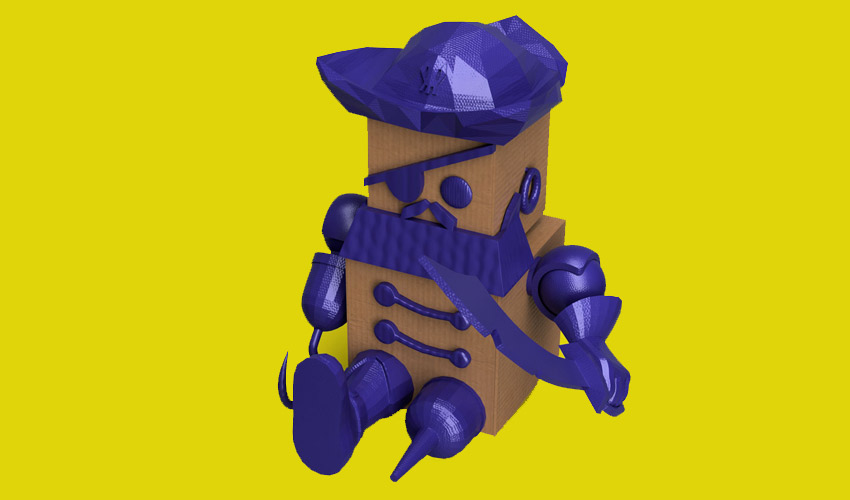 NewsMake a 3D printed pirate at home with cardboardDuring this period of quarantine, it is not always easy to keep busy: colouring, puzzles and board games, these can do the trick! So why not turn on your 3D printer to design a 3D printed pirate using cardboard boxes?…
 NewsWohlers Report 2019: materials saw record growthEvery year, the American firm, Wohlers Associates, Inc. unveils its industry-leading report on additive manufacturing. The Wohlers Report 2019 is therefore its 24th edition and contains wide-ranging data on AM materials’ development and consumption. The report showed a strong gro