Materials
Why Does 3D Printed Stainless Steel Corrode in a Marine Environment?
Why is 3D printed 316L stainless steel prone to pitting corrosion in seawater? That is the question researchers from Lawrence Livermore National Laboratory have been diligently trying to answer. Their thorough study of this metal, utilized in naval applications, aims…
- 3 min read
- Materials
- Six more stories

Why is 3D printed 316L stainless steel prone to pitting corrosion in seawater? That is the question researchers from Lawrence Livermore National Laboratory have been diligently trying to answer. Their thorough study of this metal, utilized in naval applications, aims to uncover the underlying causes of its degradation. Their findings suggest that slag, left behind during laser melting, accumulates on the surface of the material, resulting in the formation of cavities or pits.
Used in many industrial applications, metals are often subject to corrosion, i.e., degradation by chemical reactions caused by the environment. Corrosion can be controlled, but it’s important to know what causes it. There are several forms of corrosion, including pitting. In concrete terms, the metal undergoes degradation of its protective oxide layer, and loses electrons in the process. When present in an aquatic environment, an electrochemical reaction occurs, resulting in the creation of small holes, hence the name “pitting corrosion”. The severity of the repercussions for the part in question varies depending on the depth of these cavities. Interestingly, controlling pitting corrosion in seawater poses significant challenges. This is precisely why naval applications opt for 316L stainless steel, known for its exceptional mechanical properties and resistance to such pitting corrosion.
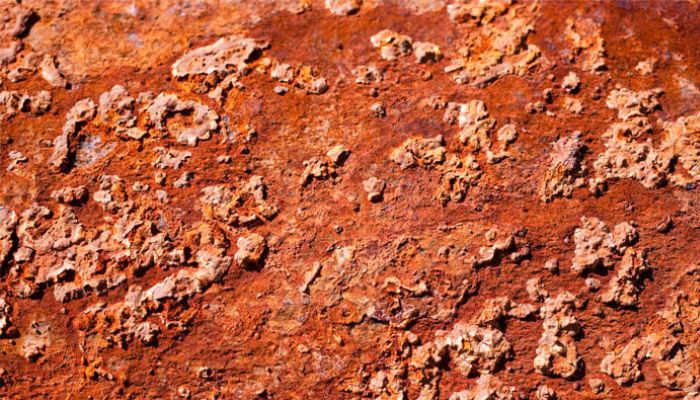
Meta degradation (or corrosion).
However, can 3D printed 316L stainless steel effectively mitigate pitting corrosion? With the marine industry showing a growing interest in additive manufacturing, both in polymer and metal, this question gains significance, particularly concerning metal certification. This is the very reason why researchers at Lawrence Livermore National Laboratory embarked on this study. Lead author Shohini Sen-Britain explains, “Pitting corrosion is extremely difficult to understand due to its stochastic nature, but we determined the material characteristics that cause or initiate this type of corrosion. While our slags looked different than what had been observed in conventionally manufactured materials, we hypothesized that they could be a cause of pitting corrosion in 316L.”
More from the desk
Six other notes from the rest of the bench.
 News500 snorkeling masks are transformed into 3D printed respiratorsAfter developing the 3D printed valves for a hospital in Italy, Isinnova has developed a new design to turn a snorkeling mask into an emergency CPAP mask. A CPAP mask helps patients who can still breathe spontaneously on their own…
 ApplicationsStratasys Showcases Automotive Applications at RAPID + TCT 2025While at RAPID + TCT 2025, one thing that was very obvious was the prevalence of applications on the show floor and in conference sessions. This follows a trend that we have seen for quite some time now, with companies…
 GuidesRomantic STL Files to Celebrate Valentine’s DayMost likely originating in ancient Rome, Valentine’s Day is a celebration of love, celebrated, as you know, on February 14. So, we’ve put together some ideas for STL files that you can 3D print at home. Whether it’s for your…
 NewsMetal and Polymer Series Production with CAMS Technology From FarsoonFarsoon Europe GmbH, a manufacturer of 3D printing systems for metals and plastics, serves the entire global market with its solutions. Farsoon has made a name for itself with its Continuous Additive Manufacturing Solution (CAMS). This conveyor system with exchangeable…
 NewsWe’ve Been Here Since 2014: 3Dnatives Unveils a New Identity for 3D Printing’s Next EraIf you logged onto the site today, you probably noticed that things look a little different around here! We are incredibly excited to officially share the new 3Dnatives brand identity with you. While it is a big visual change, this…
 NewsThe global additive manufacturing market accounts for $ 9.3 billion in 2018While the company Materialise gave us some predictions for 2019 trends in additive manufacturing, the US firm SmarTech Publishing brings us the results for the past year. They say the additive manufacturing market generated $ 9.3 billion in 2018, an 18% increase…