News
What is the current state of microscale 3D printing?
Microfabrication is the process of fabricating miniature structures of micrometer scales and smaller. Historically, microfabrication was first used in the electronics industry to miniaturize the size of devices. In fact, over the years, you might have noticed your electronic devi
- 3 min read
- News
- Six more stories
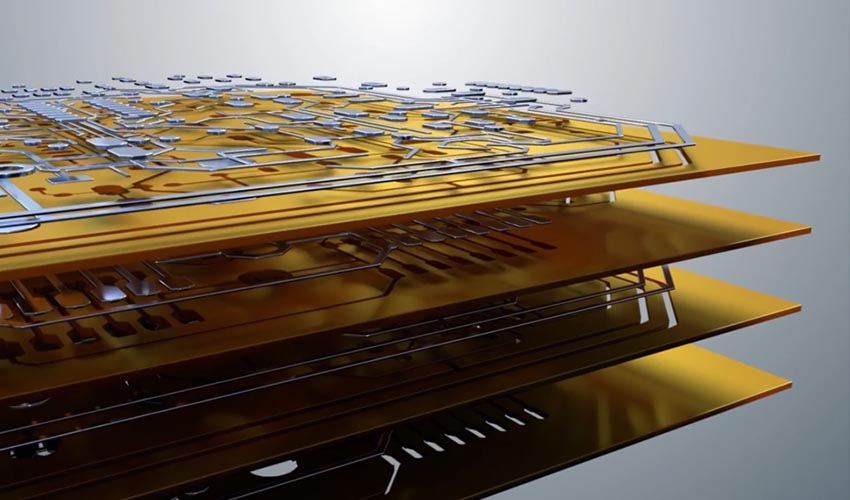
Microfabrication is the process of fabricating miniature structures of micrometer scales and smaller. Historically, microfabrication was first used in the electronics industry to miniaturize the size of devices. In fact, over the years, you might have noticed your electronic devices have been getting smaller and sleeker. Component sizes that were in tens of micrometers became single-digit micrometers, and then hundreds of nanometers, and then went down to a few tens of nanometers, where they stand today. As a result, what used to be called microfabrication was rebranded as nanofabrication, although the governing principles have remained essentially the same. To meet the challenge of shrinking component size in the electronics industry, new tools and techniques are continuously being developed. One of these techniques is microscale 3D printing. So what applications are enabled by microscale additive manufacturing? And more generally what are the benefits of micro 3D printing?
First of all, we should note that in the world of additive manufacturing, the electronics industry is one of the least well versed in the technology. If we consider that aerospace was one of the first sectors to adopt and develop 3D printing, electronics is essentially the opposite. Nevertheless, additive manufacturing can bring benefits and new capabilities to this sector by enabling a new-level of customization for micro and nanoscale components.
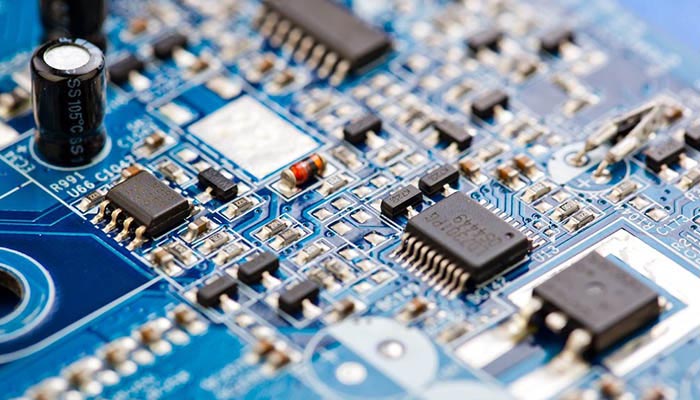
To meet the continuing challenge of shrinking component size in microelectronics, new tools and techniques are continuously being developed. The main driver of this technology being integrated circuits, such as the one above.
Indeed, microscale additive manufacturing was first developed to benefit the electronics industry, but today the technology is moving beyond this field. For example, the technique could be used for medical applications, where nano-sized components could enter the body to cure diseases, or for micro-optical elements. In the following piece, we look at multiple angles of the relationship between additive manufacturing and micro/nano fabrication to give you an overview of the current state of this technology and its applications in and beyond the electronics sectors.
More from the desk
Six other notes from the rest of the bench.
 ApplicationsHANX: The First 3D Printed Drone with US NDAA CertificationIn the midst of the US Department of Defense’s race to achieve “drone dominance,” an ambitious plan that envisions the acquisition of up to 300,000 single-use attack drones by 2028, the Marine Corps has taken an initial step. This involves…
 PrintersWho Are the American Metal 3D Printer Manufacturers?Additive manufacturing has spread all over the globe, especially in the United States, where it all started. From 1987 when stereolithography was first introduced by Chuck Hull to the advent of the first metal AM technologies in the 1990s, AM…
 ApplicationsThe Formula One Williams Racing Team Joins Forces with Nexa3DOn March 10, the Williams Racing Formula One team announced its new collaboration with resin 3D printer manufacturer Nexa3D. This is yet another partnership between additive manufacturing and Formula One, showing the importance of 3D printing in the automotive sector.…
 NewsWhat Did Attendees Think of RAPID + TCT 2024?Now that RAPID + TCT 2024 has come to an end, one question remains: who exactly enjoyed the event the most? Well, according to our latest video that answer is pretty simple, it was the attendees! With people both in…
 ApplicationsHRE3D+, the second-generation of the world’s first 3D printed titanium wheelLast week Rapid + TCT 2019, one of the most important events in additive manufacturing, came to an end. The second-generation of the first 3D printed wheel made of titanium – the HRE3D+ on a 2019 Ford GT – was…
 NewsTop 5 Videos: Aerogel microstructures using 3D printingThis week we found the top 5 videos about 3D printing and the way additive manufacturing is changing production. The technology has infiltrated many sectors, from medical to automotive – check our selection of the week to keep up with the innovations! If you enjoy these, you&hell