Applications
Welsh Companies Turned to Ancient Jellyfish for World First Bioprinting Project
Bioprinting is one of the most exciting applications for the 3D printing in the medical sector. Enabling the possibility to create organs or more, it truly represents the peak of human innovation. In the latest news, after receiving SMART Cymru…
- 3 min read
- Applications
- Six more stories
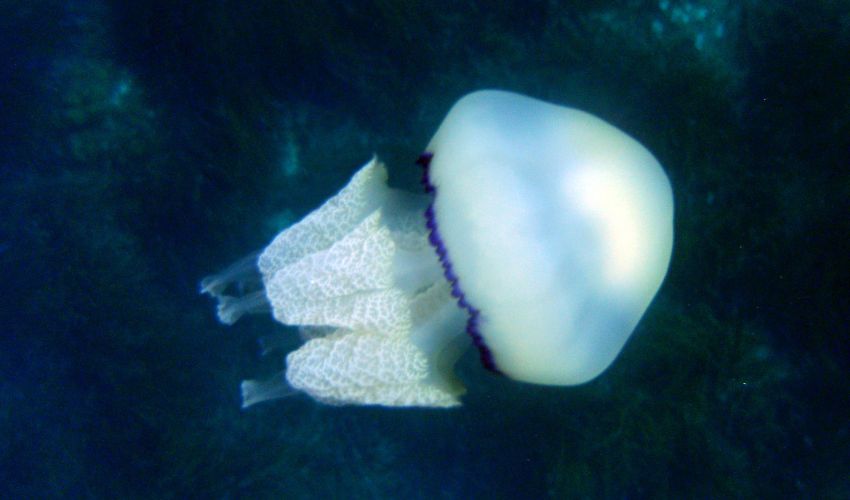
Bioprinting is one of the most exciting applications for the 3D printing in the medical sector. Enabling the possibility to create organs or more, it truly represents the peak of human innovation. In the latest news, after receiving SMART Cymru innovation funding, Jellagen and Copner Biotech, were able to successfully complete a world-first, next-generation precision bioprinter. The key? An ancient jellyfish species that helped them to create the bioinks for the bioprinting solution.
The successful completion of the project was thanks to a SMART Cymru Innovation Award of £123,724 to develop next generation 3D bio technologies. SMART Cymru was designed to help support Welsh businesses, like Jellagen and Copner Biotech, to develop, implement and commercialize new products, processes, and services. In this case, this was achieved through the creation of a unique bioprinting software and the hardware platform along with the prototype bioinks. The two companies hope that their solution will be able to be used for both research and tissue engineering in the near future.
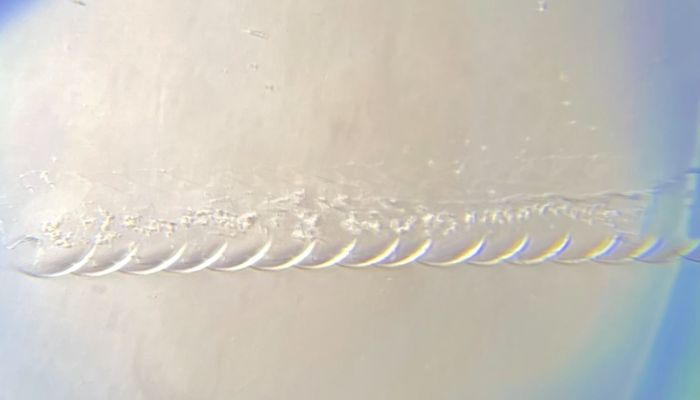
40X magnified captured image of a bioprinted Collagen Type 0 line, using GRAPE-S1’s microfluidic settings (photo credits: Jellagen)
Professor Andrew Mearns Spragg, Founder and Chief Scientific Officer of Jellagen, further commented, “Although not yet commercially available, SMART Cymru’s funding has enabled a world-first partnership in 3D bioprinting with Copner Biotech. We are delighted with the data outputs of this project that has clearly demonstrated the further potential use of our Collagen Type 0 biomaterials for future bio-ink development. We are very excited to see how this technology can be further developed towards medical tissue engineering applications and cell culture research market solutions.”
More from the desk
Six other notes from the rest of the bench.
 Applications3i-PRINT project creates 3D printed front end on classic Caddy 1 carVolkswagen is breaking into a full sprint with 3D printing following their recent project on 3D printing spare parts for their older modeled cars. In this latest development from the company, they are now working on a project alongside Altair,…
 MaterialsAll You Need to Know About 3D Printing with Cobalt-ChromeCobalt-chromium (or cobalt-chrome) is a metal alloy that has gained prominence in a variety of industrial applications, particularly in additive manufacturing. With its unique combination of strength and durability, cobalt-chrome is ideal for creating parts that require high prec
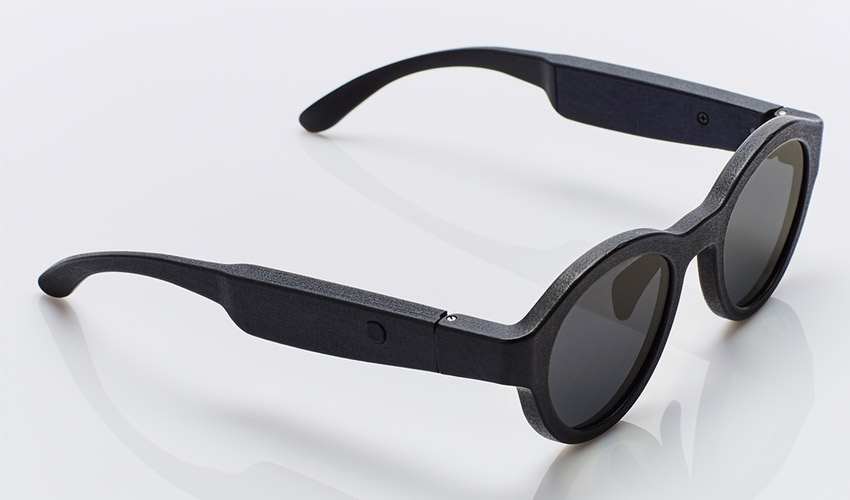 News3D Printed Smart Glasses to Help Dyslexic ChildrenAbeye is a young French company supported by Atol Les Opticiens. The medtech startup manufactures electronic glasses intended to improve everyone’s well-being. After the success of its first pair, Spectalert, which detects falls in the elderly, Abeye is now launching&hellip
 NewsSPE Has Acquired 3Dnatives, Expanding its Expertise in the Additive Manufacturing SectorSociety of Plastics Engineers (SPE) has announced the acquisition of 3Dnatives, the media platform dedicated to additive manufacturing. Founded in 1942 and now operating in 84 countries with over 22,500 members, SPE unites plastics professionals worldwide and is dedicated to&hell
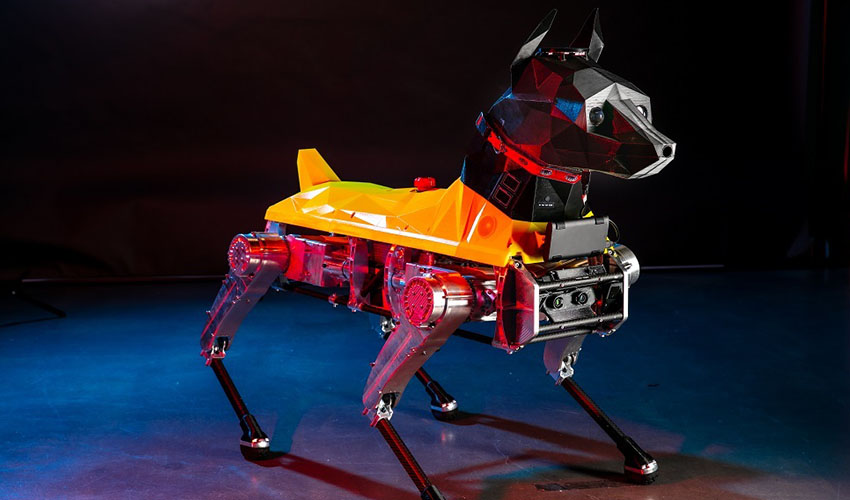 NewsScientists create 3D printed robot dogA group of scientists at Florida Atlantic University (FAU) have created Astro, a robodog. Using deep learning and artificial intelligence (AI) this quadruped robot is capable of seeing and hearing. This prototype was created at FAU’s Machine Perception and Cognitive…
 NewsLeading Innovations on Display at Formnext 2021As you may already know, what truly astonished us this year was how much AM has advanced since the last physical Formnext, all the way back in November 2019. From the growing importance of industrialization in the sector as well…