News
The US Army transforms a steel alloy to 3D print ultra-resistant parts
A team of researchers from the U.S. Army Combat Capabilities Development Command Research Laboratory says they have adapted a custom-made steel alloy to be compatible with 3D powder-bed fusion printing technology. This new material should be able to produce parts…
- 3 min read
- News
- Six more stories
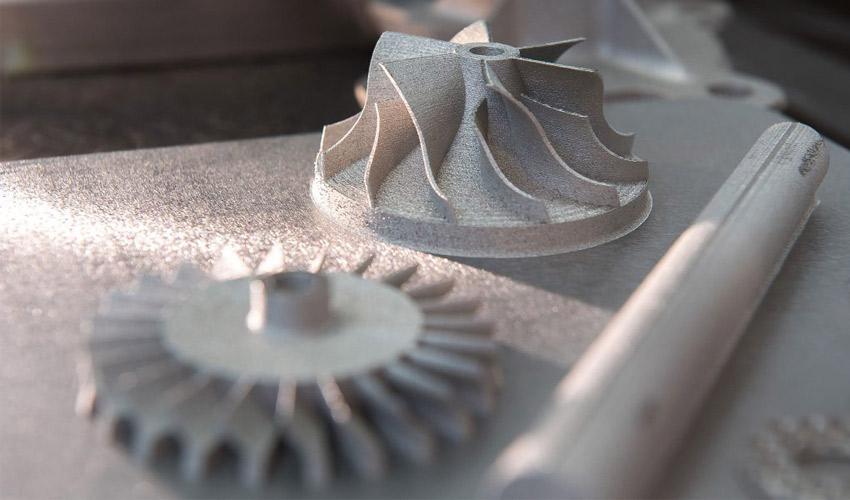
A team of researchers from the U.S. Army Combat Capabilities Development Command Research Laboratory says they have adapted a custom-made steel alloy to be compatible with 3D powder-bed fusion printing technology. This new material should be able to produce parts 50% stronger than materials currently available on the market. They should also be much more complex in terms of geometry. A quite promising application for the American Air Force!
Additive manufacturing has repercussions in the military sector, particularly on the entire logistical aspect: technology now offers more efficient ways to produce spare parts on demand, thus improving manufacturing times and supply flows. However, the cases of application are quite limited in the military field, which is very demanding in terms of quality and certification. However, the research presented by this US military team could accelerate the situation.
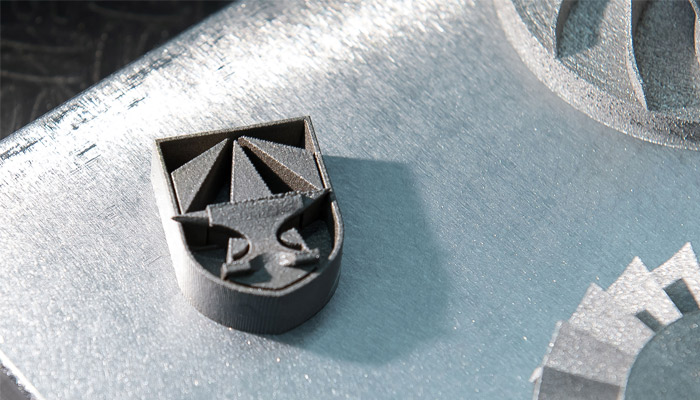
Credits: David McNally
An alloy transformed into a 3D printing material
The researchers explain that they use the material AF96, an extremely resistant steel alloy originally developed by the US military to manufacture bunker buster bombs. Apparently, they turned it into a powder to make it compatible with powder bed fusion technology, a method that uses electron beams as an energy source to fuse a metallic powder. Dr. Brandon McWilliams, head of the laboratory’s science and technology branch, says that the parts created are not yet completely reliable but that “additive manufacturing will have a huge impact on component maintenance. It will truly revolutionise logistics. Instead of worrying about transporting everything in a truck, as long as you have the raw materials and a 3D printer, you can potentially make anything you need.”
More from the desk
Six other notes from the rest of the bench.
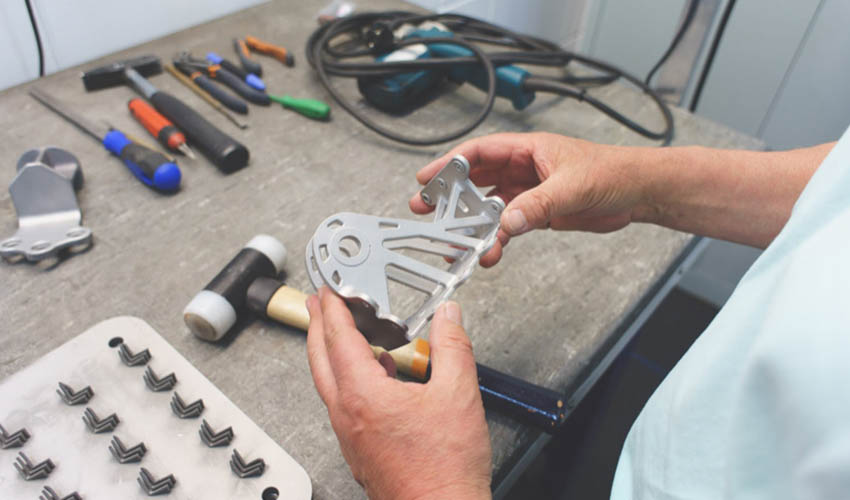 News3D Hubs predicts 2020 additive manufacturing trendsThe leading online manufacturing service, 3D Hubs, has recently released its 3D printing trends report for 2020, giving its insights on the evolution of additive manufacturing, and where the AM market is headed. Looking back at the last decade, it’s…
 GuidesPawsthesis: The Project 3D Printing Leg Prostheses for DogsAdditive manufacturing is becoming increasingly popular. This is evident in the widening array of areas in which it is used. In addition to dominant sectors such as the automotive industry or aerospace , 3D printing technologies are now increasingly being used in smaller…
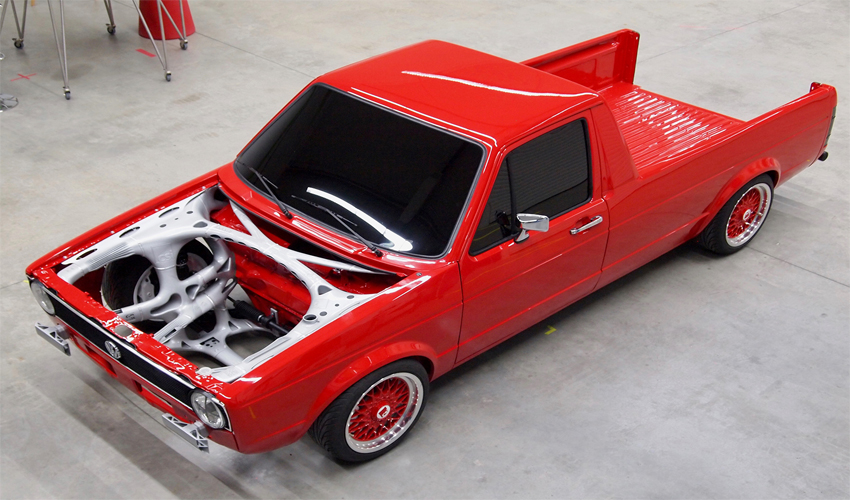 Applications3i-PRINT project creates 3D printed front end on classic Caddy 1 carVolkswagen is breaking into a full sprint with 3D printing following their recent project on 3D printing spare parts for their older modeled cars. In this latest development from the company, they are now working on a project alongside Altair,…
 NewsHow is Formlabs strengthening its presence in Europe?The American manufacturer Formlabs is one of the historical players in the 3D printing market, particularly in the stereolithography segment. Today, the company employs more than 500 people in 7 offices worldwide and has already produced more than 40 million…
 News3D print your scale model of the new BMW sports carWhile many car manufacturers use additive manufacturing to produce finished parts, BMW has decided to use the technology to present its new concept car and offer an attractive scale model to its future customers. Named Vision M Next, this vehicle…
 GuidesCytosurge, 3D metal printing on a microscaleDirect 3D printing of metals with submicron resolution is a promising additive manufacturing technique for a wide range of sectors. The FluidFM µ3Dprinter from Cytosurge is the world’s first 3D printer capable of delivering such resolution in direct metal printing, while…