News
Interview with UPS: how will 3D printing impact the Supply Chain?
UPS is one of the world’s leading parcel delivery companies and a leading provider of specialised transportation and logistics services. Since its creation in 1907, the company has evolved tremendously and is quickly turning to innovative solutions. It is no surprise&hellip
- 3 min read
- News
- Six more stories
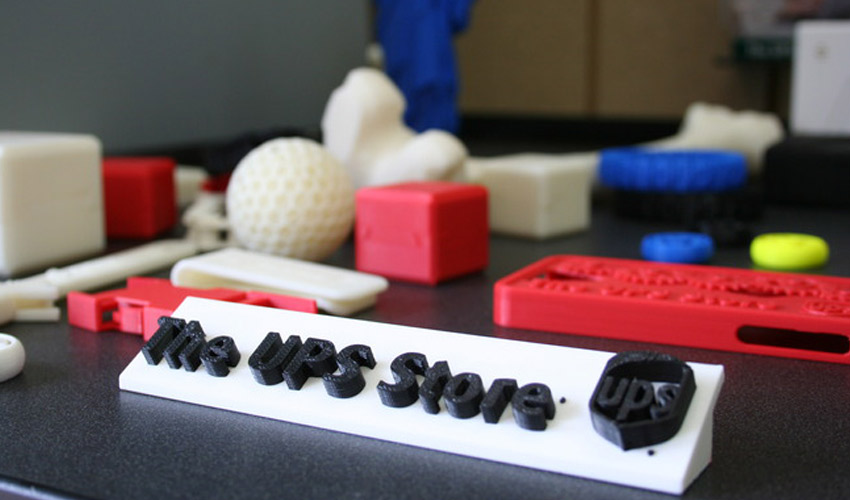
UPS is one of the world’s leading parcel delivery companies and a leading provider of specialised transportation and logistics services. Since its creation in 1907, the company has evolved tremendously and is quickly turning to innovative solutions. It is no surprise that it started focusing on additive manufacturing technologies. Additive manufacturing enables to dematerialise certain stock of parts by producing only the parts needed at a given moment. It’s a key advantage in terms of costs but also optimisation of logistics flows. Additive manufacturing creates opportunities in terms of ‘manufacturing-as-a-service’ since we start to produce parts according to users’ needs and no longer in volume. The technology has already changed other industries such as bringing growth to the ceramics industry. The general impact of 3D printing is very interesting and we wanted to know more about this dematerialisation of stocks. As well as how UPS is using 3D printing today to rethink the management of logistics flows: so we met Jean-François Mathieu, Director EMEA for the industrial sector at UPS.
3DN: Can you introduce yourself and your link with additive manufacturing?

Jean-François Mathieu
UPS is a leading supply chain company that now transports nearly 3% of global GDP to more than 200 countries and territories around the world. We are focused on innovation with, for example, our subsidiary UPS Capital, which covers all risks related to the supply chain. As a B2B Segment Manager at UPS EMEA, I’m in charge of the go-to-market in certain segments such as industry, automotive, aerospace, and so on.
3DN: How does UPS perceive 3D printing today?
We believe that additive manufacturing has recently reached a point of inflection, with significant advances in recent years that have significantly reduced production costs. The number of cases in which it becomes economically relevant continues to increase daily, and will continue to increase.
More from the desk
Six other notes from the rest of the bench.
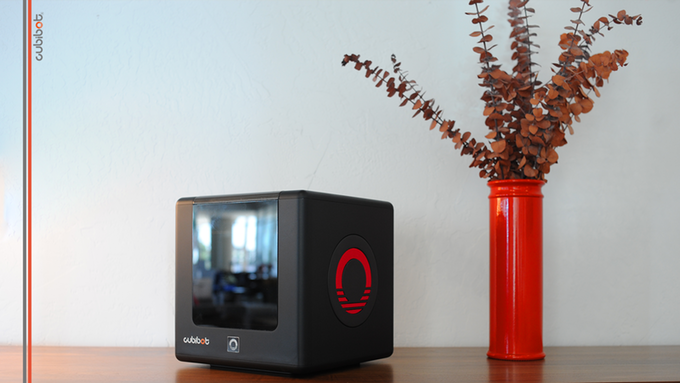 PrintersThis tiny 3D printer has raised over $500K on KickstarterFor those who still have the mindset that 3D printing is an industry with huge barriers to entry, controlled by big companies with even bigger pockets, this might change your mind. This tiny 3D printer, made in San Diego by…
 NewsTCT show 2018 opens up their doors in Septemberthe TCT show 2018 is now officially open for registration. The show takes place at the NEC this year, the 25th–27th of September. With 64 engaging presentations across three stages containing an array of world-leading speakers, along with over 300 cutting-edge…
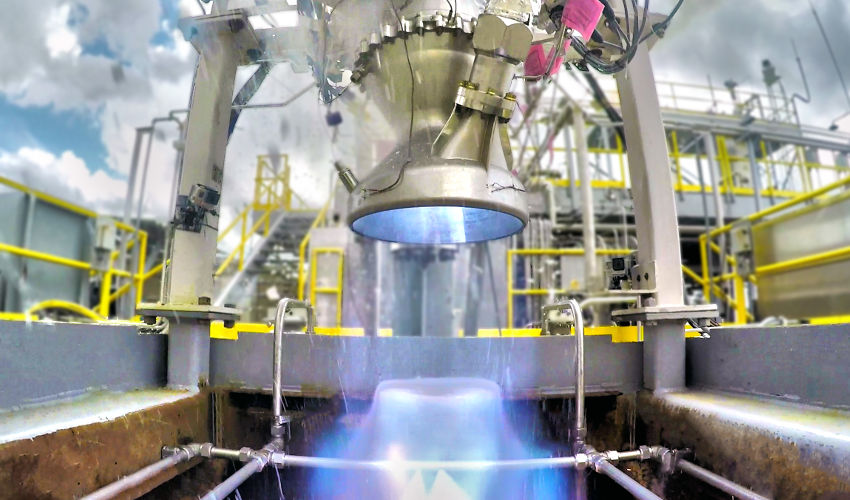 Guides#3DStartup: Relativity Space, Creating 3D Printed Rockets for MarsAdditive manufacturing pushes the earth’s limits and invades space : Relativity Space is a perfect example! This American startup has invented a 3D printing method to create whole rockets that could well take off in a few years. Their Stargate process would indeed be&hellip
 NewsPolymerisation Optimisation for More Accurate SLA PartsResearchers from the National Institute of Standards and Technology (NIST) have found that it is possible to produce more accurate and uniform parts by enhancing control over polymerisation and diffusion. They discovered this using a new method of measuring photo-polymerisation-b
 ApplicationsSolar Voyager; 3D printed electric vehicle going to AntarcticaClean2Antarctica is a Dutch association whose aim is to promote the circular economy and to encourage organisations and individuals to develop sustainable alternatives to our current way of life. To do this, the team has gone on an expedition to the…
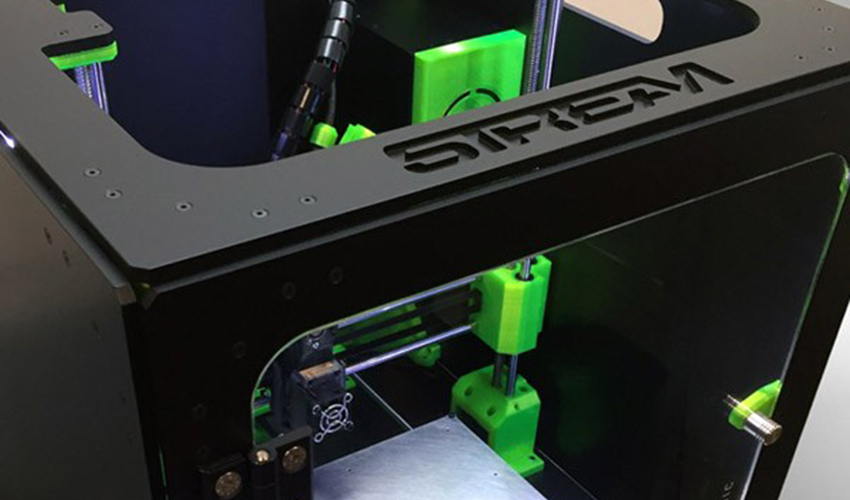 PrintersLab 3Dnatives: the Volumic STREAM 30 Pro MK2 3D PrinterThe French manufacturer Volumic recently sent us a new STREAM 30 Pro MK2 3D printer for us to review this professional model. The MK2 denomination corresponds to the manufacturer’s new generation of machines, which also officialised the arrival of its…