News
International Research Collaboration for Manufacture of Plastics and Polymers
International collaboration is a cornerstone of almost all scientific research; the opportunity to share techniques, expertise, and ideas is essential to discovery and development. To no surprise, 3D printing is no exception to this rule. In a recent example of…
- 3 min read
- News
- Six more stories
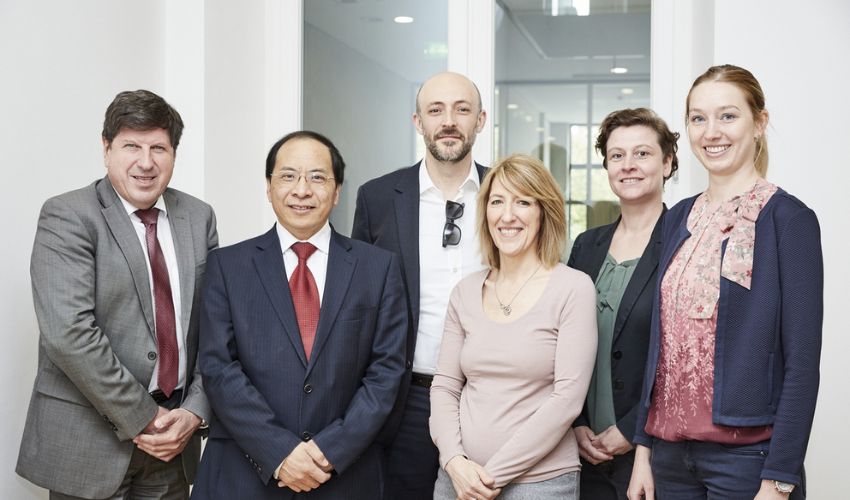
International collaboration is a cornerstone of almost all scientific research; the opportunity to share techniques, expertise, and ideas is essential to discovery and development. To no surprise, 3D printing is no exception to this rule. In a recent example of this, The University of Leeds, UK, and Karlsruhe Institute of Technology (KIT), Germany, have furthered their scientific collaboration with the announcement of a new project intending to study how machine learning can be combined with 3D-printed reactors. They hope that this could lead to the development of high-quality polymers and plastics.
This 3D printing research project was originally carried out at Leeds; its equivalent parts are now under construction and preliminary tests at KIT. The collaboration involves lots of international travel and back-and-forth: a PhD researcher from KIT has spent time in Leeds to learn about the software and techniques. They will then use these technologies to make 3D printed parts at KIT, to then be tested back in Leeds. The two institutions began collaborating many years ago, and in 2019 signed a Memorandum of Understanding as a symbol of their commitment to the strengthening of international cooperation and research. They have a number of different projects together, from studies in climate change, AI and robotics, advanced materials, and data analysis.
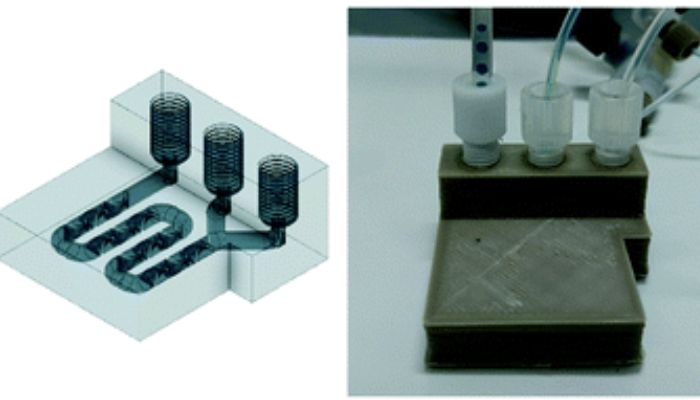
3D printed reactors such as this one can be used for flow chemistry – when a chemical reaction is run continuously as opposed to in batches. (Photo credit: Reaction Chemistry Engineering, 2020,5, 728-735)
Professor Thomas Hirth, Vice-President for Transfer and International Affairs at KIT, said: “The University of Leeds is a very important partner of KIT in the UK and Europe. This is reflected by the large range of topics covered by our increasingly close collaboration in research, academic education and transfer.”
More from the desk
Six other notes from the rest of the bench.
 Applications3D Ice Printing Can Create Artificial Blood Vessels in Breakthrough for Lab-Grown OrgansAs the need for organ donations, especially for hearts, kidneys and livers, becomes more prevalent, more and more scientists are dedicating themselves to finding ways to create viable artificial organs, although there has been little success in recent years. However,…
 NewsCaracol Shows How It Is Breaking Boundaries in 3D Printing With Large-Format Robotic SolutionsRAPID + TCT 2024 might have wrapped up, but that does not mean that the content from the show will slow down. Out of the 400+ exhibitors attending the event, we had the opportunity to sit down with five of…
 GuidesThe Top Websites to Download Free STL FilesAn STL file (short for stereolithography) is the most common format for representing the geometry of an object to be 3D-printed. Unlike formats such as OBJ, 3MF, or AMF, STL describes only the shape using a mesh of triangles, without…
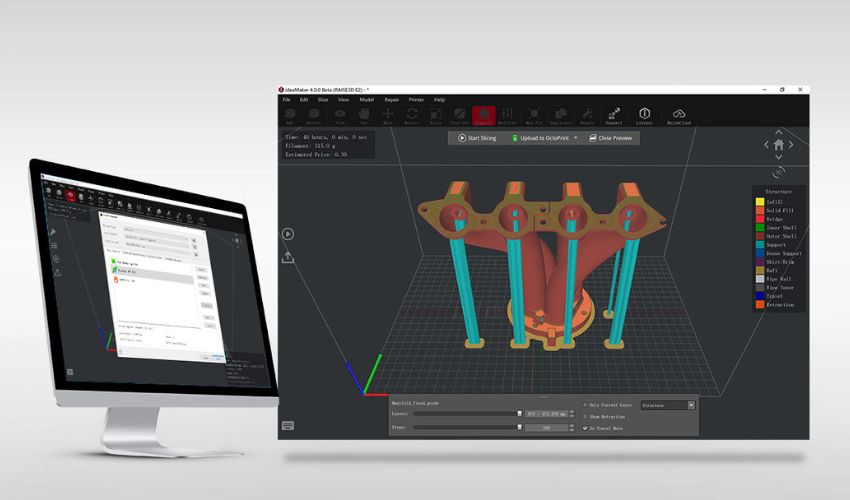 SoftwareideaMaker: The Free Slicer from Raise3DAs you probably know, slicers are a critical step when 3D printing a part. As an intermediary between the 3D model and the 3D printer, slicers allow the machine to understand the information in the 3D model thanks to a…
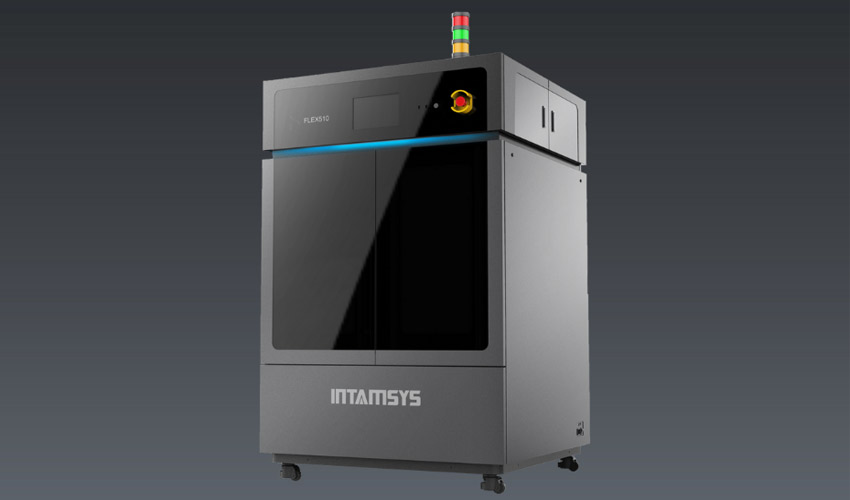 PrintersFLEX 510 by INTAMSYS, a high speed 3D printer for flexible materialsThe Chinese manufacturer INTAMSYS has just revealed a new industrial machine designed for printing flexible materials. Called FLEX 510, this is the new addition to the manufacturer’s range of machines focused on high-temperature additive manufacturing, capable of working with tec
 ApplicationsTitomic’s D523 3D Printers Head to Ukraine Front Line After Largest-Ever SaleThe integration of 3D printing technology into military operations has steadily increased in recent years. From prototyping and tooling to spare parts production and battlefield repairs, additive manufacturing offers various advantages for military applications. Leveraging this g