Materials
TPE vs TPU Filament: Choosing the Right Flexible Material
When you need to 3D print parts that bend, stretch, or absorb heavy impacts, standard rigid plastics like PLA or PETG will not cut it. That’s why makers turn to flexible filaments like TPE and TPU. To understand the difference,…
- 3 min read
- Materials
- Six more stories
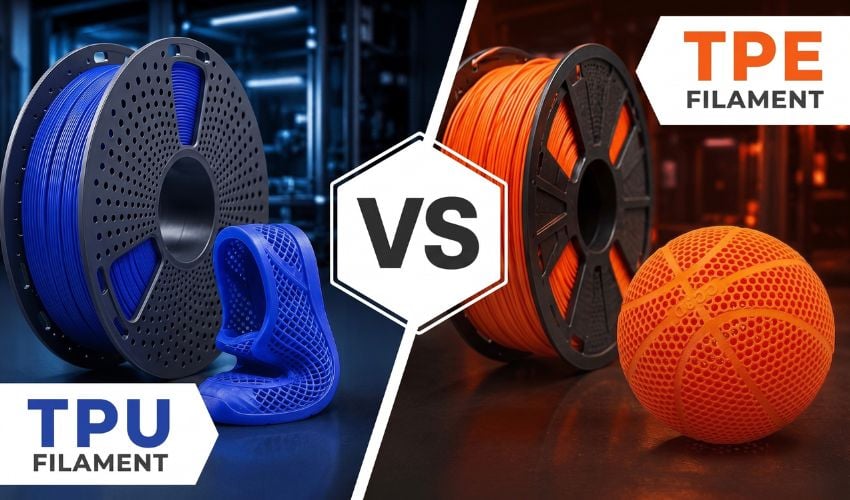
When you need to 3D print parts that bend, stretch, or absorb heavy impacts, standard rigid plastics like PLA or PETG will not cut it. That’s why makers turn to flexible filaments like TPE and TPU. To understand the difference, you first have to look at their relationship.
Thermoplastic Elastomer (TPE) is a broad umbrella family of materials that combines the elastic properties of rubber with the melting and processing characteristics of plastic. Thermoplastic Polyurethane (TPU) is not a separate competitor to TPE, but rather a specific, more rigid subset within that same family. Both filaments excel at creating parts that are impact-resistant, waterproof, and highly durable against weathering and UV exposure.
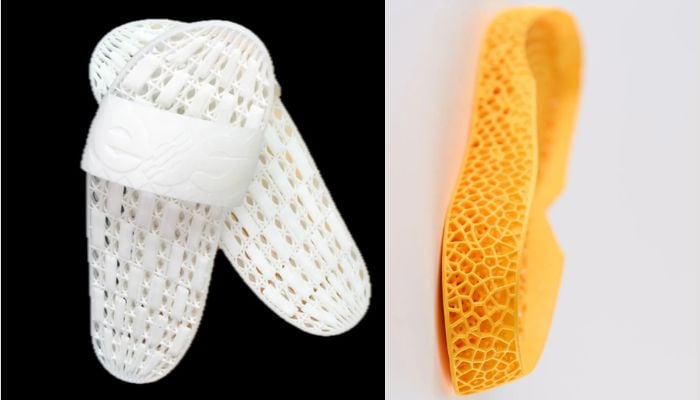
EOS TPU 1301 (left), ALM TPE 410 (right). Photo Credit: EOS
So, how do they actually differ on the print bed and in real-world applications? Filaments marketed under the general TPE label are traditionally softer, more lightweight, and feel like true rubber. However, their extreme flexibility makes them less dimensionally stable under stress and more challenging to print. TPU, on the other hand, is more rigid and tough, which means superior abrasion resistance. Most importantly for makers, TPU’s rigidity makes it significantly easier to successfully 3D print, making it the preferred choice for functional and durable applications.
More from the desk
Six other notes from the rest of the bench.
 GuidesItzcóatl, the 3D-Printed Serpent Head Made of Soil and ObsidianItzcóatl was the fourth ruler of Mexico-Tenochtitlan, and his name means “obsidian serpent” in Nahuatl. Today, it is also the name of a sculpture 3D printed with soil by Mexican artist Alfredo Salazar-Caro, co-founder of the Digital Museum of Digital…
 MaterialsAM of the Future: Cubic Ink® on High-Performance MaterialsCubic Ink® is part of the specialized chemicals company ALTANA and aims to produce high-performance materials for additive manufacturing that are suitable for various applications. To find out exactly what Cubic Ink® materials are all about, we had the opportunity…
 GuidesToolkit3D: The Automation Platform Unifying Design and Manufacturing WorkflowsWhen it comes to manufacturing, many tools are required: design software, quality monitoring software, machines, scanning applications, etc. However, these solutions are often disconnected, presenting a challenge for users. The workflow elements do not communicate with each other
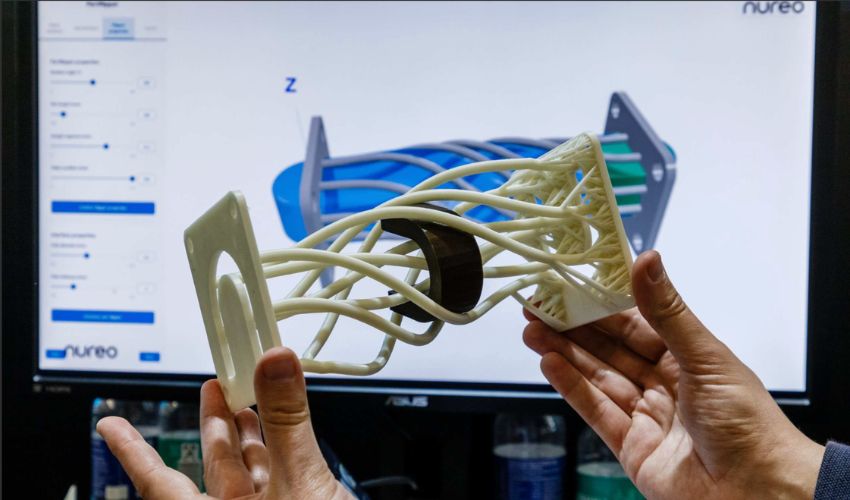 Software#3DStartup: Could nureo’s Automated Engineering Software Eliminate Manual CAD?The promise of additive manufacturing has always been design freedom, yet engineers frequently face complex, manual design processes to turn a concept into a manufacturable part. The Zurich-based software startup nureo is changing this by bridging the gap between advanced…
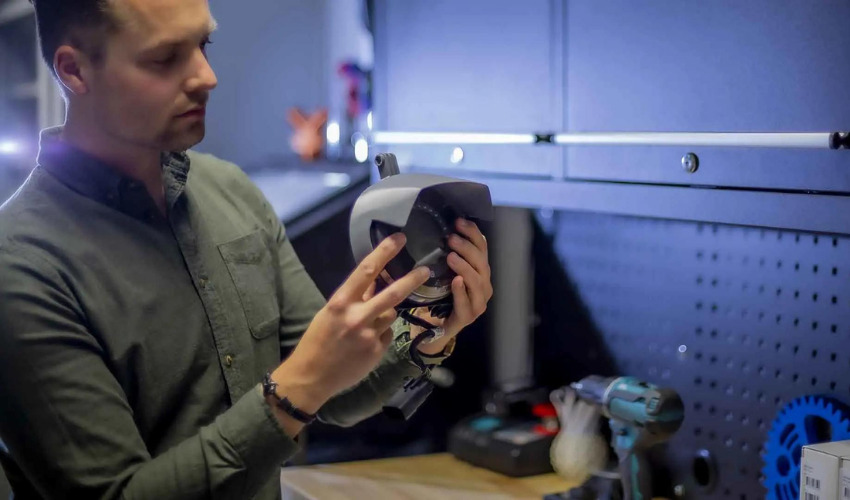 MaterialsUltimaker Announces the Release of its Newest Filament, Ultimaker PETGLeading 3D printing specialist, Ultimaker, has announced the launch of its new 3D printing material, Ultimaker PETG. PETG joins a number of other filaments offered by the company including, PLA, PVA, Nylon, CPE, ABS, PC, among others. The company stated…
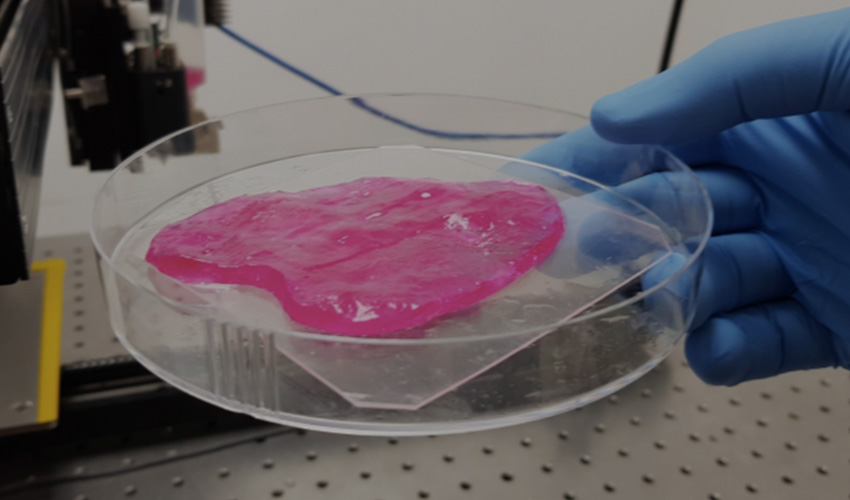 NewsMeaTech: this startup is 3D printing real and clean meatOver a month ago, we told you about the latest developments in alternative meat products made possible by 3D printing technologies. A growing number of companies have started to invest in the development of 3D printed meat alternatives, some rely…