Applications
The Top Examples of 3D Printed Rockets
Since the moon landing in 1969, humanity has never stopped reaching for the stars. What has changed, however, are the means of getting there. Since Apollo 11, rockets have changed immensely with innovation being the name of the game and…
- 3 min read
- Applications
- Six more stories
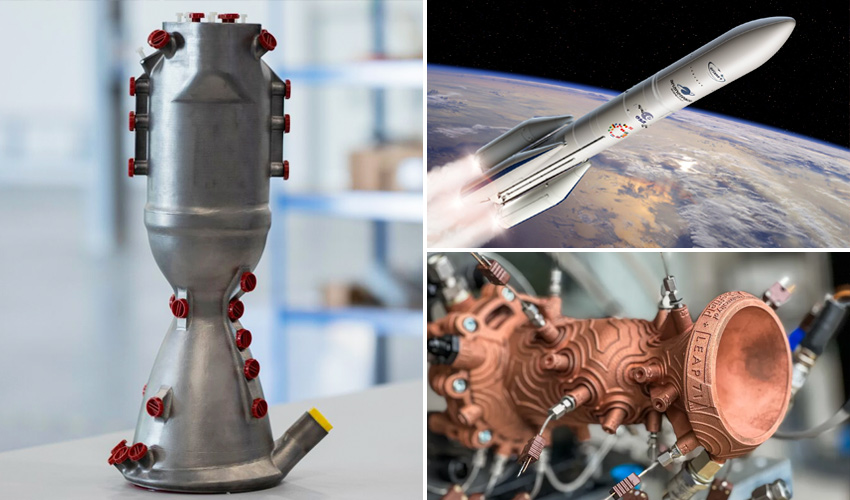
Since the moon landing in 1969, humanity has never stopped reaching for the stars. What has changed, however, are the means of getting there. Since Apollo 11, rockets have changed immensely with innovation being the name of the game and in most recent years that has created additive manufacturing. More and more we are seeing 3D printed rockets, both those that are being developed and that have already been sent into space. In the following listing (in no particular order), we took a look at some of the most exciting projects, including everything from fully 3D printed rockets to engines and other parts that have been made and optimized using additive manufacturing.
Agnibaan From Angikul Cosmos
Agnibaan is one of the most recent 3D printed rocket projects, coming directly from Agnikul Cosmos, an Indian aerospace manufacturer that believes that going to space should be within everyone’s reach. It is for that reason that the company turned to 3D printing. Agnibaan (meaning “an arrow of fire” in Sanskrit) is claimed by the company to be the world’s first rocket with a single piece 3D printed engine, although Agnikul has not announced which technologies were used for the project. Agnibaan’s successful launch on May 30th at 7:15AM marks a huge step forward for additive manufacturing in the Indian space industry.

Photo Credits: Agnikul Cosmos
The E-2 Rocket Engine From Launcher
Launcher is a company founded in 2017 that worked in partnership with the US Space Force, the US Air Force and NASA to develop high-performance rockets and orbital transfer vehicles, it was acquired by Vast in 2023. But before then, by integrating state-of-the-art liquid propulsion technology and using 3D printing, the E-2 liquid rocket engine was created. This is a closed combustion engine with a combustion chamber made of a copper-chromium-zirconium alloy, which reduces costs and dependence on supply chains. Launcher is the first company in the launch vehicle sector to use 3D-printed copper alloys to manufacture the combustion chamber of a rocket engine. The combustion chamber also has integrated cooling channels to increase thermal efficiency. Together with AMCM, Launcher developed the AMCM M 4K 3D printer, which was then used to print the combustion chamber. The coaxial injector of the E-2 engine was produced on a Velo3D Sapphire 3D printer. In April 2022, the 3D printed E-2 engine reached full thrust during testing at NASA’s Stennis Space Center, whereupon Launcher announced the successful completion of the test run.
More from the desk
Six other notes from the rest of the bench.
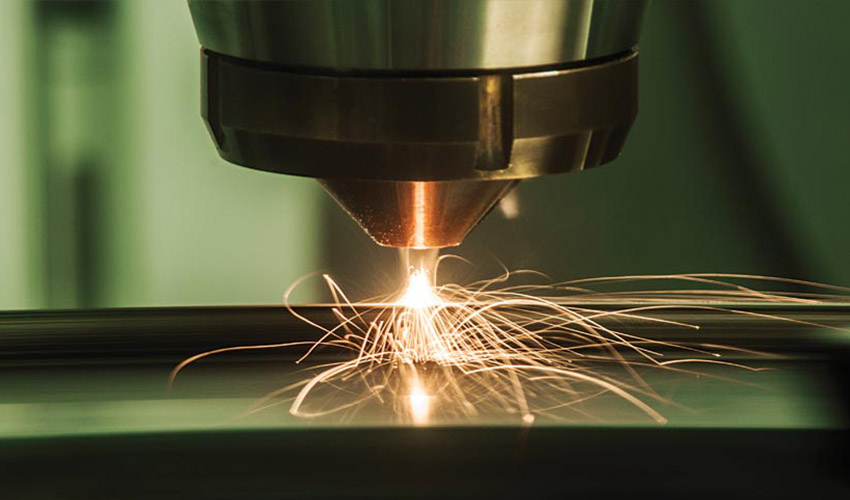 NewsThe Complete Guide to Directed Energy Deposition (DED) in 3D PrintingDirected Energy Deposition (DED) is a more complex 3D printing process, typically used to repair or add additional material to existing components. It is completely possible to fabricate parts from scratch using this technology, but it is often used for…
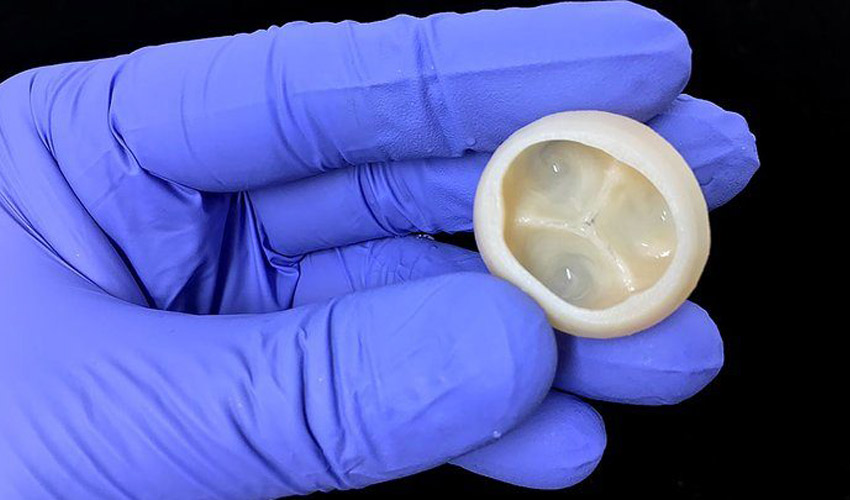 ApplicationsResearchers have been able to bioprint parts of the human heartScientists at Carnegie Mellon University are one step closer towards the manufacture of functional 3D printed organs: by using FluidForm technology, they have been able to reconstruct parts of the human heart, including heart valves. Called FRESH (Freeform Reversible Embedding&he
 NewsResearchers Successfully 3D Print Male Reproductive CellsThe University of British Columbia recently accomplished a new world first. A team of researchers led by Dr. Ryan Flannigan have succeeded in 3D printing human testicular cells. After a few days of maturation, these cells would have been able…
 NewsBambu Lab Opens Its First Retail Store in ChinaHow often do you see a 3D printer sitting on a store shelf? Chances are, you haven’t. Most consumer 3D printing sales still happen online. Bambu Lab is looking to change that with the launch of what it calls the…
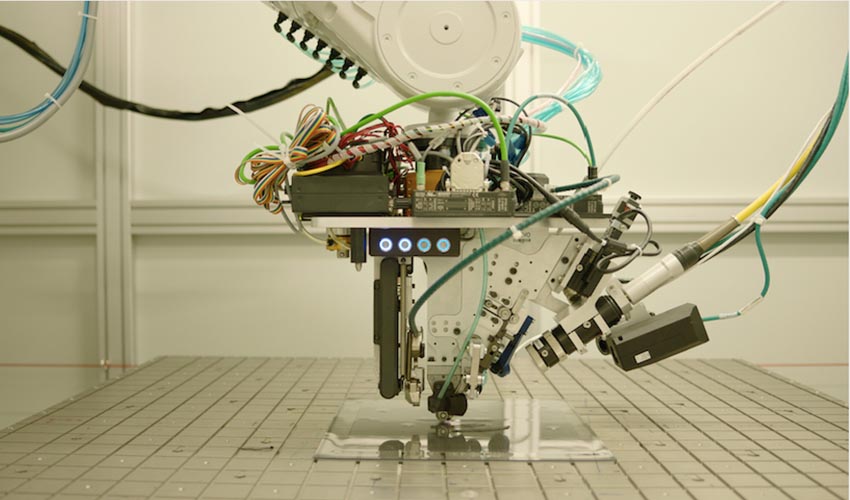 GuidesAREVO launches world’s first high-speed AM composite systemAREVO, a young Californian company, is known for having developed an additive manufacturing platform to transform composites production in the AM sector. As you may know, composites represent a growing segment in this industry, and have started competing with some…
 NewsWEBINAR: How to Start and Scale a 3D Printing ServiceOn the 29th of October, 3Dnatives hosted a webinar on how to start and scale a 3D printing service. Mike Moceri, CEO of MakerOS, led this masterclass in not just how to build a 3D printing service from the ground up,…