Applications
Researchers have been able to bioprint parts of the human heart
Scientists at Carnegie Mellon University are one step closer towards the manufacture of functional 3D printed organs: by using FluidForm technology, they have been able to reconstruct parts of the human heart, including heart valves. Called FRESH (Freeform Reversible Embedding&he
- 3 min read
- Applications
- Six more stories
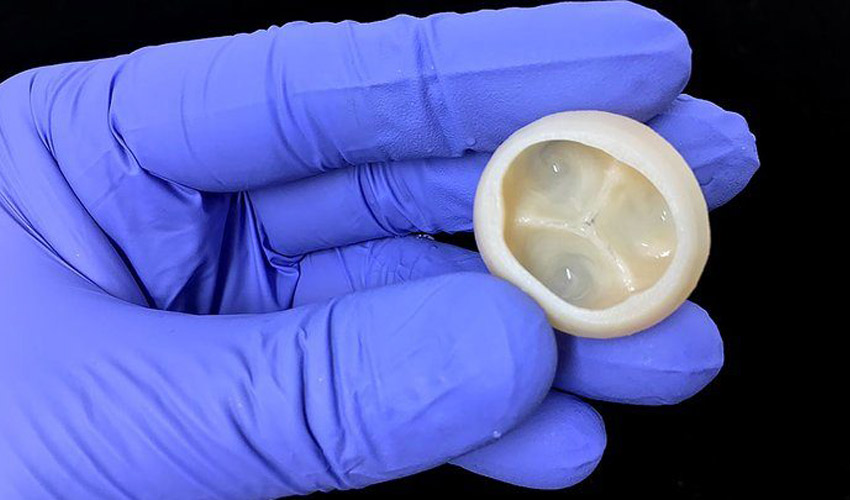
Scientists at Carnegie Mellon University are one step closer towards the manufacture of functional 3D printed organs: by using FluidForm technology, they have been able to reconstruct parts of the human heart, including heart valves. Called FRESH (Freeform Reversible Embedding of Suspended Hydrogels), this technology allows complex scaffolding to be 3D printed with unmodified collagen using a temporary support gel.
A few days ago, we reported on the research project of the ETH Zurich team, the team had 3D printed artificial heart valves from silicone. After two hours of printing, this valve was reinforced with collagen. American researchers went further this time by 3D printing directly from collagen, right from the start of the printing process. They even designed ventricles, valves and small blood vessels.
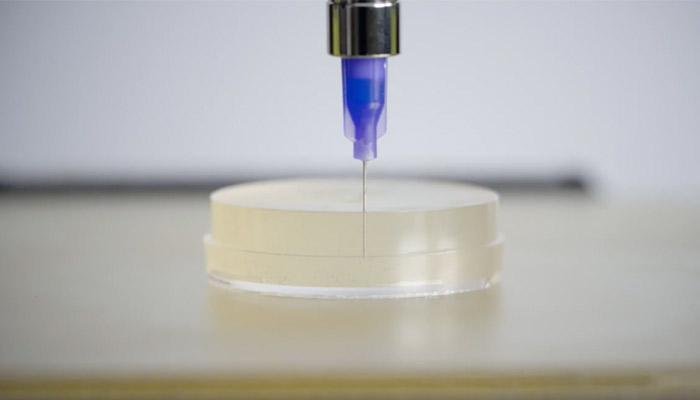
To achieve this medical breakthrough, the University team used FRESH bioprinting technology, a system that allows bioinks and other flexible materials – such as collagen – to be deposited layer by layer in a gel tank. This one acts as a printing medium as it allows to maintain the extruded materials, minimising the risk of deformation of the biomaterials. This gel is then heated to easily remove the bioprinted part, in this case a heart valve. CTO and co-founder of FluidForm, Adam Feinberg, explains: “We now have the opportunity to build concepts that incorporate the key structural, mechanical and biological properties of native fabrics. There are still many challenges to be met to bring us to 3D organs from bioengineering, but this work represents a major step forward.”
More from the desk
Six other notes from the rest of the bench.
 NewsZap&Buj, making fashion through additive manufacturingThe development and manufacture of fashion through additive manufacturing is not new in the technology sector. Many firms have already benefited from 3D printing for fashion design and production. Innovation and originality in the creation of unique products opens up…
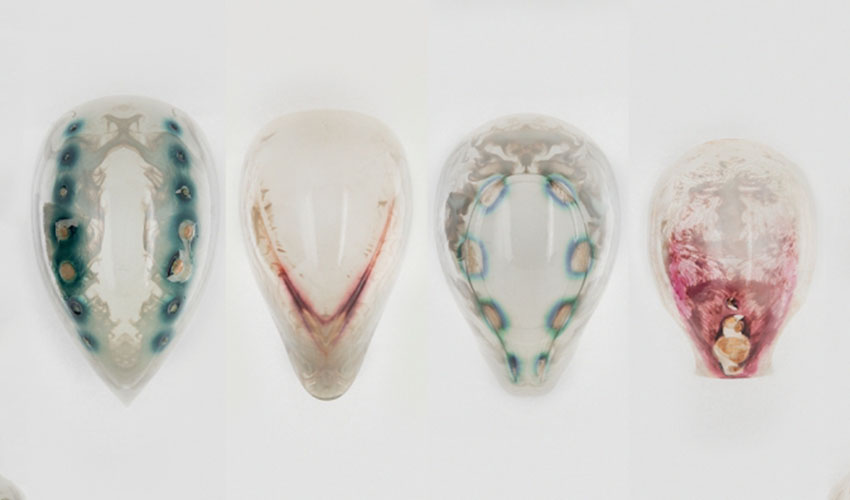 Applications3D printing system uses hybrid living materials to make biomedical toolsHybrid Living Materials (HLMs) are formed by combining living and non-living components such that the resulting composite takes on the properties of both. At MIT’s Media Lab Mediated Matter group, researchers have been studying how 3D printing technologies can control…
 Printers3D Printed Houses the Cure to the Housing Crisis?Austin, capital of Texas, is now home to its first 3D printed house. This house was created specifically to show how concrete 3D printing can help developing countries create affordable housing. This project, a collaboration between charity New Story and…
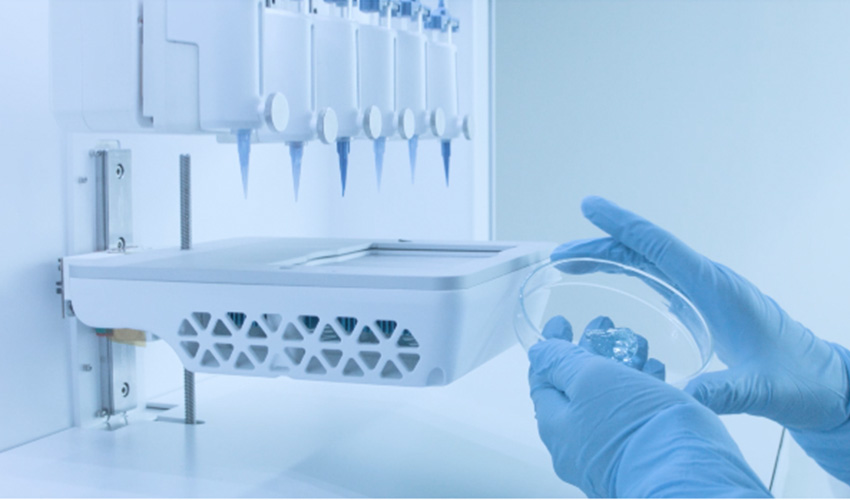 PrintersCELLINK reveals new six-printhead bioprinting platform: BIO X6CELLINK just announced the launch of the BIO X6, a six-printhead bioprinting platform that enables users to combine more materials, cells and tools than other systems on the market. The company specialises in designing and developing bioprinting technologies that enable…
 GuidesTop 13 3D printed Halloween costumes and propsHalloween is tomorrow, and costumes are at the hight. It is the season to dress up and explore a different world of fantasy and scares. But if you still haven’t found your final halloween costume or need a final detail…
 NewsMitsubishi Electric develops a metal additive manufacturing processMitsubishi Electric Corporation is a Japanese electrical equipment manufacturer and one of the world’s largest producers of photovoltaic panels. It is also a player in the additive manufacturing market that has already developed a hybrid machine combining metal sintering an