Guides
The Top 3D Printing Applications in Ophthalmology
3D printing is becoming increasingly important in medicine and has now also taken on an important role in ophthalmology. One example is 3D-printed glasses, which can be perfectly adapted to the needs and wishes of patients. But it’s not just…
- 3 min read
- Guides
- Six more stories
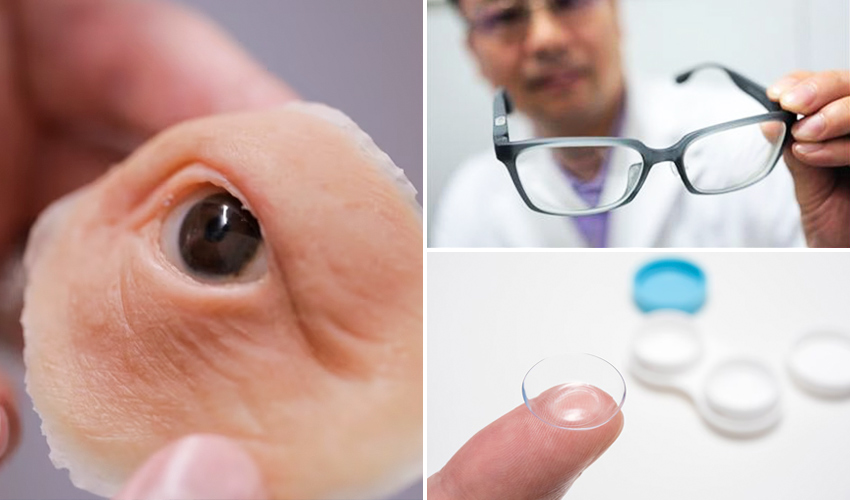
3D printing is becoming increasingly important in medicine and has now also taken on an important role in ophthalmology. One example is 3D-printed glasses, which can be perfectly adapted to the needs and wishes of patients. But it’s not just that. Additive manufacturing opens up new possibilities that improve both the precision and individualization of treatments. And also according to Research And Markets, the market for 3D-printed medical devices is set to grow to $4.9 billion by 2026, with an annual growth rate of 24.5%, illustrating the rapid progress of the technology. That’s why this week, we want to focus our attention on the different applications of 3D printing in ophthalmology. In our ranking, we present various implants, instruments, innovative projects and even contact lenses that have been produced using additive manufacturing. Find out how 3D printing is changing ophthalmology and what benefits it offers for patients and doctors.
Eye Implants and Prosthetics
A Realistic 3D Printed Eye Prosthetic in the UK
In November 2021, history was made for both opthamology and 3D printing when Moorfields Eye Hospital announced that the first British patient had been fitted with a 3D printed eye. Made through a collaboration between the hospital, NHS and UCL researchers, with Fraunhofer and Ocupeye involved with the software, the prosthetic eye was considered to be a true biomimic and a more realistic prosthetic, with real depth to the pupil and clearer definition. It was given to Steve Verze who used it to replace his regular prosthetic, noting that for him it looks fantastic as it was made using digital scans of his other eye, nearly perfectly matching it. An incredible accomplishment!
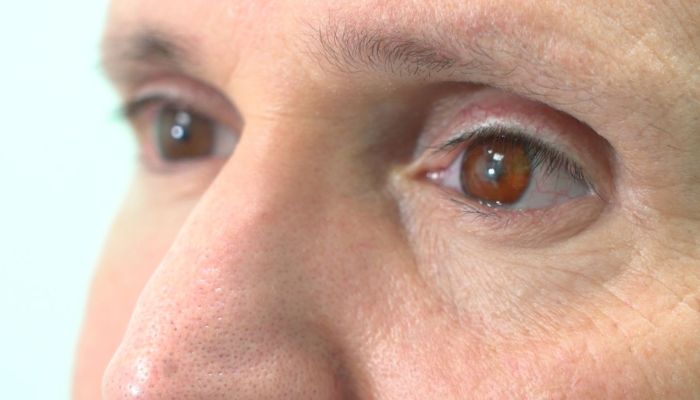
Steve Verze with his new 3D printed eye prosthetic (photo credits: Moorfields Eye Hospital)
3D Printed Ocular Prostheses From Fraunhofer and OCUPEYE
Researchers at the Fraunhofer Institute for Computer Graphics Research IGD, in collaboration with OCUPEYE Ltd, have developed an AI-based method for 3D printing artificial eyes. This innovative technique aims to meet the demand for artificial eyes as it takes 80 percent less time and can produce a complete prosthesis in just 90 minutes, reducing the workload for ocularists fivefold. The 3D-printed prostheses are modeled using a scan of the functioning eye so that they fit perfectly into the patient’s eye socket and look realistic. The data obtained is then entered into an AI model, which creates the design. Printing is then carried out using the J750 Polyjet multi-material printer and VeroVivid materials. With a resolution of 18 billion droplets per cubic centimeter, the printer enables precise eye implants that realistically and aesthetically match the remaining eye. In the future, the team plans to further improve the method in order to reduce production costs.
More from the desk
Six other notes from the rest of the bench.
 NewsAMT Improves Post-Processing With its Digital Manufacturing SystemAMT is a leading developer of post-processing solutions for additive manufacturing. Its mission is to make this technology a viable alternative to traditional manufacturing through its line of automated post-processing solutions, called PostPro. It is once again at Formnext 2022&
 NewsTop 5 Videos: The BigRep PRO Industrial 3D PrinterThis week, discover the BigRep PRO industrial 3D printer. With a printing volume of one cubic meter, it is designed to produce large parts. Then, get to know the the J5 MediJet™ from Stratasys, which was developed specifically for the…
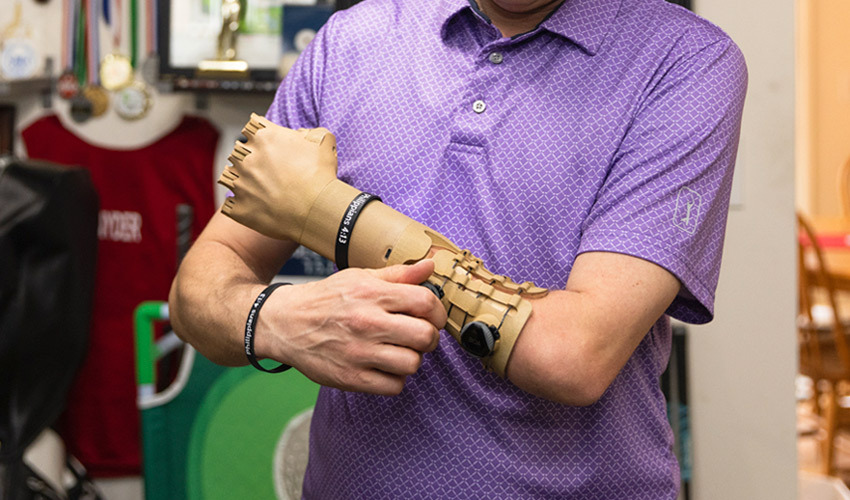 Guides#3DStartup: Unlimited Tomorrow and its 3D Printed Bionic Prosthetic ArmIt is no secret that 3D printing has been making great waves in recent years in the medical sector. One arena in which the technologies have been especially useful is for making prostheses as it allows for lighter, more customized…
 NewsJob Market 2024: What Were the Trends in the 3D Printing Sector?Every year, 3Dnatives conducts a study of the 3D printing job market, highlighting the most relevant trends and developments for the future of the sector. This analysis is based on job offers published on our job board in different languages:…
 NewsThe Top STL Files of 2023As we look back on a year of impressive, helpful, wacky, and fun 3D printing experiences, we can’t help but pick out some of our favorite 2023 STLs and highlight them in our end-of-year retrospective. From giant 3D printed constructions…
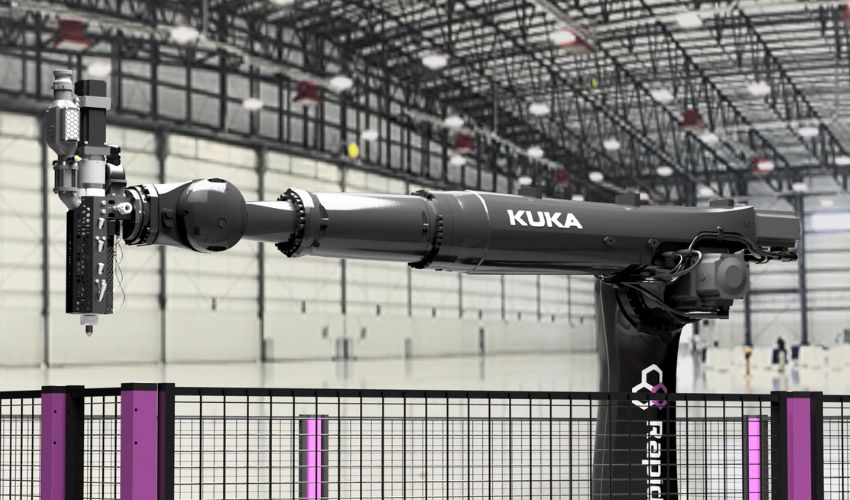 MaterialsRapid Fusion Talks Using Pellets for Large-Format Additive ManufacturingIf asked which two trends have been dominating the polymer 3D printing sector, the answer would be obvious: pellets and large-format additive manufacturing (LFAM). In recent years, we have seen machines getting larger for even more applications in sectors like…