News
The Complete Guide to Multi Jet Fusion (MJF) 3D Printing
When it comes to additive manufacturing, it is safe to say that it is definitely not one size fits all. Though of course the basis of the technology, developing layer by layer, stays constant, the way of doing this certainly…
- 3 min read
- News
- Six more stories
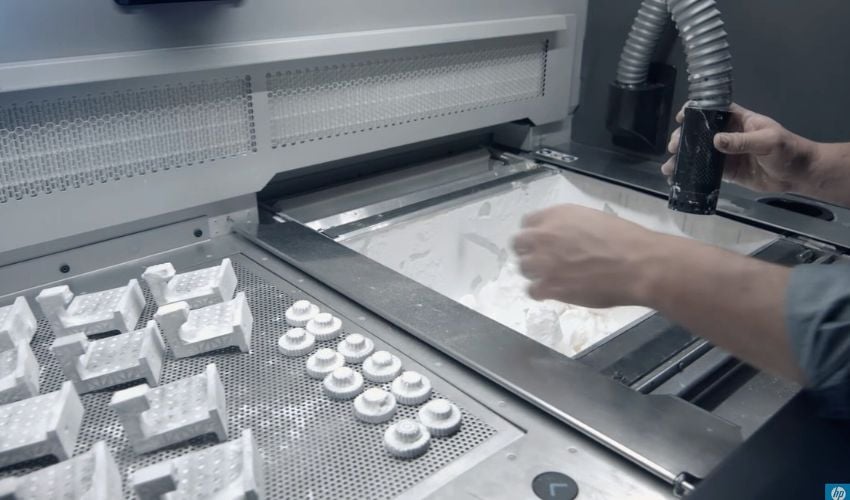
When it comes to additive manufacturing, it is safe to say that it is definitely not one size fits all. Though of course the basis of the technology, developing layer by layer, stays constant, the way of doing this certainly does not. Indeed, currently there are 7 additive manufacturing families that separate the processes: photopolymerization; material extrusion; Material Jetting; Binder Jetting; Powder Bed Fusion; Directed Energy Deposition; and sheet lamination. But sometimes there is one that does not quite fit into any of these. One notable example is Multi Jet Fusion (MJF) from HP.
Technically speaking, MJF belongs to the powder bed fusion family. This is unsurprising considering that the technology involves both a powder bed and fusing agents. But it also shares characteristics with other processes, notably Binder Jetting. We took a closer look at how the technology works, its benefits and limitations and applications.
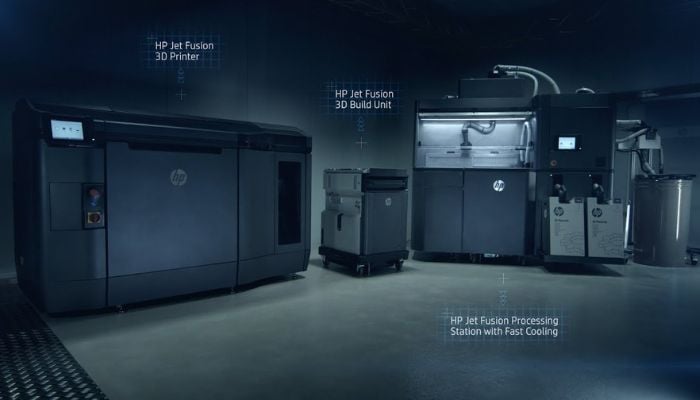
Photo Credits: HP
How Does Multi Jet Fusion Work?
But what exactly is Multi Jet Fusion? Well the technology was created by HP in 2016, building upon the company’s expertise in inkjet printing and is compatible with both rigid and elastomeric polymers. Although relatively a newcomer on the 3D printing market (to compare, stereolithography and fused deposition modeling were both developed in the early 80s and many metal AM processes started to come out in the 90s), it is relatively popular, especially when it comes to creating highly accurate and durable polymer parts.
More from the desk
Six other notes from the rest of the bench.
 News3D printed polymer cubes can resist bullet impactAt Rice University in Houston, researchers have created 3D printed cubes from polymer that can withstand bullets. Their secret lies in the very design of these cubes, composed of different lattice structures that make them much more resistant. It is…
 NewsMakerBot and Ultimaker Announce MergerIf there is one thing that is certain in life, it is that the additive manufacturing market never sleeps. And after a busy 2021 in terms of mergers and acquisitions, 2022 is continuing the trend. Today two of the leaders…
 PrintersChinese Tech Conglomerate Xiaomi Debuts New 3D PrinterIn the ever-expanding realm of innovation, Xiaomi, a massive Chinese designer and manufacturer of consumer electronics, software, home appliances, and household hardware, has taken its first step into the world of additive manufacturing with the introduction of its debut product,
 ApplicationsRestoration of vintage car thanks to 3D technology and KW HeritageThe KW Heritage affiliate of the UK group KW Special Project recently unveiled its plans to restore the famous 1967 car: Alfa Romeo Tipo 33/3. Thanks to 3D technologies, the team in charge of the project were able to present this classic…
 ApplicationsLamborghini bets on Carbon 3D printing technologyInitially specialised in the construction of tractors, the Italian company Lamborghini quickly turned to the development of luxury sports cars. Today, the company is showing interest in additive manufacturing. More particularly, in Carbon 3D printing technology to produce some pa
 NewsWhat Were the Trends on the 3D Printing Job Market in 2022?Every year, 3Dnatives takes a look at the 3D printing job market and identifies some of the recruitment trends therein based on the offers published on our dedicated job board. In 2022, we published more than 900 job offers on…