News
The 3D Printed Hana Table Combines Originality and Sustainability
The use of 3D printing in interior design is gaining popularity. One company in particular that is leading in this field is Aectual. Based in the Netherlands, the organization’s mission is to extend the life cycle of products, increasing their…
- 3 min read
- News
- Six more stories
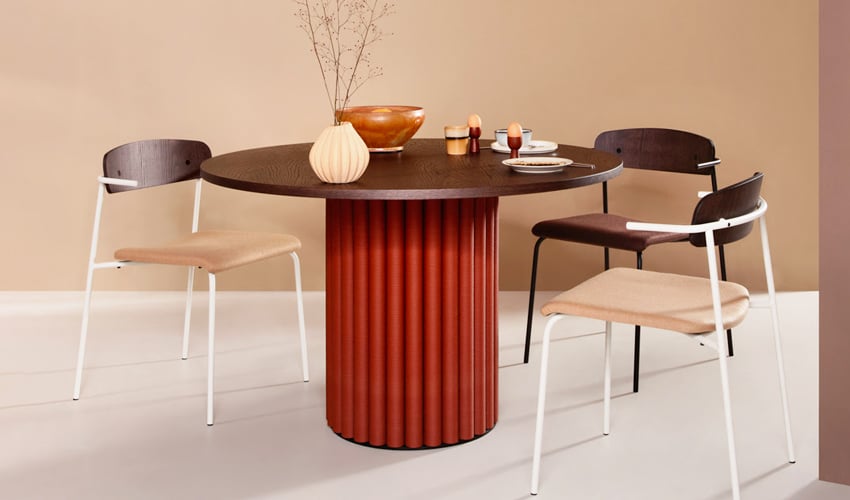
The use of 3D printing in interior design is gaining popularity. One company in particular that is leading in this field is Aectual. Based in the Netherlands, the organization’s mission is to extend the life cycle of products, increasing their value and that of materials in a limitless loop. Now, the company has launched a new project that once again combines new technologies with design, all while keeping sustainability in mind. The Hana Table is an original 3D printed table, which is ideal for workplaces and hospitality interiors that are dedicated to the concept of a circular economy, but without sacrificing style. Its timeless, elegant and fun design can be adapted to a variety of different spaces.
More specifically, the Hana Table is the brainchild of designer Joost van der Vecht, in conjunction with sustainable furniture brand Occony and circular furniture brand Aectual. The table’s name is inspired by the Japanese word for “flower,” alluding to the inherent beauty of the design and its sustainable principles. According to Aectual, it is also a nod to the modern craftsmanship that has gone into the creation of this innovative piece of furniture. But how exactly was additive manufacturing used for this project?
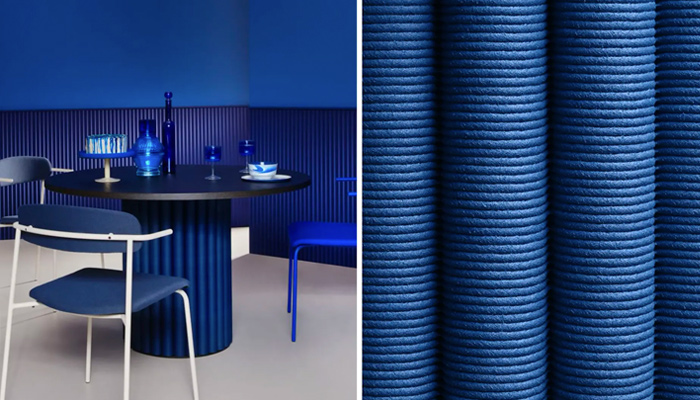
The name, Hana Table, alludes to the inherent beauty of the design
3D Printing of the Hana Table
The base of the Hana Table was created through additive manufacturing. Specifically, it is 3D printed from recycled beverage carton foils, demonstrating its commitment to the environment. Indeed, it subscribes to the ideal of a circular economy wherein materials that would otherwise have been wasted are given a new life. After use, the material can be shredded and reused to 3D print new furniture. On the other hand, the table-top is made from recycled wood fibers and has a waterborne wood finish that is completely free of toxic elements. The company notes on its website, “Our circular process, driven by data and digital manufacturing, represents a fundamental shift from today’s linear economic system to a design-driven regenerative economy.”
More from the desk
Six other notes from the rest of the bench.
 NewsWhat Types of 3D Printing Dyeing Solutions Are There?Beyond its purely aesthetic function, color plays an important role in areas such as consumer goods, interior design, and even medicine. A colored 3D component can be produced in various ways: either directly with a multicolor 3D printer, through hand…
 PrintersThe Different SLS 3D Printers on the MarketOnce an exclusive tool for high-budget labs, selective laser sintering (SLS) has become a practical solution for modern manufacturing. The technology uses a laser to fuse plastic powder layer-by-layer, and historically, it was sidelined by high costs and operational complexity.&h
 Guides#3DStartup: Gastronology’s 3D-Printed Food Can Help Patients With Eating DifficultiesFood is a basic fact of human life, and global trade means most people can enjoy cuisines and options from all over the world. However, not everyone can benefit from the rich variety of food available to us. What happens…
 PrintersNew affordable and fast full-color FDM 3D printer from OVEOVE and Memjet have come together to offer a fast, full-color FDM 3D printer. The two companies, OVE, a Polish 3D printing startup and Memjet, a Californian provider of inkjet technology both leveraged their expertise for the creation of this…
 NewsSHINING 3D Offers High Precision Inspection With 3D ScanningSHINING 3D is a manufacturer of 3D digital technologies. Its ecosystem of solutions covers the entire digital manufacturing workflow, from 3D scanning to 3D printing, design and inspection, in a wide range of applications and industries. At Formnext this year…
 Guidesmoi: redefining manufacturing by 3D printing compositesComposites manufacturing is a form of additive manufacturing that enables more structural efficiency for the finished part. Instead of creating a part layer by layer on a flat surface as you would with a 3D printer, this method manufactures in…