Materials
Tethon 3D: A Behind-the-Scenes Look at Resin Development
When you purchase resin for vat photopolymerization, do you ever think about where that resin came from? Even if there’s a brand name on the label that coincides with the printer you are using, there is a chance that the…
- 3 min read
- Materials
- Six more stories
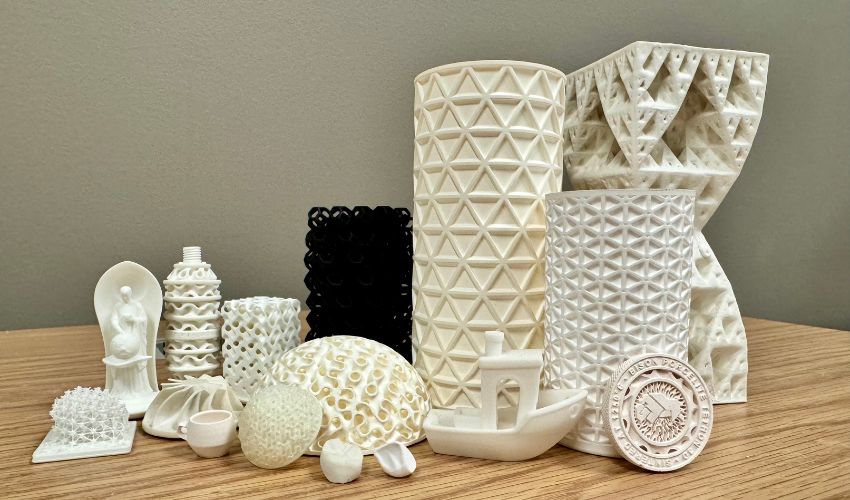
When you purchase resin for vat photopolymerization, do you ever think about where that resin came from? Even if there’s a brand name on the label that coincides with the printer you are using, there is a chance that the resin was actually developed by a different manufacturer—perhaps a company like Tethon 3D. Tethon 3D is a ceramic additive manufacturing company that develops composite resins and hardware, with a focus on material development. The Nebraska-based business is named Tethon for the Native American Omaha tribe word for white buffalo. In Omaha Native culture, the white buffalo symbolizes strength, rarity and earthly connection. Tethon 3D, with its recognizable white buffalo logo, seeks to produce ceramic 3D printing technology with the same qualities.
Stepping into the Tethon 3D offices, you see printers from several well-known brands like Stratasys, Formlabs and Nano Dimension, as well as Tethon 3D’s proprietary printer, the Bison 1000. Why all the printers? The lab at Tethon 3D makes custom resins to be resold by such brands like Stratasys and Fortify, as well as custom materials for research labs and government and military projects. While rooted in Omaha, the company has clients and partners across the US, Asia and Europe. Since its founding in 2014, it has provided over 1,700 customers in over 40 countries with solutions for ceramic additive manufacturing.
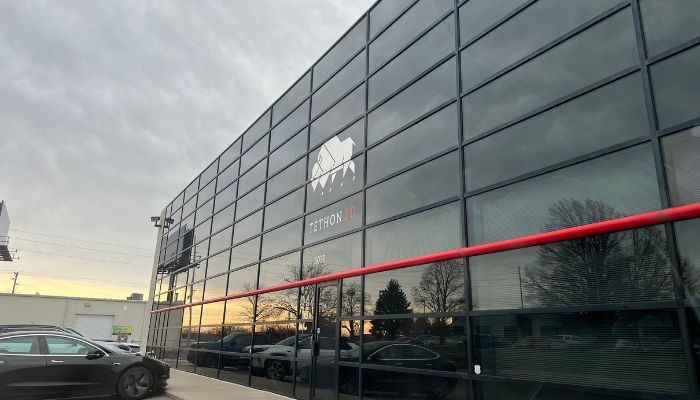
Tethon 3D’s office in Omaha, Nebraska (Photo Credits Julia Steiner)
Tethon 3D was founded by husband and wife Karen and Jim Linder, who both have medical backgrounds. One night, the two attended a lecture from a Bowling Green State University (BGSU) professor who was researching ceramic 3D printing. Their initial thought was that 3D printed ceramics could have useful medical applications. As it turned out, the professor had been looking for an avenue to commercialize his research while still being able to teach. Karen and Jim had previously founded other companies and had funded over thirty startup companies with their angel investment company Linseed Capital. So, they negotiated with BGSU to acquire the invention’s intellectual property and founded Tethon 3D as a materials company.
More from the desk
Six other notes from the rest of the bench.
 NewsFor the first time, a 3D printed house is listed on AirbnbFor several years now, Airbnb has been one of the preferred choices for tourists when they go on vacation. The platform, which allows individuals to rent out their apartment or house, has been so successful that it is now considered…
 News3D Daily Show #4: Improving Part Quality with Post-ProcessingToday was the final day of Formnext as well as our 3D Daily Show #4, with exclusive content from the event. Since it’s the last day, it’s only fitting that we also spoke about the last step of the additive…
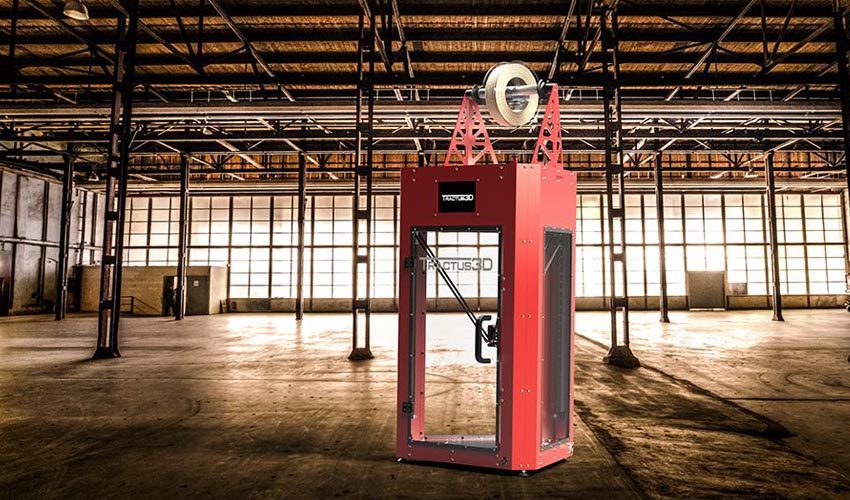 PrintersTractus3D releases its high-temperature modular 3D printerDemand for advanced thermoplastic polymers such as PEEK, PEKK or PEI, compatible with 3D printing has never been as significant as today. Tractus3D leads the way as it was one of the first manufacturers that developed a high temperature PEEK…
 NewsApple Unveils “Apple You”: A 3D-Printed Personalized Product LineIt has long been Apple’s mission to make technology feel intuitive, seamless and, above all, personal. The name is literally iPhone. Now, the Silicon Valley tech giant is taking that philosophy one step further. On March 31, Apple quietly announced…
 ApplicationsCopper3D uses 3D printing to combat HIV transmission during breastfeedingUsing 3D printing, Chilean manufacturer Copper3D has just introduced a brand new device to combat HIV transmission during breastfeeding. The invention is a 3D printed breast pump nozzle made from an antibacterial material. The young startup is the originator of…
 NewsLancaster Museums Create 3D Printed Versions of Paintings for the Visually ImpairedIn a recent project, Lancaster City Museums, Lancaster University, and Galloway’s Society for the Blind in Morecambe joined forces to 3D print relief versions of paintings from the museum’s art collection. The purpose of this is to give people with…