News
SLA vs DLP: Which Resin 3D Printing Process Should You Choose?
Since the invention of stereolithography (SLA) in 1984 by Charles Hull, multiple technologies such as FDM, SLS, and MJF, have emerged. Some are even derived from SLA like Digital Light Processing (DLP). As you probably know, each of these processes is intended…
- 3 min read
- News
- Six more stories
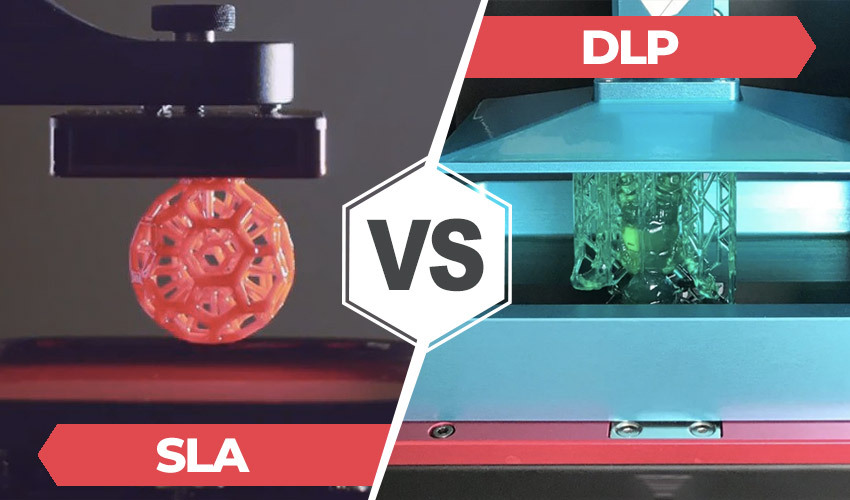
Since the invention of stereolithography (SLA) in 1984 by Charles Hull, multiple technologies such as FDM, SLS, and MJF, have emerged. Some are even derived from SLA like Digital Light Processing (DLP). As you probably know, each of these processes is intended for various industries and applications. Today we will focus on SLA and DLP technologies , and we will determine their characteristics in order to establish a comparison between the two processes. And while the two technologies have many things in common, there are some notable differences. How do these technologies work? What materials can be used? Who are the main manufacturers? We go over all you need to know below!
SLA and DLP technologies
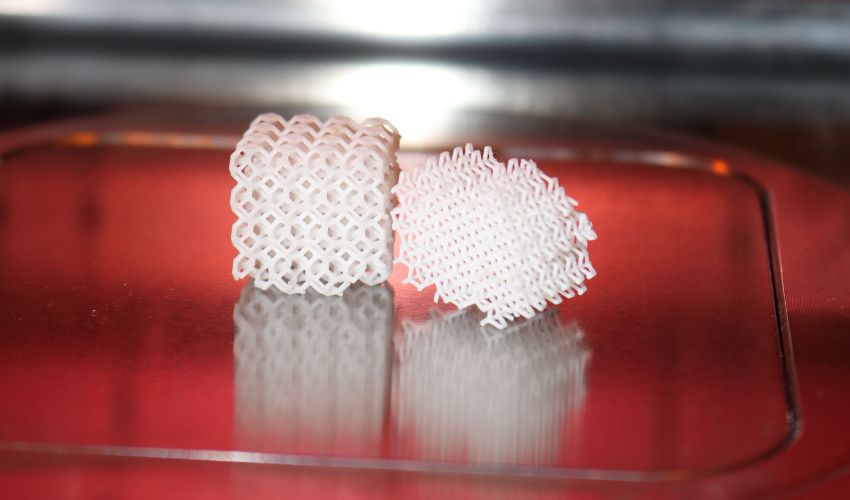
While SLA and DLP printing processes have several differences, there are some similarities between the two. They both expose liquid photopolymers to a light source. As they both have a resin tank, they are intended for printing small models with precise details. The methods are compatible with flexible or hard materials, and can also print composite materials, filled with glass or ceramic for example. Note that the printed parts are relatively fragile, liable to deteriorate if they are exposed to the sun and may be subject to warping.

Liquid resin is used for both SLA and DLP.
The first 3D printing technology developed in 1984, stereolithography is now considered to be one of the most accurate 3D printing processes on the market. Unlike DLP technology, the light source used is a laser. The laser beam sweeps across the resin tank moving on the horizontal axis and solidifies the material layer by layer. Two types of machines exist today: those where the laser acts from top to bottom, with a plate which will descend with each new layer and those with a laser that acts from the bottom up, with a platform that goes up as you go. The SLA achieves smooth surfaces and a layer thickness between 0.05 and 0.01 mm, thus allowing the printing of objects with extremely thin layers.
More from the desk
Six other notes from the rest of the bench.
 NewsHeadmade Materials raise 1.9 million to scale up their technologyFounded in 2019, Headmade Materials is a startup that develops materials and processes for metal 3D printing. The company is known for developing a sinter-based metal additive manufacturing process called Cold Metal Fusion (“Metal SLS”). This innovative process enables additive&h
 NewsTop 5 Videos: A 3D Printed Park, Space X’s 3D printer and more!As with every Sunday, today we will be sharing with you some of the latest videos from the world of additive manufacturing. For this week, we took a closer look at park in Shenzhen, China with 3D printed 2,000 parts.…
 Guides#3DStartup: Gastronology’s 3D-Printed Food Can Help Patients With Eating DifficultiesFood is a basic fact of human life, and global trade means most people can enjoy cuisines and options from all over the world. However, not everyone can benefit from the rich variety of food available to us. What happens…
 ApplicationsITP Aero 3D Prints the Structure of the New UltraFan Aeronautical EngineAs the Spain-based subsidiary of British luxury automobile maker Rolls-Royce, ITP Aero continues to innovate in the aeronautical industry, particularly as it pertains to engines. Now, ITP Aero has designed and created one of the main structures of the new…
 NewsWhat to Expect at ANTEC 2023When it comes to 3D printing materials, the importance of plastics can not be dismissed. Even though we are increasingly seeing the use of metals and ceramics in additive manufacturing, plastics continue to be king. Indeed, the global 3D printing…
 MaterialsLucideon Talks Advancing Metal and Ceramic AMMaterials are, and always will be, the core of additive manufacturing. But being able to pick the right one for the right application, and making it with the right process, is a constant challenge for many looking to adopt the…