Applications
Sensors for Future NASA Missions To Be Manufactured With Additive Technology
The aerospace sector stands out as a prime beneficiary of additive manufacturing‘s advantages. Through 3D printing, intricate, lightweight components can now be designed and produced with unprecedented speed and efficiency, revolutionizing not only aerospace but various oth
- 3 min read
- Applications
- Six more stories
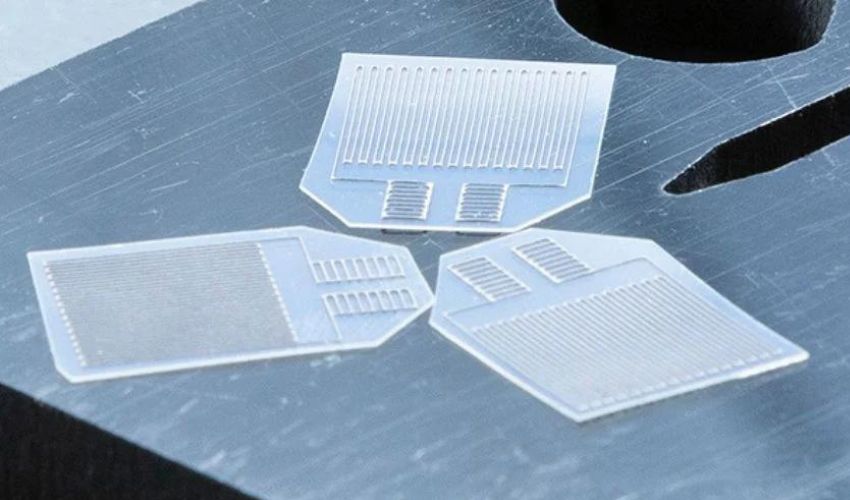
The aerospace sector stands out as a prime beneficiary of additive manufacturing‘s advantages. Through 3D printing, intricate, lightweight components can now be designed and produced with unprecedented speed and efficiency, revolutionizing not only aerospace but various other industries as well. A groundbreaking moment in space exploration and additive manufacturing occurred when a team from the FAMU-FSU College of Engineering, a collaborative institution between Florida A&M University and Florida State University, successfully developed 3D printed sensors for NASA. This achievement represents a notable stride in leveraging 3D printing technology to craft high-performance components, promising remarkable advancements in both space exploration and manufacturing capabilities.
The research team, consisting of engineering students and experienced engineers, was led by Professor Subramanian Ramakrishnan of the Department of Chemical and Biomedical Engineering. With the expertise of the multidisciplinary team and the decision to use innovative technologies such as additive technologies, they were able to produce state-of-the-art sensors that mechanically outperform conventional sensors used in the aerospace industry. This breakthrough is the result of the NASA-driven project Additive Manufacturing of Electronics for NASA Applications, on which work will continue for another year. The universities received $300,000 for research and development of the sensors, which will be supported by NASA engineers.
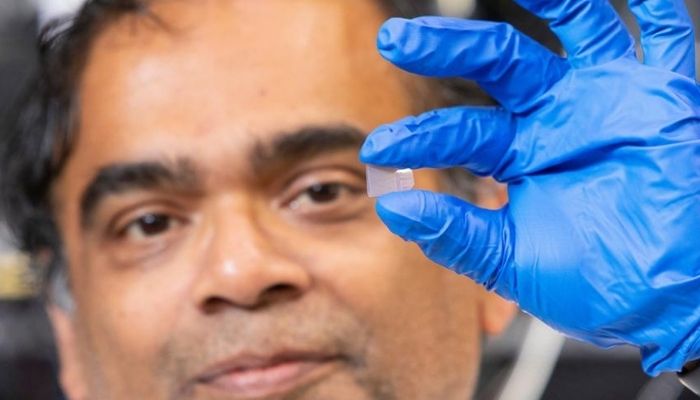
Professor Subramanian Ramakrishnan, project leader (Photo Credit: FAMU-FSU College of Engineering).
Sensors play a pivotal role in aerospace endeavors, translating physical phenomena into electrical signals for computer processing. This critical function enables engineers to comprehend the behavior of spacecraft systems amid the rigors of space. Among the array of sensor types with specific functions, strain gauges stand out. These sensors are instrumental in measuring the deformation of objects, offering invaluable insights into structural integrity. During aerospace missions, these devices assume a paramount role, diligently monitoring systems in real-time. Their vigilance is essential in averting any deformations that might jeopardize spacecraft safety and operational efficiency.
More from the desk
Six other notes from the rest of the bench.
 ApplicationsSouth Korean researchers 3D bioprint human skin3D bioprinting is a sector that has experienced the most changes and developments over the last couple of years, bringing us new headway with the creation of 3D printed human cartilage and Ovaries. Thanks to a boom in new discoveries, researchers have found…
 SoftwareThe Top AI Software Solutions for 3D PrintingIt seems that nowadays artificial intelligence, or AI as it is more commonly known, is on everyone’s lips. And though there is significant discourse centering on ethical issues with the technology, it is undeniable that AI could be a great…
 NewsFirst 3D Printed Starbucks Coffee Bar Opens in ShanghaiStarbucks is a giant of the corporate world, with over 26,000 coffee bars worldwide as of 2017. A major source of Starbucks’ recent growth has been in Asia, especially China. Of their 2017 total, over 3,000 are in China alone,…
 ApplicationsNomad Prototypes Unveils Resin-Based 3D Printed DroneIn aviation, the use of 3D printed drones has already revolutionized our perception of aerial possibilities. These devices, the result of a fusion between 3D printing and modern aviation, offer unprecedented flexibility and adaptability. We’ve already seen a number of&helli
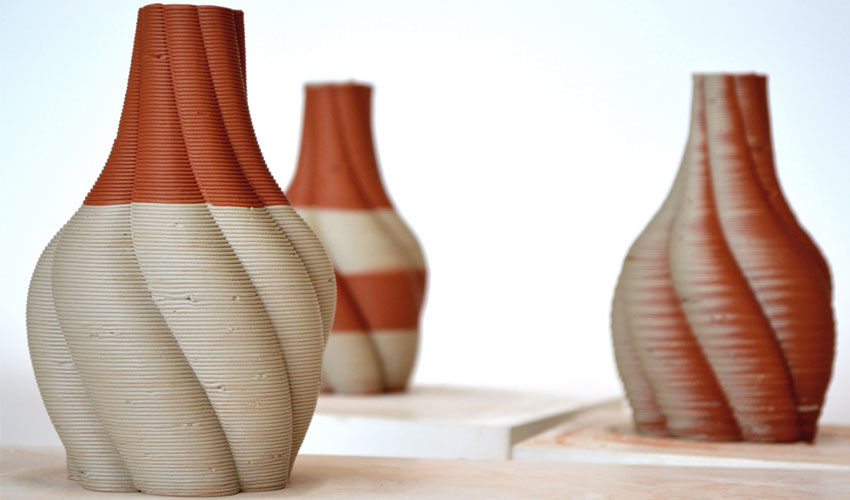 PrintersVormVrij unveils their ceramic 3D printer, the LUTUM v43D ceramic printing is becoming more accessible in the additive manufacturing market with the arrival of players who are developing affordable and innovative machines. The Dutch manufacturer VormVrij is now making their introduction into it following the launch of their…
 ApplicationsOsteopore and Magloy Tech team up to commercialise dissolvable bone graft productOsteopore International and Magloy Tech have partnered to commercialise their new dissolvable bone graft product. The OrthoMag is a fully degradable facial bone fixation implant. The product is the first complete bone implant solution. While its predecessors require revision surg