Applications
RMIT Research Team Develops New Method for Designing Implants Using Bioprinting and Injection Molding
At the Royal Melbourne Institute of Technology (RMIT University), a team of researchers, along with doctors from St Vincent’s Hospital in Melbourne, have developed an innovative method for bioprinting medical implants. Instead of designing scaffolds on which cells will mult
- 3 min read
- Applications
- Six more stories
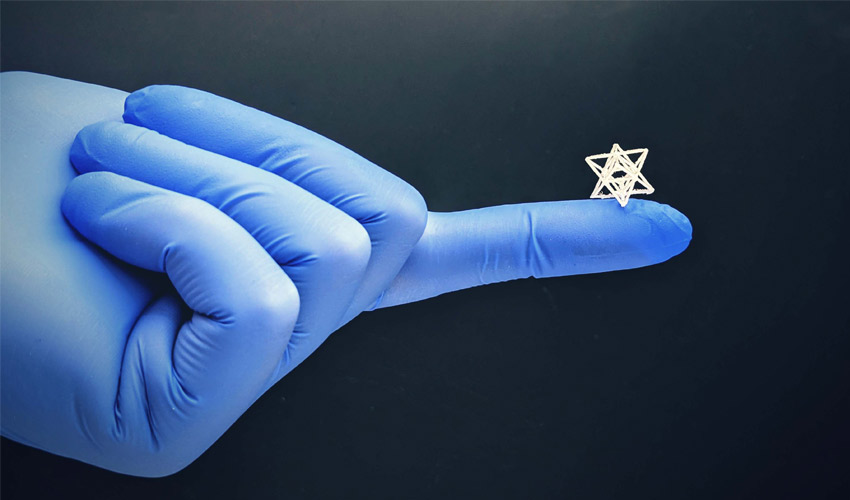
At the Royal Melbourne Institute of Technology (RMIT University), a team of researchers, along with doctors from St Vincent’s Hospital in Melbourne, have developed an innovative method for bioprinting medical implants. Instead of designing scaffolds on which cells will multiply, they 3D printed molds with cavities into which they injected biocompatible materials. Once the mold was dissolved in water, all that would remain would be this bio-scaffold. This technique, dubbed Negative Embodied Sacrificial Template 3D (NEST3D) should be compatible with a wide variety of materials but would especially allow the creation of microscopic structures.
In tissue engineering, the use of bioprinting is becoming more and more common as it can design of devices that promote the reconstruction of bones or muscles. Generally, 3D printed scaffolds are implanted in a patient’s body to encourage cells to reproduce and thus heal injuries which can range in severity. One of the obstacles that exists today is the size of these structures and their complexity: using scaffolds in the micron range remains complicated. Why not adopt a more indirect approach?
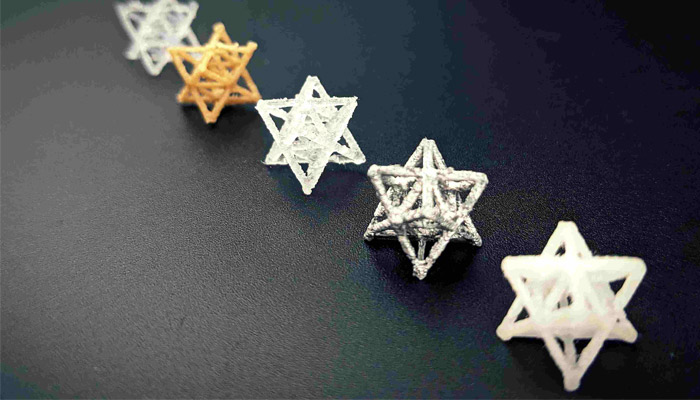
Using their method, researchers can design much more complex and smaller structures (photo credits: RMIT University)
This team of researchers decided to 3D print a mold with complex, intricately-patterned cavities. They were then able to inject biocompatible materials into these holes that form a welcoming scaffold for any cell. The researchers explain that they used a PVA glue to make the mold and injected biocompatible materials into it. Once hardened, the mold is immersed in water, which completely dissolves the glue. All that remains is the intricately shaped scaffold, as small as a fingernail.
More from the desk
Six other notes from the rest of the bench.
 NewsSandwaves, the 3D printed installation from sandArchitecture is always evolving as the years go by. In fact, increasingly, 3D printing technologies are providing the tools to imagine new projects for this sector. In Saudi Arabia, two architectural design studios, Precht and Mamou-Mani Architects have constructed a…
 NewsResearchers mimic nature for colorful 3D printingResearchers from the University of Illinois are demonstrating how additive manufacturing technologies can be used to produce multiple colors from a single ink. More specifically, the research paper entitled “Tunable structural color of bottlebrush block copolymers through direct-
 News3D Printing with Holograms to Speed Up the ProcessA study conducted by the Lawrence Livermore National Laboratory (LLNL) in collaboration with MIT, the University of Rochester and UC Berkley, demonstrates how the use of holograms in the 3D printing process can dramatically speed it up. 3D volumetric printing…
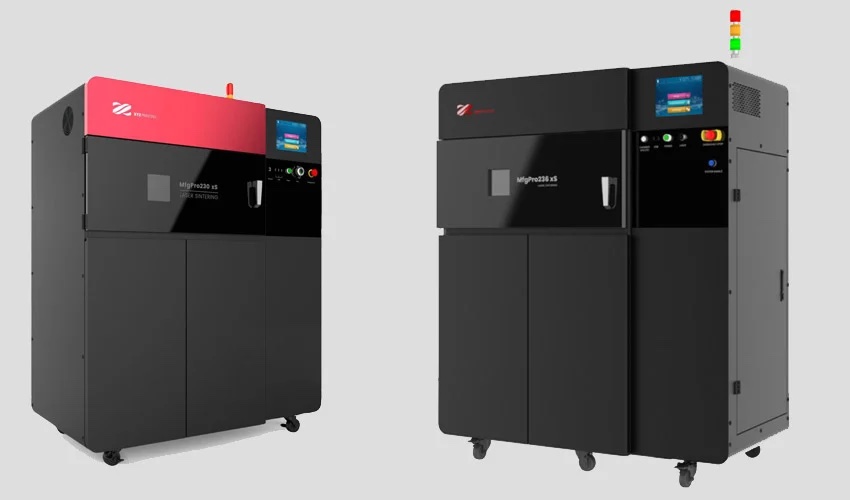 NewsNexa3D Has Announced the Acquisition of XYZprinting’s SLS TechnologyThe American manufacturer Nexa3D, which is known for its range of resin machines, has just announced the purchase of the SLS activity of the company XYZprinting. Not much information has been revealed so far, but this asset purchase is most…
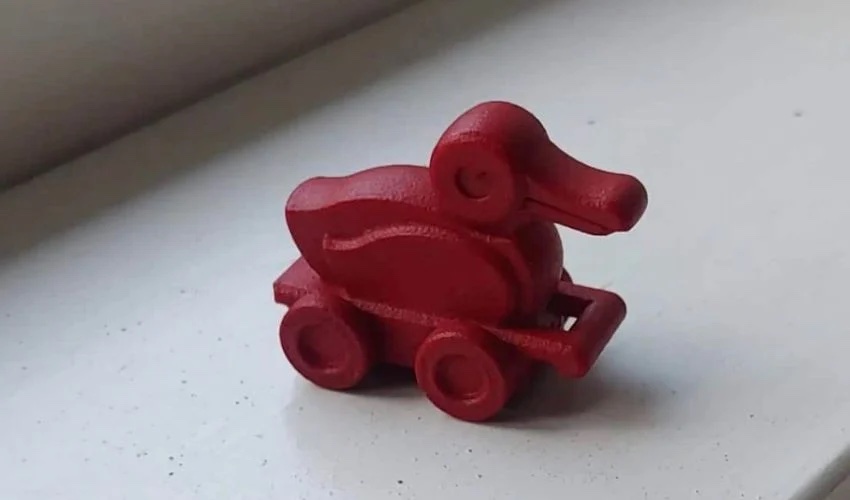 NewsLEGO Has Unveiled a 3D Printed Duck ToyYou have almost certainly heard of LEGO. These iconic toys comes in all colors, shapes and themes and are found all over the world! Whether making cars, houses or rocket ships, the iconic toy has shaped entire generations and is…
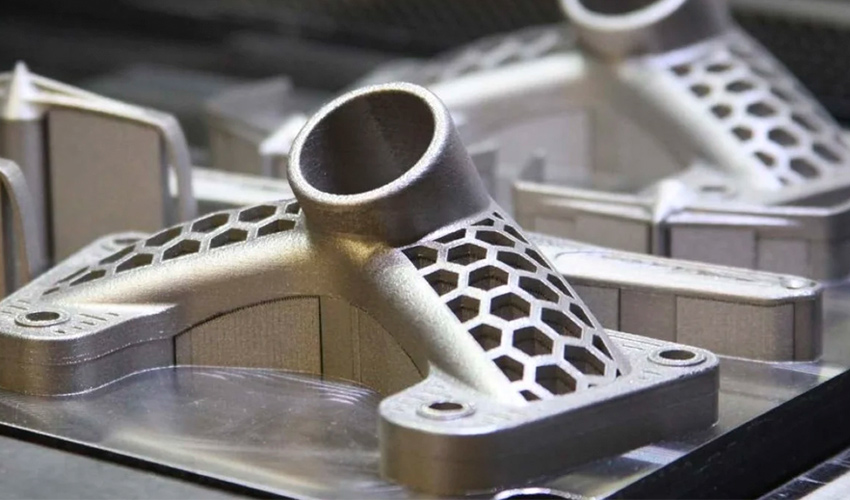 NewsThe Industrial 3D Printing Market is Expected to Reach $107.7B By 2031There is no doubt that the additive manufacturing sector is booming. According to the recent study released by Allied Market Research, the industrial 3D printing market is expected to reach a value of $107.7 billion by 2031, representing a Compound…