News
Researchers develop 3D printing with sound waves
3D printing has evolved in recent years. We know of examples such as the 3D printing liquid and 4D printing etc. Now Harvard researchers present us with their newest progress; 3D printing with sound waves. Based on acoustic or acoustic levitation they have been able to create&hel
- 3 min read
- News
- Six more stories

3D printing has evolved in recent years. We know of examples such as the 3D printing liquid and 4D printing etc. Now Harvard researchers present us with their newest progress; 3D printing with sound waves. Based on acoustic or acoustic levitation they have been able to create drops of different liquids of a composition and viscosity. According to them, their new technique will allow 3D printing with different materials on demand. It will be a great evolution for sectors such as biopharmaceutical or optical fields.
Currently 3D printing of liquid materials is used for the manufacture of medicines. But it is something that very few 3D printers can work with. The problem in working with these materials is often related to their viscosity. Some biopolymers based on sugar can be as viscous as honey, 25,000 times more viscous than water. This viscosity also changes with temperature, which makes it more difficult to optimise the printing parameters and, therefore, the size of the droplets.
Development of 3D printing with sound waves
Due to these drawbacks the researchers wanted to develop a manufacturing method that was independent of the physical properties of the liquid. Thus, 3D printing with sound waves emerged. Its development means that, thanks to the manipulation of the waves, it forms drops of controlled size from viscous fluids. The acoustic resonator created is capable of amplifying an ultrasound in a printing nozzle. So you have a force strength a 100 times stronger.
More from the desk
Six other notes from the rest of the bench.
 NewsF-elia, 3D printed optical jewelry that rethinks glassesF-elia is a young French brand of 3D printed optical jewelry that gives a second life to the glasses we know. Indeed, these accessories combine aesthetics, practicality and new technologies! The use of 3D printing in the creative process produces…
 PrintersWhat Are the Free CAD Software Solutions on the Market?Before you can 3D print a part, you have to create a model. This stage of conception is essential and can be completed using several tools, notably CAD (computer-aided design) software. They allow you to imagine any shape, whether you…
 NewsTCT 3sixty 2021: A Round-Up of the News from the EventSlowly but surely, additive manufacturing events are starting to start back up after more than a year of inactivity due to the health crisis. Last week yet another popular event took place in person, on the heels of its sibling…
 NewsSpanish Police Bust Illegal 3D Printed Weapons WorkshopIn a joint effort between the National Police and officials of the Tax Agency, the first illegal 3D printed weapons manufacturing workshop in Spain has been dismantled. While the operation itself was carried out a few months ago on September…
 ApplicationsRocket Lab Set to be Valued $4.1 billion Following MergerRocket Lab USA has just announced that it will become publicly traded in after entering into a definitive merger agreement with Vector Acquisition Corporation. The well-established end-to-end space company is a global leader in the launch, space systems and space…
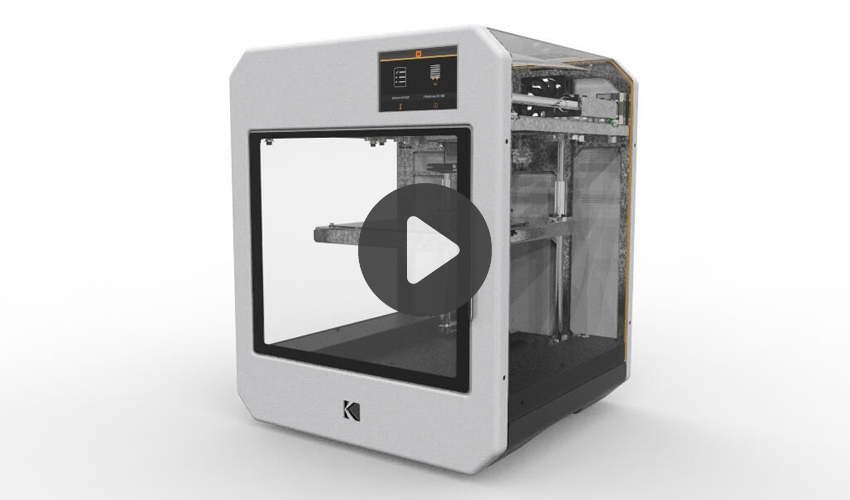 NewsTOP 5 Videos of the Week: Kodak, Makerbot, & more!This week’s Top 5 Videos of the Week contains a variety of interesting videos published in the last seven days. Since there were a number of exciting videos posted from large companies in the 3D printing industry this week, we…