Materials
How to Achieve Quality ABS Parts at Scale With Additive Manufacturing?
According to a report by MarketsandMarkets, the polymer 3D printing market is growing, with a calculated value of $1.7 billion in 2023 and an estimated $4.4 billion by 2028. Among the most widely used thermoplastics in the manufacturing industry is…
- 3 min read
- Materials
- Six more stories
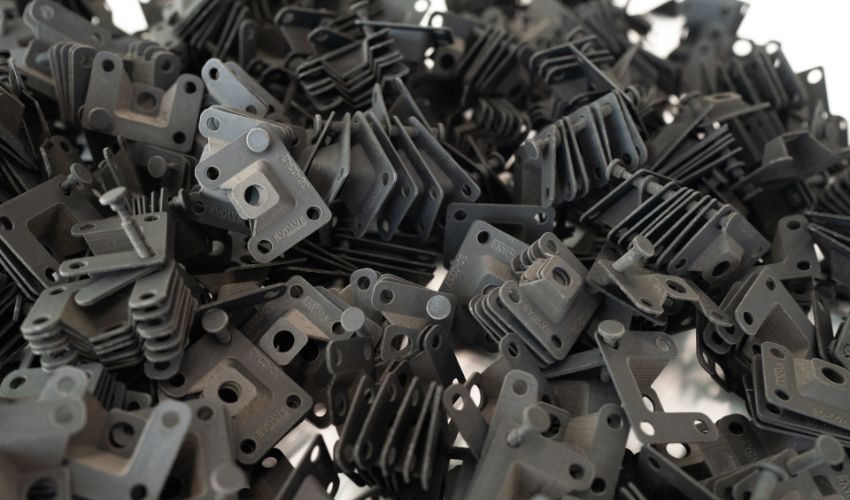
According to a report by MarketsandMarkets, the polymer 3D printing market is growing, with a calculated value of $1.7 billion in 2023 and an estimated $4.4 billion by 2028. Among the most widely used thermoplastics in the manufacturing industry is ABS (Acrylonitrile Butadiene Styrene), best known for its impact resistance, low temperature resistance and light weight. Thanks to these characteristics, it is used in numerous applications: prototypes, appliance parts, car interiors, gears, valves, tools, etc.
The most widely used production method for large-batch ABS parts is injection molding, but additive manufacturing is equally used for prototyping and small runs. A limitation in this field is that encountered by the segment of users who are scaling up their production and therefore need to move quickly from prototyping to volume production. Evolve Additive Solutions’ Selective Thermoplastic Electrophotographic Process (STEP) technology fits into this market segment, offering itself as a viable alternative to injection molding for the production of quality ABS parts at scale. How? Let’s delve deeper.
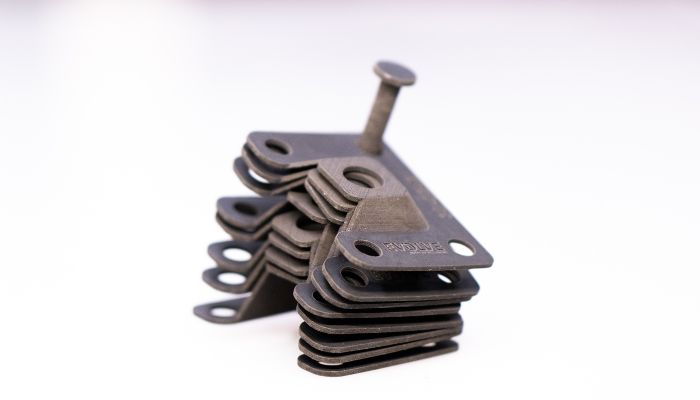
Set of ABS brackets 3D printed using STEP technology.
How Does STEP Work?
Evolve’s STEP technology is part of the additive technology family, but it does not correspond exactly to any of the processes currently outlined in the international standard ISO/ASTM 52900:2021, which describes additive manufacturing processes.
More from the desk
Six other notes from the rest of the bench.
 Materialsigus on Food-Grade Plastics for 3D PrintingGerms and pathogens are everywhere in food processing and in supermarkets. It is therefore all the more important that there are uniform regulations for statutory hygiene standards within the EU and the US. These standards ensure that the spread of…
 Printers3Dnatives Lab: Testing Artec Micro 3D scannerFounded in 2007, the manufacturer Artec 3D specializes in the development of professional 3D scanners, installing its equipment at the largest companies in the world including Tesla, Apple, Mercedes or Nike. One of the accomplishments of the the brand is…
 NewsTop 5 Videos: 3D Printing “Soft Motors” for RobotsThis week, we have a great lineup of thought-provoking videos related to 3D printing. First up, watch a video from Oregon State University on how their research teams are working on printing reactive material for robots. Second, learn from Professor…
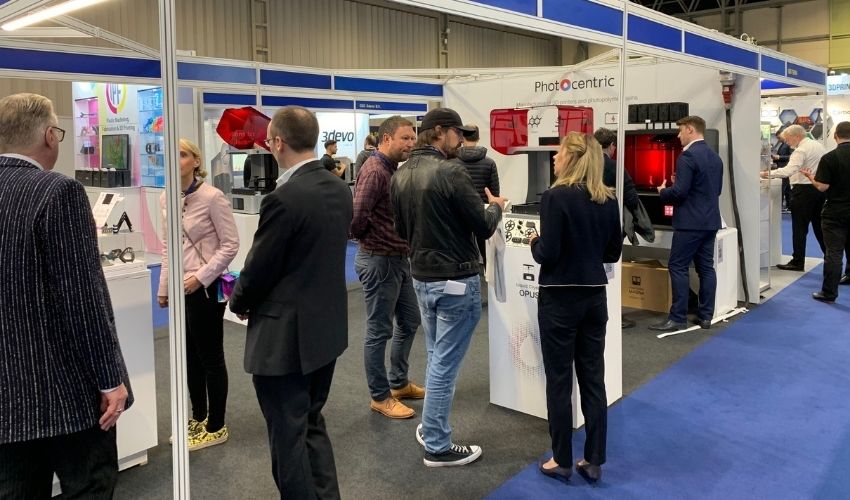 NewsTCT 3sixty 2021: A Round-Up of the News from the EventSlowly but surely, additive manufacturing events are starting to start back up after more than a year of inactivity due to the health crisis. Last week yet another popular event took place in person, on the heels of its sibling…
 NewsWEBINAR SERIES – Beyond Prototyping: Innovative AM Applications & MaterialsAdditive manufacturing is advancing at an incredible pace, with new innovations emerging all the time. Yet, one of the biggest challenges can simply be knowing what’s possible. That’s why we partnered with Stratasys to bring you a webinar series you…
 NewsTop 5 Videos: 3D Printing on an Offshore PlatformHello and welcome back to the top 5 videos of the week in the world of 3D printing! While you may rest assured we’ve got a whole range of interesting stories and takes from the industry. Join us as we…