Printers
Prototype 3D Printer Capable of Working with Lunar Regolith Developed
Additive manufacturing in the aerospace sector is growing steadily. Now, Chinese scientists at the Tiandu Laboratory have achieved an important technological breakthrough in this field. The team developed a prototype 3D printer capable of using lunar regolith as a construction&he
- 3 min read
- Printers
- Six more stories
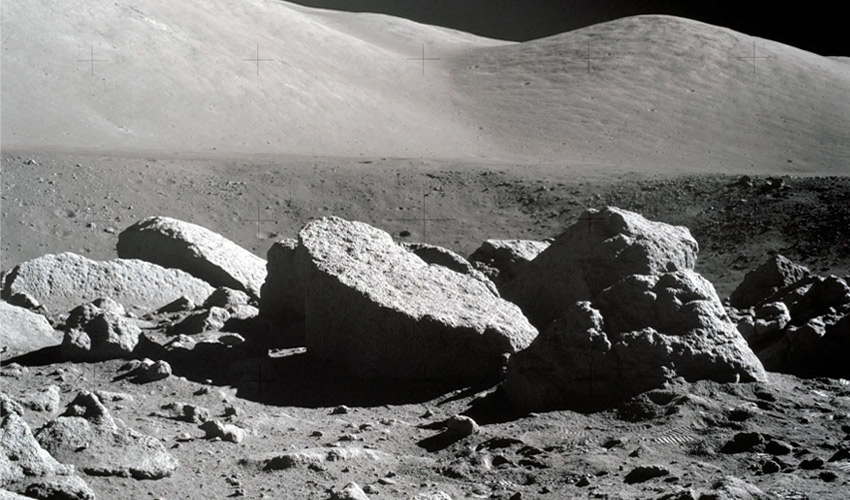
Additive manufacturing in the aerospace sector is growing steadily. Now, Chinese scientists at the Tiandu Laboratory have achieved an important technological breakthrough in this field. The team developed a prototype 3D printer capable of using lunar regolith as a construction material. Regolith is the dust and rock fragments that cover the surface of the Moon. This means that infrastructures could possibly be built directly on satellites, without needing to transport materials from Earth. In this way, 3D printing would make future space missions much more viable in the long term.
The 3D printer combines a high-precision solar concentrator with an optical fiber bundle energy transmission. Thanks to this, the team was able to reach temperatures high enough to melt the regolith, making it compatible with additive manufacturing. Yang Honglun, chief engineer of the lab, says, “This printing breakthrough has validated the feasibility of using lunar soil as the sole raw building material, enabling true in-situ resource utilization and eliminating the need to transport any additional materials from Earth.”
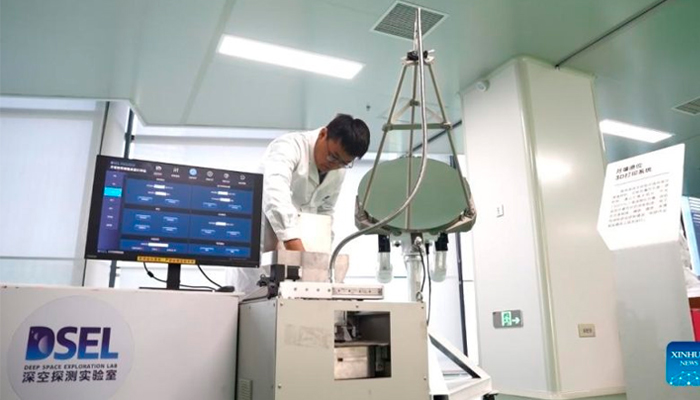
Photo Credits: Xinhua
The 3D Printer Prototype
The initial tests of the prototype were carried out on Earth, where it was possible to demonstrate that it is possible to fuse regolith into different shapes, such as lines, surfaces and 3D bodies. These tests also served to validate the efficiency of the solar concentration system and the casting process. One of the main challenges they faced was how to handle solar energy in conditions as extreme as those on the Moon. However, a multidisciplinary team ranging from planetary scientists to optical engineers managed to overcome the technical difficulties.
More from the desk
Six other notes from the rest of the bench.
 NewsNREL Advances Sustainable Marine Energy Technology With 3D PrintingAs the global demand for a reduced reliance on fossil fuels intensifies, harnessing clean and renewable energy sources has become an increasingly crucial subject. Among these emerging solutions, marine energy, which focuses on capturing power from waves, tides, and currents,&hell
 NewsSciperio aims to bioprint human bloodWhat if we could bioprint human blood? This is the project of Sciperio, the research segment of micro 3D printing equipment manufacturer nScrypt. Together with partners such as Safi Biosolutions and the Geneva Foundation, the American company hopes to facilitate…
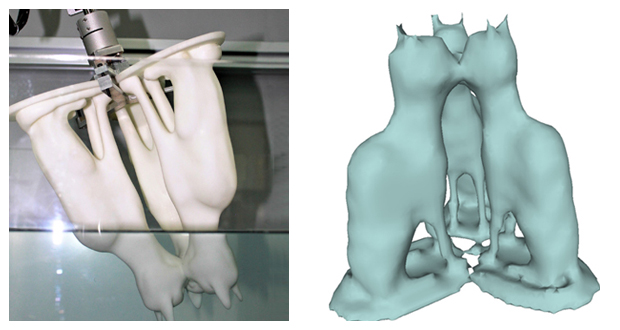 PrintersA new 3D scanning process that takes 3D scanning underwater3D scanners are a very useful tool when you want to create a new 3D model of an already existing physical object. 3D scanners that you can currently find on the market today are very efficient and accurate, but when…
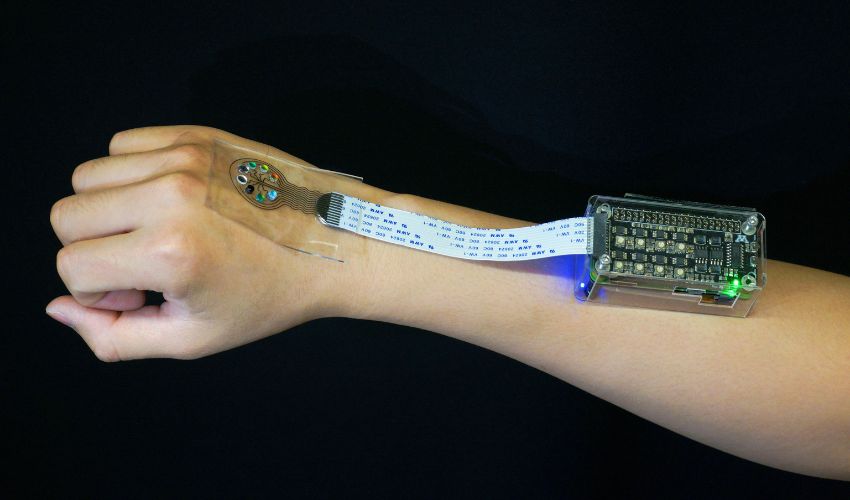 Applications3D Printing is Helping Doctors to Treat LupusOnce again, doctors are turning to 3D printing to solve unique issues in the field of medicine. In this case, engineers and doctors at the University of Minnesota Twin Cities used the technology to develop a unique light-sensing medical device…
 PrintersBenefits of an SLS 3D Printer: with Natural RoboticsThe technology of selective laser sintering involves creating objects via a powder material. It was developed in the 80s, but in its early years it was inaccessible to most because of its high price. In 2014 the patent expired, opening…
 News3D printed fashion at the Met Gala 2019!The Met Gala is undoubtedly one of the most famous fashion evenings in the world, bringing together celebrities and young designers to promote innovation and design. This Met Gala 2019 saw some amazing creations combining craftsmanship and 3D printing: designer…