News
Preserving the Marine Environment: Dubai Reefs’ 3D Printing Project
According to URB, a prominent player in the advancement of sustainable cities worldwide, numerous cities, including Dubai, are expected to confront the challenges of rising seas and coastal flooding by the end of the 21st century. These events primarily stem…
- 3 min read
- News
- Six more stories
According to URB, a prominent player in the advancement of sustainable cities worldwide, numerous cities, including Dubai, are expected to confront the challenges of rising seas and coastal flooding by the end of the 21st century. These events primarily stem from the effects of global warming, which lead to the melting of land ice and thermal expansion of seawater. Furthermore, the rise in sea levels significantly impacts coral reefs, which are vital ecosystems responsible for preserving underwater biodiversity and safeguarding coastlines. In a world where the marine environment is undergoing the full force of harmful human activities, many projects are being developed to promote marine restoration.
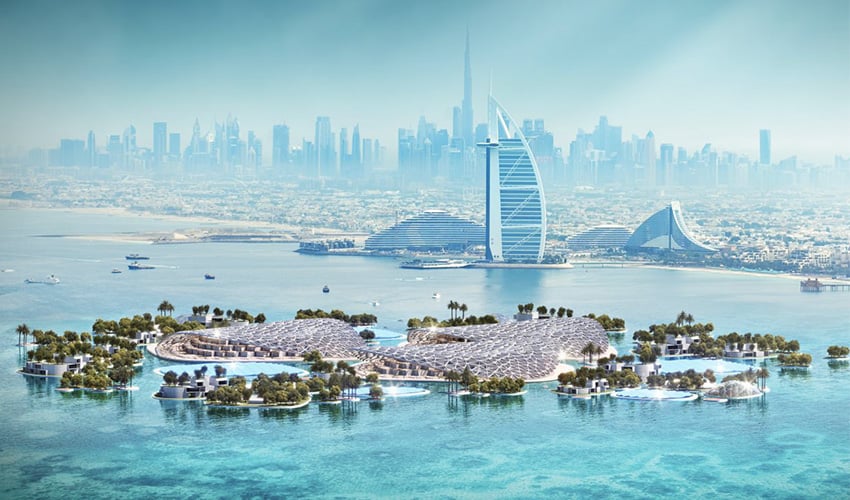
Among them is Dubai Reefs, an ambitious initiative led by URB, which aims to establish a sustainable and floating city encompassing various sectors such as residential, hospitality, sales, education, and research. The primary goal is to create over 30,000 employment opportunities while safeguarding Dubai’s marine and coastal environment. This visionary project involves the installation of an artificial reef spanning 200 km2, serving as a vast habitat for over a billion corals and 100 million mangroves. These plants are known to protect coasts from erosion and extreme weather events. Additive manufacturing has been pivotal in the development of numerous coral reefs. Companies and projects like D-Shape, Innovareef, and archiREEF are dedicated to preserving and rejuvenating the underwater ecosystem.
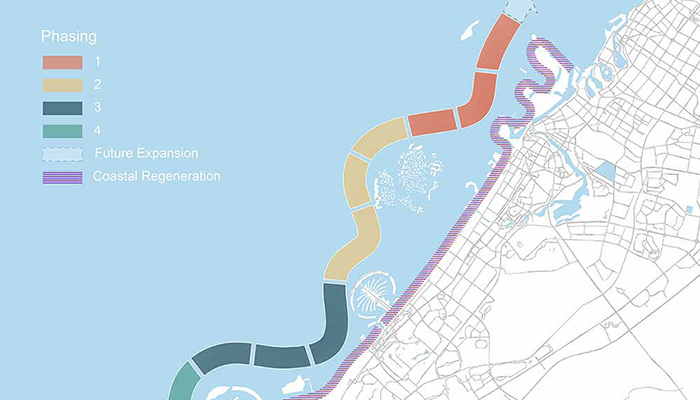
The 3D printed artificial reef will cover 200 km2 (photo credits: URB)
Restoring Underwater Life with 3D Printing
The Dubai Marine Institute is dedicated to ensuring the long-term protection of Dubai’s marine and coastal environment by implementing sustainable solutions. One crucial aspect of this initiative involves the utilization of additive manufacturing, specifically for the creation of artificial reefs. The decision to employ this technology stems from its ability to offer unparalleled design flexibility. By leveraging 3D printing, the institute can fabricate reefs with various shapes and textures that closely resemble natural underwater landscapes. This adaptability enables the reefs to seamlessly integrate into their respective ecosystems.
More from the desk
Six other notes from the rest of the bench.
 NewsTop 5 Videos: Touring the Prusa Headquarters and Print Farm in PragueSunday is finally here! And for us here at 3Dnatives, that means it is once again time to share with you the most exciting 3D printing videos from the week. This time, start off with our very own Elliot Saldukaite…
 NewsTop 5 Videos: Markforged Replicates The Historic NYSE Bell For Their IPOThis week we found the top 5 videos about 3D printing, focused on how additive manufacturing can be applied in medicine, movie sets, and more. First, we take a look at the 3D printed robotic arm that is capable of…
 NewsWEBINAR: How to get started with Additive ManufacturingOn the 26th of February, we had our first webinar of the 2020 to guide you through the steps of adopting 3D printing for your company. If you are into technology, you will have noticed that additive manufacturing has stolen…
 NewsNike A.I.R. Revolutionizes Footwear With AI and 3D PrintingConsider a shoe that reflects the diverse personalities of individuals. Whether you’re a bookworm, a connoisseur of luxury timepieces, or a fan of fantasy movies, what would such a shoe entail? Nike pursued this vision with its Nike A.I.R. project,…
 ApplicationsResearchers 3D Print Headlight Lenses, Overcoming Manufacturing ChallengesOne of the best ways to understand 3D printing’s value is by explicitly comparing its effectiveness versus CNC machining and reverse engineering. Such is the case in a study conducted by Taiwan’s Tunghai University, where researchers discovered that, for headlight&hel
 GuidesSheyn: The Art of Making Everyday Life More Beautiful Through 3D PrintingSheyn means “beautiful” in Yiddish. Aesthetics are at the heart of Nicolas Gold and Markus Schaffer’s work, so much so that they chose this word as the name for their design studio. Their approach blends architecture and design to reveal…