News
Porsche Present 40% Lighter 3D Printed Electric Drive Housing
The car manufacturer Porsche has just unveiled its first complete housing for an electric engine thanks to additive metal manufacturing, or more precisely, thanks to SLM Solutions’ new machine, the NXG XII 600. Still in the prototype stage, the part…
- 3 min read
- News
- Six more stories
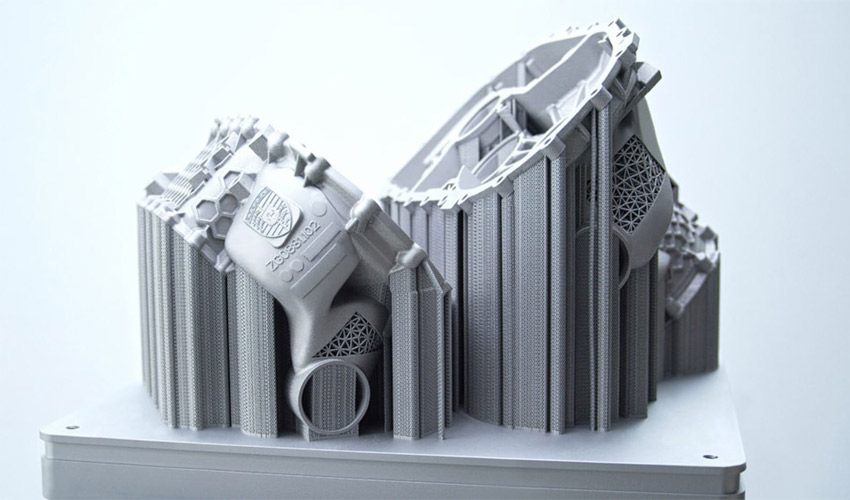
The car manufacturer Porsche has just unveiled its first complete housing for an electric engine thanks to additive metal manufacturing, or more precisely, thanks to SLM Solutions’ new machine, the NXG XII 600. Still in the prototype stage, the part would be lighter than those conventionally manufactured, reducing the total weight of the drive by about 10% and doubling the rigidity in heavily stressed areas. The prototype has passed all the quality and resistance tests successfully, proof that additive manufacturing has a bright future in the automotive sector.
Porsche has been using 3D technologies since the 1980s, first for rapid prototyping, then, with the evolution of the market, to design more and more finished parts. Today, 3D printing for manufacturers can be divided into three areas: product innovation, process innovation and new business models. Having recently introduced 3D-printed pistons for its GT cars: which are now lighter and directly incorporate a cooling duct to reduce temperature, increasing efficiency. It is then unsurprising that their new electrically powered housing was designed using the same approach.
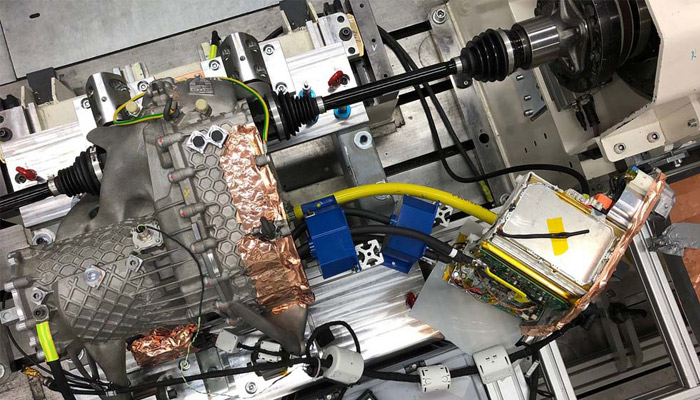
Porsche uses additive manufacturing to accelerate the prototyping phase (photo credit: Porsche AG)
Lighter and more efficient 3D printed electric drive housing
Made with a high-performance metal alloy, the housing would also incorporate the two-speed gearbox, intended to be used on the front axle of a sports car. The goal was to bring together as many features as possible in a single room, reducing the assembly steps. Falk Heilfort, project manager in the Powertrain Advance Development department at the Porsche Development Center in Weissach, explains: “Our goal was to develop an electric drive with the potential for additive manufacturing, at the same time integrating as many functions and parts as possible in the drive housing, saving weight and optimising the structure.”
More from the desk
Six other notes from the rest of the bench.
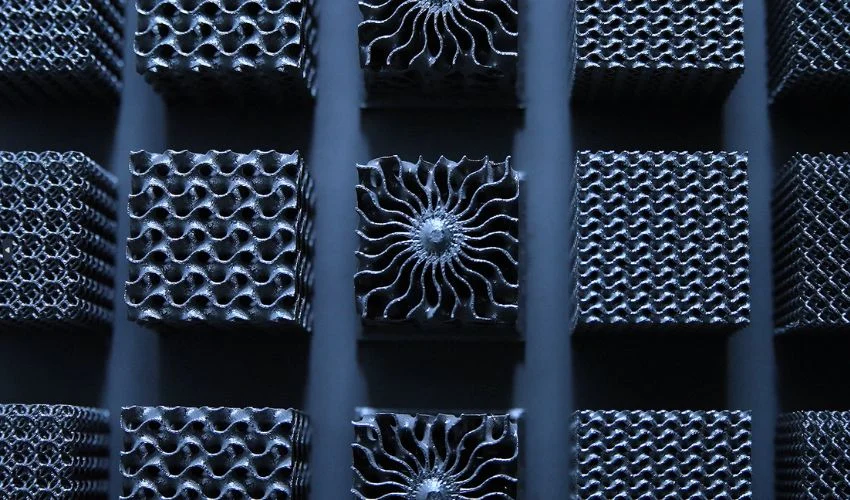 Guides#3DStartup: How AM3L Uses Metal AM for High Performance Porous ArchitecturesWe end this year with a startup coming from the CEA, the French Alternative Energies and Atomic Energy Commission: AM3L. The company is a starup that specializes in porous metamaterials produced by metal 3D printing. Its goal is to use…
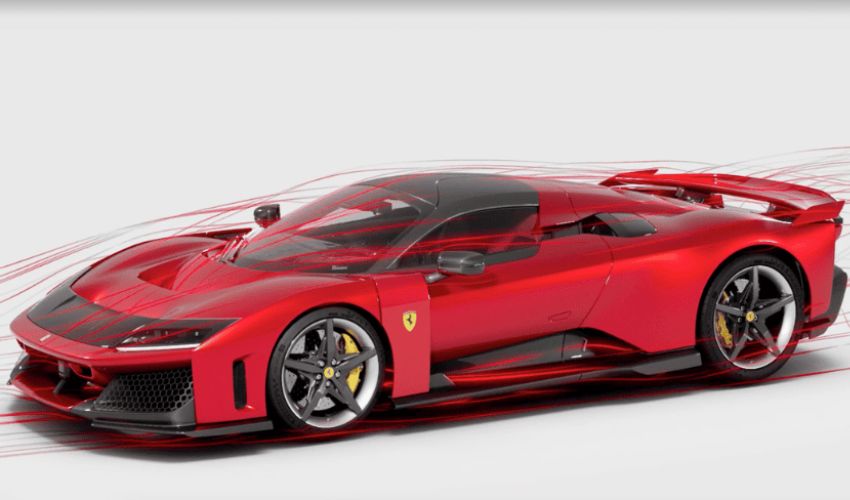 ApplicationsFerrari Uses 3D Printed Metal Parts in New F80 SupercarFerrari, the iconic Italian luxury car and racing brand, unveiled its new limited-edition F80 supercar on October 17. Production of this model will begin in 2025 and run until 2027, marking the automaker’s 80th anniversary. A total of 799 models…
 NewsThe Next Generation of Timepieces: Panerai’s 3D Printed Submersible WatchAdvancements within the watchmaking industry continue to captivate enthusiasts, pushing the boundaries of tradition and embracing technological innovations. Panerai, a company with a rich history dating back to 1860, showcased their commitment to embracing change at the recent Sa
 NewsFlo Mask Gives Kids The Perfect Fit with 3D ScanningIn order to make personalized products, scanning is probably one of the most efficient and reliable methods. Especially since today 3D scanners are more precise than ever. Whether it is to create adapted anatomical models, glasses, or personalized shoes, 3D…
 ApplicationsVeterinary 3D Printing Helps in Dog’s Hip SurgeryWhether on two legs or four, and regardless of fur, feathers or hair, advances in medical 3D printing have been benefitting humans and animals alike. The veterinary world in particular has seen many 3D printed prosthetic limbs and parts with…
 NewsMetal and Polymer Series Production with CAMS Technology From FarsoonFarsoon Europe GmbH, a manufacturer of 3D printing systems for metals and plastics, serves the entire global market with its solutions. Farsoon has made a name for itself with its Continuous Additive Manufacturing Solution (CAMS). This conveyor system with exchangeable…