Printers
Meet Photocentric’s JENI: A Serious Challenge to Injection Molding at Industrial Volumes
JENI doesn’t look like a 3D printer. It’s a tower, lit from within by a deep red glow, modular sections stacked and racked like server infrastructure. Add a module and it grows. Reconfigure a node and it takes on a…
- 3 min read
- Printers
- Six more stories
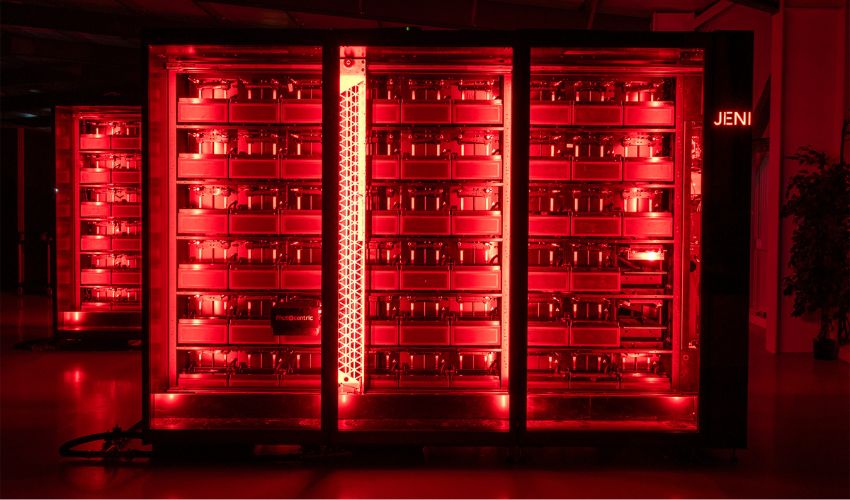
JENI doesn’t look like a 3D printer. It’s a tower, lit from within by a deep red glow, modular sections stacked and racked like server infrastructure. Add a module and it grows. Reconfigure a node and it takes on a new process. A single install can produce hundreds of thousands of parts a day and in some cases, more than a million.
Photocentric launched JENI as an autonomous production platform that pairs high-resolution LCD 3D printing with robotic post-processing to manufacture plastic parts at volumes and costs the UK company says compete directly with injection molding.
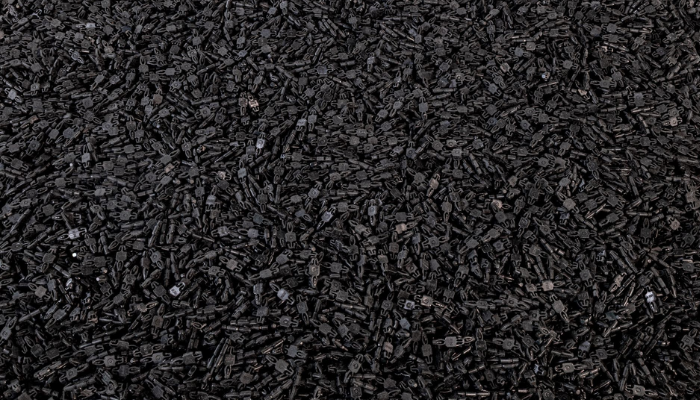
Standoffs 3D printed by JENI in the hundreds of thousands.
It’s Time to Use 3D Printing for Mass Production
Additive manufacturing is known for being excellent for prototypes, and for complex or bespoke components, but never for the parts that the world runs on: the clips, caps, connectors and grommets made in the millions. Photocentric argues that the idea is now outdated, and that additive’s failure to compete with injection molding at volume was not about the printing itself, but about labor, part handling, batch inconsistencies, and material cost. That’s why JENI is designed to run continuously and unattended, with every job carrying its own process parameters.
More from the desk
Six other notes from the rest of the bench.
 NewsTop 5 Videos of the Week: Women in 3D Printing!This week we found the top 5 videos about 3D printing and the way additive manufacturing is shaping our society. The technology has infiltrated many sectors, from medical to automotive! For international women’s day, we’ve decided to pick 5 videos that showcase the da
 ApplicationsTop 5: Safer 3D Printing With the CDCNow that Sunday is here, it is once again time to look back at our favorite 3D printing videos from the past week! We start off with an important topic, the CDC has published the first in a series of…
 NewsThe 3D printed Future TreeThe use of concrete in 3D printing is revolutionizing the construction industry. From houses to pedestrian bridges, additive manufacturing provides a great deal of design freedom that goes beyond the limits of the imaginable. In fact, it may well be…
 ApplicationsThe Role of Large Format Additive Manufacturing in Boat Building and RepairIn the maritime sector, additive manufacturing is becoming popular for the production of boats, whether to design custom parts, higher-performance components or entire models. In Greece, one of the countries where tourism is a key asset for the economy, the…
 MaterialsMIMETE on Producing Atomized Metal Powders for Additive ManufacturingMaterials for additive manufacturing are increasingly varied and vast, and depending on the target technologies and applications they can be used in a number of different forms. Materials research is also an increasingly important focus for manufacturing companies some of…
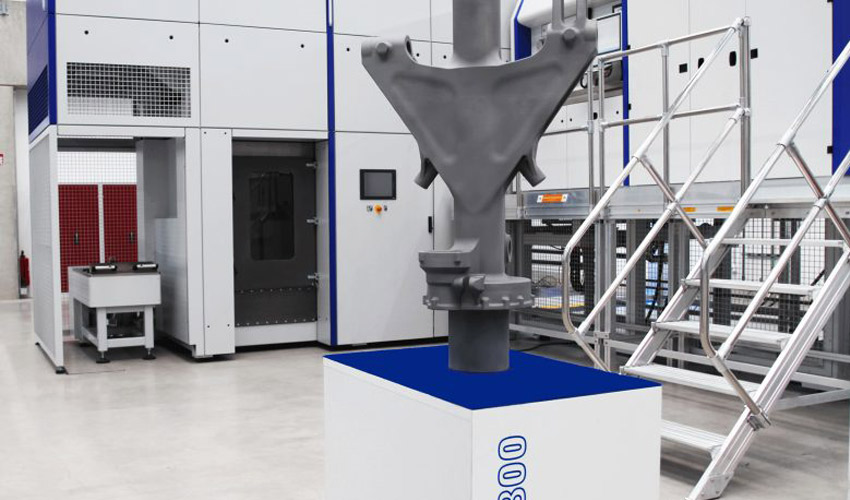 ApplicationsSafran 3D Prints a Titanium Nose Landing Gear Component For a Business JetThe French industrial group Safran, and more specifically the Safran Landing Systems branch, has used SLM Solutions‘ Selective Laser Melting (SLM) technology to produce a component of a business jet’s nose landing gear. More concretely, they have used metal additive&h