Materials
All You Need to Know About Nylon for 3D Printing
3D printing nylon (polyamide) is a strong, stretchy artificial material made from synthetic polymers. Often fashioned into bristles, fabric, or sheets, and used especially in textiles and plastics, it is one of the most widely used polymers in the additive…
- 3 min read
- Materials
- Six more stories
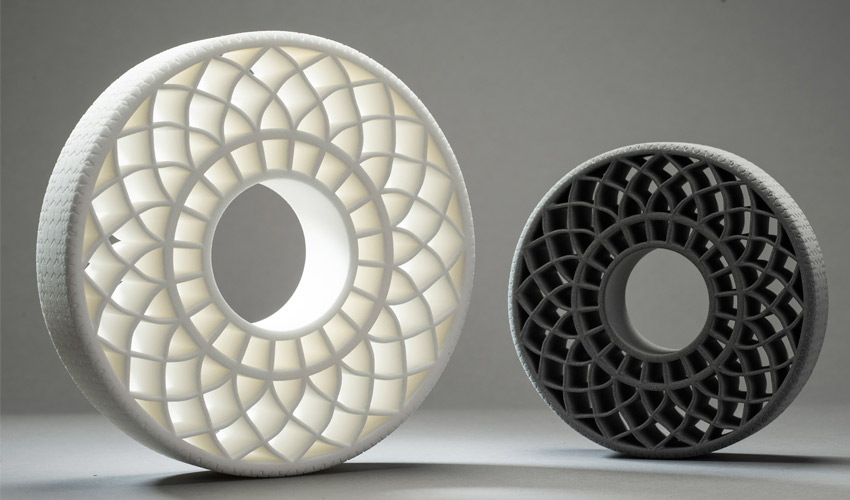
3D printing nylon (polyamide) is a strong, stretchy artificial material made from synthetic polymers. Often fashioned into bristles, fabric, or sheets, and used especially in textiles and plastics, it is one of the most widely used polymers in the additive manufacturing sector, with popularity growing. The global market valuation for nylon 3D printing filament is projected to reach $7.82 billion by the end of 2034, with a Compound Annual Growth Rate (CAGR) of 18.8%, according to DiReports. This thermoplastic is available in powder or filament form for technologies such as SLS, Multi Jet Fusion or FDM. These plastics are classified according to their chemical composition, according to the number of carbon atoms they contain.
The most well-known on the 3D printing market are undoubtedly PA12 and PA11, as well as PA6 for FDM. What are the characteristics of nylon when used for 3D printing? What are the applications? And who are the manufacturers? Find out more in our complete guide below!
How is Nylon Produced, and What Are Its Characteristics?
Nylon first appeared in 1935 in the form of nylon 6.6. It was developed by Wallace Carothers who then worked for the chemist DuPont. This first material was patented in 1937, commercialized in 1938 and remains the most widely used today. Nylon is mainly found in the textile industry thanks to its flexibility and resistance. It was used in 1940 for the first time in the production of women’s stockings. Even in 3D printing, one of the most interesting characteristics of this material is its flexibility. Nylon 6, on the other hand, was first produced by Paul Schlack in the laboratories of IG Farben and patented in 1941. All other forms of nylon came later.
More from the desk
Six other notes from the rest of the bench.
 NewsUMaine Uses Giant 3D Printer to Speed Nuclear Reactor BuildThe University of Maine is proving that large-scale 3D printing is rapidly becoming one of the most transformative tools in modern infrastructure development. When California-based Kairos Power set out to build its experimental Hermes nuclear reactor in Tennessee, the company&hel
 News3D printing and chocolates from Universal FavoriteThe Australian agency Universal Favorite created colourful chocolates through 3D printed molds. As they experimented with interlocking shape designs they ended up on a clean cut version. These chocolates have the shape of a modular staircase and can easily fit…
 NewsThe AM sector filed over 800 patents in 2020The IFI Claims Patent Services, one of the leading platforms for patent data analysis, has conducted a new study on patents filed in the technology sector in the United States. It selected the 10 most important categories in terms of…
 Software#3Dstartup: AdditiveLab and its simulation software for metal additive manufacturingTo start the year off right, we take you to Belgium to meet AdditiveLab, our first #3Dstartup this year. Winner of the Start-Up Challenge 2019 organized by Formnext, the company has developed software solutions to simulate the entire additive manufacturing…
 NewsWEBINAR: Mass Production in Additive ManufacturingAdditive manufacturing applications are rapidly evolving. Manufacturers are moving from rapid prototyping to small or even large series production. Their objective is to leverage the benefits of additive manufacturing such as the ability to design custom-made, complex and durable
 ApplicationsiFix, the 3D pen that bio-prints to treat eye injuriesA team of researchers from the University of Sydney and the University of Wollongong have developed iFix. A pen that through special ink can bio-print a cell structure to help treat eye injuries. They received $ 1.1 million in funding from…