News
A New Process Allows for Mass Production of 3D Printed Microscale Particles
Over the past year, we have seen a number of major milestones in the field of microscale 3D printing. Now there has been yet another, as researchers at Stanford University in California have developed a new microscale 3D printing process…
- 3 min read
- News
- Six more stories
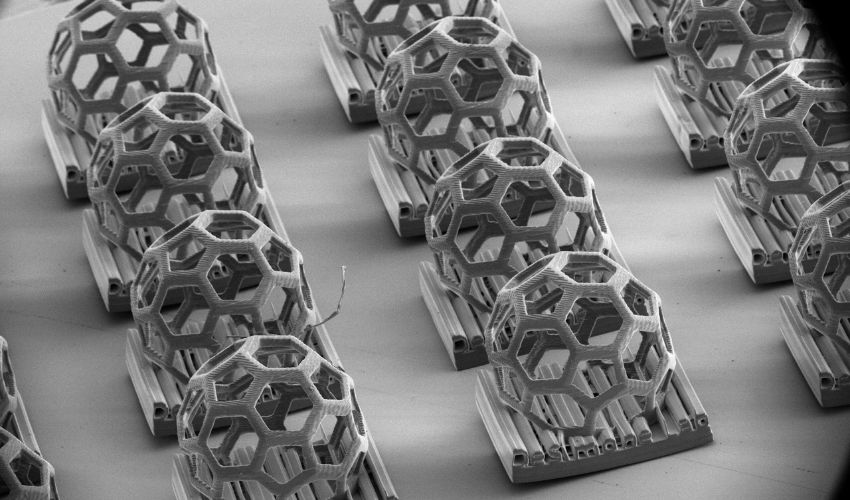
Over the past year, we have seen a number of major milestones in the field of microscale 3D printing. Now there has been yet another, as researchers at Stanford University in California have developed a new microscale 3D printing process for the production of particles in a variety of shapes. What is most notable about the new process is its exceptional speed, allowing for up to one million highly detailed and customizable particles to be produced efficiently every day.
According to a press release from Stanford, these 3D-printed microscopic particles are suitable for use in manufacturing, medicine and research. For example, they could be used specifically in microelectronics, microfluidics and as abrasives for complex manufacturing processes as well as for drug and vaccine delivery. The research was funded in part by the Bill & Melinda Gates Foundation and the National Science Foundation Graduate Research Fellowship Program.
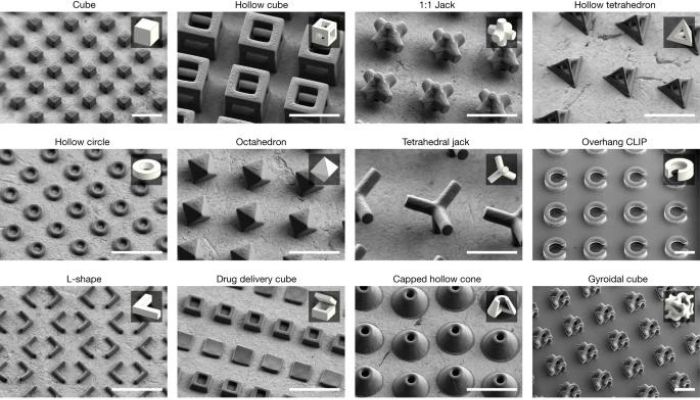
Geometries produced with r2rCLIP (image credits: Kronenfeld, Rother, Saccone, Dulay & DeSimone)
Until now, the production of such microscale particles has been exceptionally difficult. A very specific combination of light supply, resin properties and stage movement is required to produce the particles in a scalable manner. However, this new photopolymerization process provides a solution.
More from the desk
Six other notes from the rest of the bench.
 NewsQuiz: What 3D printer is ideal for you?There is no shortage of machines on the 3D printing market! Between DIY 3D printers, Plug & Play, professional or even 3D pens, there are many different models that will meet everyone’s needs and skills. Each one is more or…
 NewsTOP 5 videos of the week: the SpaceX 3D printed helmet and more!We found the TOP 5 videos of the week related to 3D printing and additive manufacturing here. Share your videos and comment on the article below or on the 3Dnatives’ Facebook or Twitter account. Hope you’ll enjoy and have a…
 News3D printed footwear, a market in full growth?The research firm SmarTech Analysis, specialised in additive manufacturing, recently published its latest report on the role of 3D technologies in the footwear sector. The use of additive manufacturing in this industry is expected to generate more than $6.5 billion…
 GuidesR3direct on Making 3D Printed Street Furniture Using Recycled MaterialsSustainability and ecological issues are at the forefront of society today, in all fields. Many companies are taking this issue seriously, exploiting the advantages and benefits of 3D printing to invent materials, products and production processes that have a minimal…
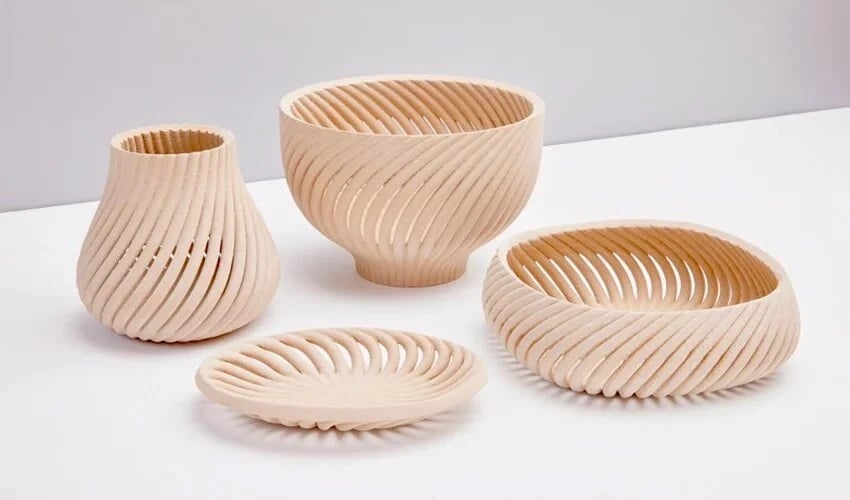 MaterialsAll You Need to Know About Wood 3D PrintingWhen we talk about additive manufacturing and materials, we often think of plastics or metals. However, the current offering has grown significantly over the years and we can now produce parts with a wide variety of materials, from ceramics to…
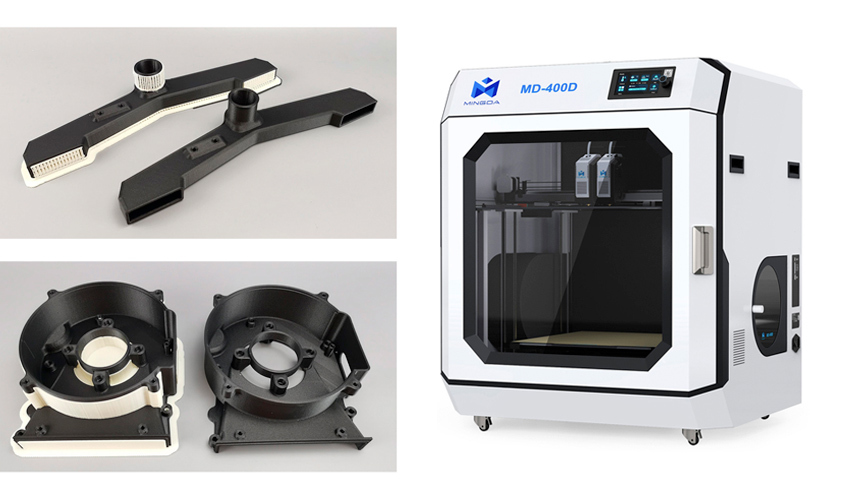 PrintersMINGDA 3D Is Paving the Way for Larger-Scale IDEX Printing With the MD-400D 3D PrinterOne of the terms that we have increasingly heard in the 3D printing field is IDEX. Meaning independent dual extruders, the technique allows for two print heads to move independently of each other. Each has a nozzle and can print…