News
New Model to Lead to Even Better 3D Printed Shoes
Nowadays, it seems that there is a never-ending quest for what could be considered the “perfect” shoe. In these efforts, 3D printing is often the technology of choice, as it allows for fully customized shoes fit to the customer. But…
- 3 min read
- News
- Six more stories
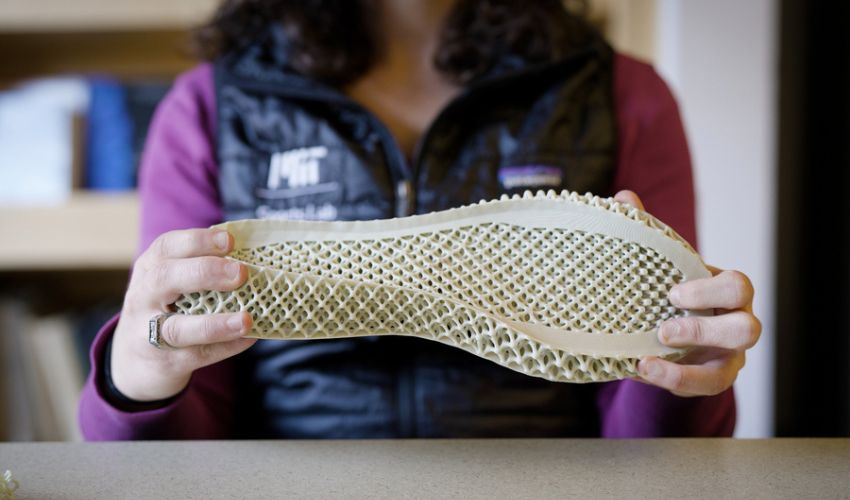
Nowadays, it seems that there is a never-ending quest for what could be considered the “perfect” shoe. In these efforts, 3D printing is often the technology of choice, as it allows for fully customized shoes fit to the customer. But how do we know that they are working as expected? What about finding a way to optimize based on running style or on whether someone is doing a marathon or a sprint? Now we may know, thanks to a model developed by MIT engineers that is able to predict the optimal running shoe design for any given runner, including for shoes that have been 3D printed.
Running is one of the most popular forms of exercise today, with about 50 million American (or about 15% of the U.S. population) engaging in it in 2021 according to information from Statista. But the type of running and the type of runner can vary greatly, hence the vast selection available on the market today. 3D printing offers another alternative by allowing for shoes that are customizable to each runner, with companies like adidas, Zellerfeld and more already jumping on the trend. But every runner is unique, as is the shoe, and what works for a career marathoner and someone who is just beginning will not be the same and manufacturers need to know that their shoes will work.
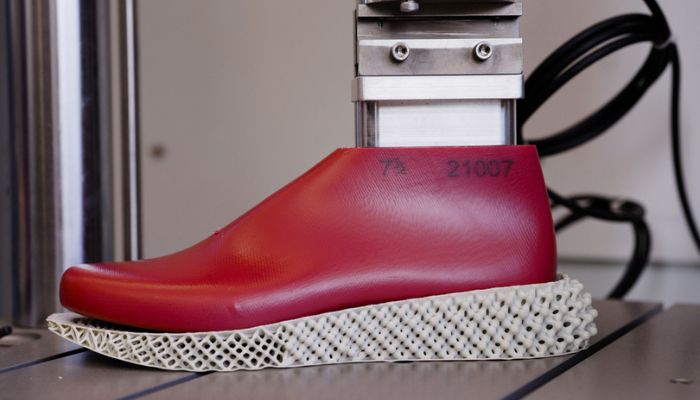
Researchers tested the stiffness of 3D printed midsole designs on an Instron machine in order to mimic footsteps
That is why shoe designers chose to turn to MIT in order to find a way to optimize the performance, including of 3D printed shoes. Anette “Peko” Hosoi, a professor of mechanical engineering at MIT and a co-author of the paper, explains, “With 3D printing, designers can tune everything about the material response locally. And they came to us and essentially said, ‘We can do all these things. What should we do?” This model is the response.
More from the desk
Six other notes from the rest of the bench.
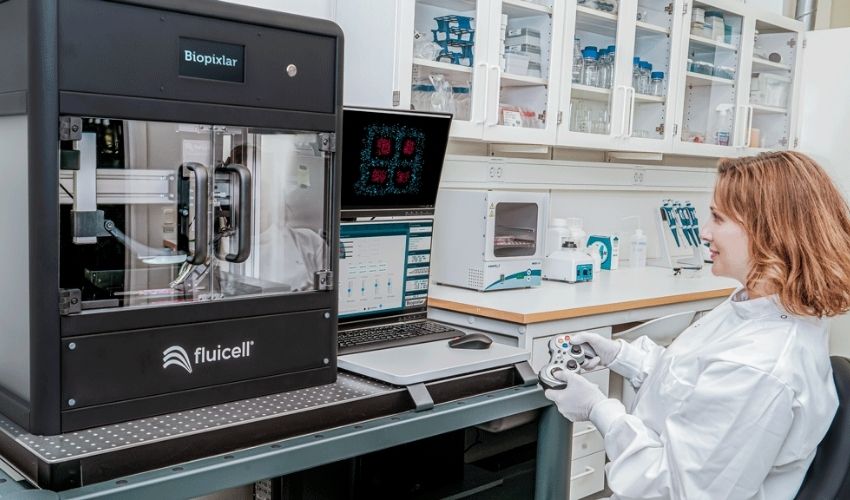 ApplicationsFluicell Develops Advanced BioPrinted Products for DiabetesThe field of medical bioprinting is rapidly advancing. Particularly, quite a bit of progress had been made in the medicinal application of 3D printing technologies for people living with diabetes. Companies have created 3D-printed pancreas models for childhood diabetes research,&
 NewsTU Graz 3D Prints Ceramic Cubes to Cool Rooms by Nearly 7°C, No Electricity NeededEurope is living through its fourth major heatwave of the 2026 season, with temperatures above 40°C recorded across the Iberian Peninsula, France, Italy, and Austria. Cities are hit hardest: urban heat island effects can push local temperatures 1.7 to 4°C…
 NewsThe Best 3D Printing Videos From 20242024 was an extraordinary year for 3D printing, with breakthroughs revolutionizing fields as diverse as medicine, automotive and aerospace. In this article, we’ve put together a selection of our favorite videos of the year, where creativity and technology collide to…
 News3D Daily Show #1: New Additive Manufacturing Solutions for a Digital IndustryFormnext 2022 opened its doors yesterday morning and the 3Dnatives teams is there on scene, going behind the scenes of the event and allowing you to follow all the news of this world event direct from your home! Every morning,…
 SoftwareThe Top Free 3D Modeling Software ProgramsNowadays, if you want to get started with the critical step of 3D modeling, there is no longer a need to invest significant money in software! Free solutions exist on the market to get started with modeling your objects or…
 NewsUnsmashable 3D printed guitar imagined by SandvikSandvik, an expert in metal additive manufacturing, has developed an original 3D printed guitar: it is apparently unbreakable. No matter how much force the musician uses to smash it against the ground, it should not break. Guitar smashing, which began…