Materials
Researchers develop a new method of 3D printing with latex
Widely used in different industries, latex is the most flexible material known so far. It has a natural origin and is composed of long polymer chains rolled into water-dispersed nanoparticles. Although, in general, latex is very well known, little has…
- 3 min read
- Materials
- Six more stories
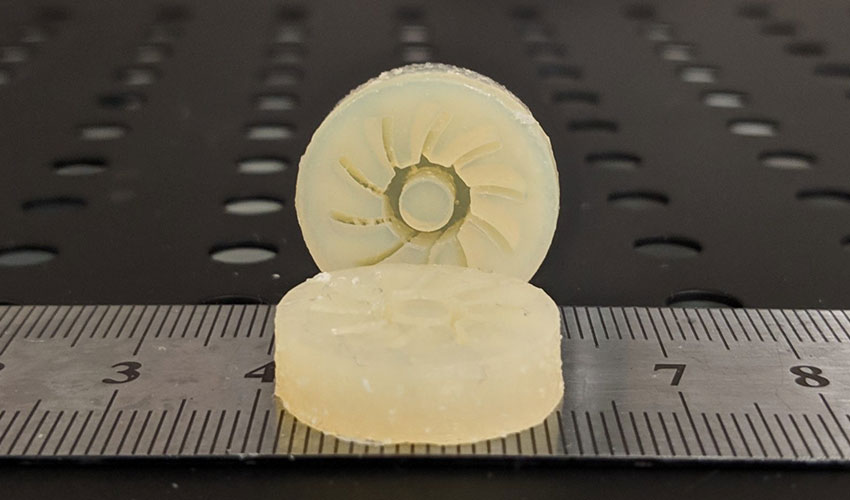
Widely used in different industries, latex is the most flexible material known so far. It has a natural origin and is composed of long polymer chains rolled into water-dispersed nanoparticles. Although, in general, latex is very well known, little has been said about it within the additive manufacturing context, as very precise characteristics are needed to be able to print with this material. This week a group of researchers from Virginia Tech University (VTU), in collaboration with the team from Michelin North America, have developed a new method for 3D printing with latex, which opens the way for printing with more elastic materials.
Phil Scott, a fifth-year student at the Long Research Group and part of the research team, had been trying for some time to synthesize latex to achieve the molecular weight and mechanical properties needed for 3D printing. By using liquid latex, he realized that the material that was extremely brittle and difficult to alter chemically.
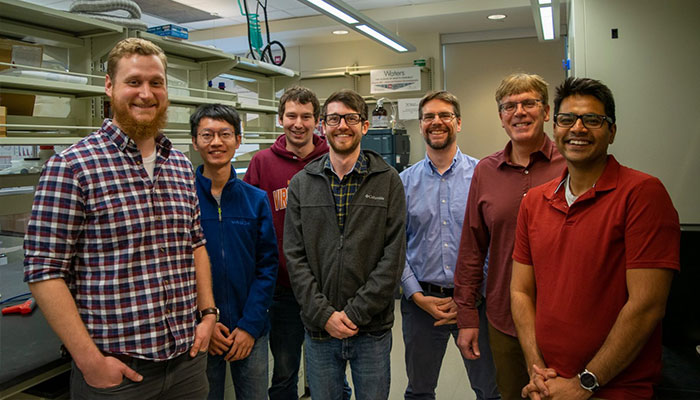
Chemists and engineers of the project’s research group. (Image credits: VTU)
“Latex is in a Zen state,” explained Viswanath Meenakshisundaram, a PhD student in mechanical engineering who is collaborating on the project. “If you add something to it, it will completely lose its stability and break.” To address the issue, the VTU team used water-soluble network precursors (photoinitiators) to create a tunable scaffold, surrounding the latex particles and allowing them to fuse together. This technique was successful and resulted in a latex variant that can be used in stereolithography.
More from the desk
Six other notes from the rest of the bench.
 ApplicationsCould 3D Printed Food Help People with Difficulty Swallowing?3D printed food is nothing new. Several companies, like Steakholder Foods and Forma Foods, have 3D printed meat and fish alternatives. Others have 3D printed chocolate and reconstituted fruits and vegetables. An international team of researchers at the University of…
 ApplicationsNAVSEA Partners with Johns Hopkins APL to Advance AM for Critical MissionsFor critical military applications, metal additive manufacturing has been questioned for concerns over porosity, mechanical reliability and reproducability. However, those issues have proved to be addressable, and defense organizations from around the world have gone on to adopt
  NewsLondon student convicted for 3D printing firearmA student at South Bank University in London, Tendai Muswere, was arrested a few days ago for printing two guns in his apartment. The 26-year-old quickly pleaded guilty and claimed that he was producing props for a film project as…
 News3D printing takes on the restoration of a historic buildingEDG is a New York-based architecture firm that says it has developed a new method of digital sculpture, called “Modern Ornamental”, used to restore a building in New York City. This method relies on 3D printing to make complex molds…
 News3D Printing Startups of the Year 2017Every month, 3Dnatives interviews 3D printing startups that are working on something innovative in the 3D printing sector. These startups range from manufacturer Markforged, to metal 3D printer manufacturer Desktop Metal, to bio-printing firm Aspect Biosystems. We summarised the
  News3D Printing Magic Meets Box Office Realities With Disney Pixar’s ‘Elemental’Amidst the buzz surrounding the remarkable 3D printed characters of Disney Pixar’s “Elemental,” there’s an underlying cloud of skepticism lingering in the air. The film, set in the imaginary Element City, where fire, water, land, and air residents coexist,