Applications
New 3D Printed Cervical Cage Successfully Implanted in Patients
In the medical industry, the use of 3D printed prostheses have frequently been used to enhance or fully replace parts of patients’ bodies. These 3D solutions are often instrumental in aiding the comfort or mobility of patients whose main goal…
- 3 min read
- Applications
- Six more stories
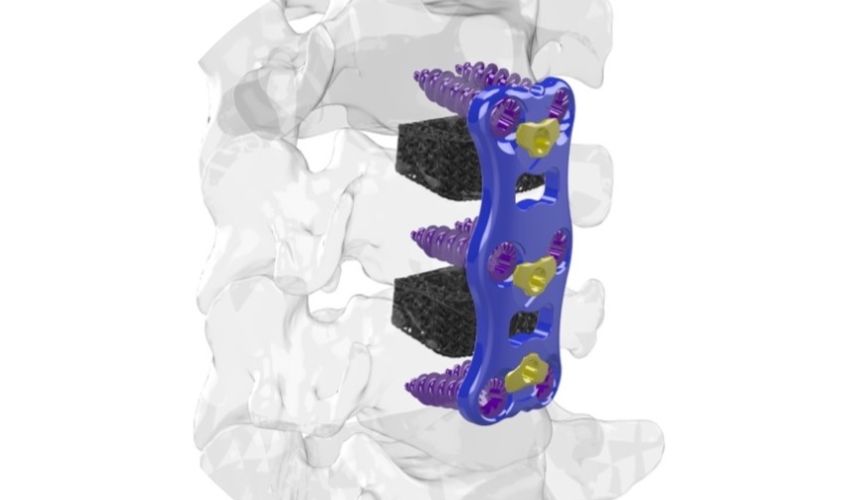
In the medical industry, the use of 3D printed prostheses have frequently been used to enhance or fully replace parts of patients’ bodies. These 3D solutions are often instrumental in aiding the comfort or mobility of patients whose main goal is to return to a normal life. While some of the major advances have been in the skull, hips, or knees, researchers from the Research Park at Florida Atlantic University have recently made a breakthrough in spinal surgery with the first successful installment of a 3D printed cervical cage recently created by medical implant company FloSpine LLC.
The implant, known as the Ti-Largo 3D Printed Cervical Cage, is a device that is meant to hold open the space between two levels of the spine, allowing bone to grow through and eventually fuse. Spinal cages like this are generally used to treat different injuries or conditions related to damage to spinal disks or vertebrae, and to repair bone growth, posture and increase support in the spine. 3D printing allows the cages to be made from a variety of robust materials such as PEEK, ceramic or titanium alloy, the latter of which the Ti-Largo 3D Printed Cervical Cage is made out of.
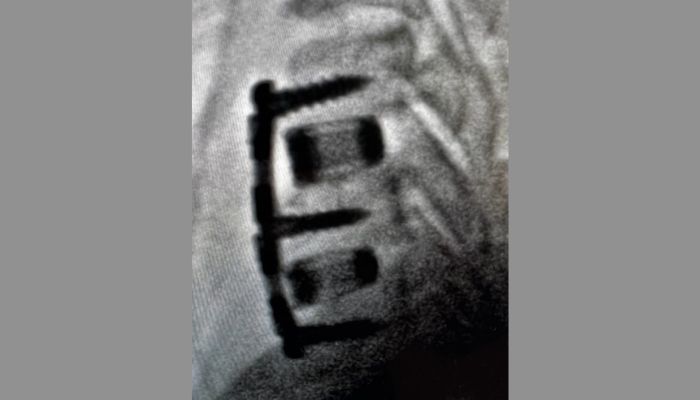
The Ti-Largo 3D Printed Cervical Cage seen after implantation (Photo credits: Research Park at FAU / FloSpine)
FloSpine’s Custom Spinal Solution
The Ti-Largo 3D Printed Cervical Cage is designed to work seamlessly paired with a second FloSpine device, the Panama Anterior Cervical Plate which together form an all-encompassing treatment for the cervical spine, which are the first seven vertebrae connected below the skull. The main focus of the Ti-Largo design is on the distinct needs of each individual patient. Because it is produced via 3D printing, each piece can be custom fitted and shaped to best suit the needs of the wearer. In addition, the team behind the implant focused heavily on optimal biocompatibility, or the least amount of resistance the device has with the living body around it, as well as maximizing promotion of bone growth within the cage area.
More from the desk
Six other notes from the rest of the bench.
 NewsTop 5 Videos: HandsOnMetrology 3D Scanning Sprays Plus Atlas RobotsOn this week’s top 3D printing videos, we present the latest video from HandsOnMetrology, which thanks to 3D scanning sprays, can scan difficult surfaces, such as windshields. Next, discover the Atlas robots made by Boston Dynamics. Equipped with 3D printed…
 NewsThe Warp, a 3D-Printed Japanese Teahouse Made of Recycled WoodAt the latest edition of Dubai Design Week, Japanese architecture studio Mitsubishi Jisho Design unveiled The Warp, a new sort of tearoom. Made from recycled wood using an extrusion 3D printing technique, this installation showcases an innovative approach called “Regenerative&hel
 NewsShimizu’s Spray-Based 3D Printing System Is Redefining How Reinforced Concrete Is BuiltAs Japan’s aging population and shrinking construction workforce put growing pressure on the industry, Shimizu Corporation is turning to a new kind of 3D printing. The company has developed a spray-based system designed to fabricate large, curved, and reinforced concrete…
 NewsTop 5 Videos: A 3D Printed Vegan Steak, ADDITIV Aerospace & MoreIn this week’s selection of top 5 videos about 3D printing, we’re giving you a sneak peak of our next ADDITIV event – ADDITIV Aerospace. Next up is Marketforged’s new investor video, released after the company announced a merger with…
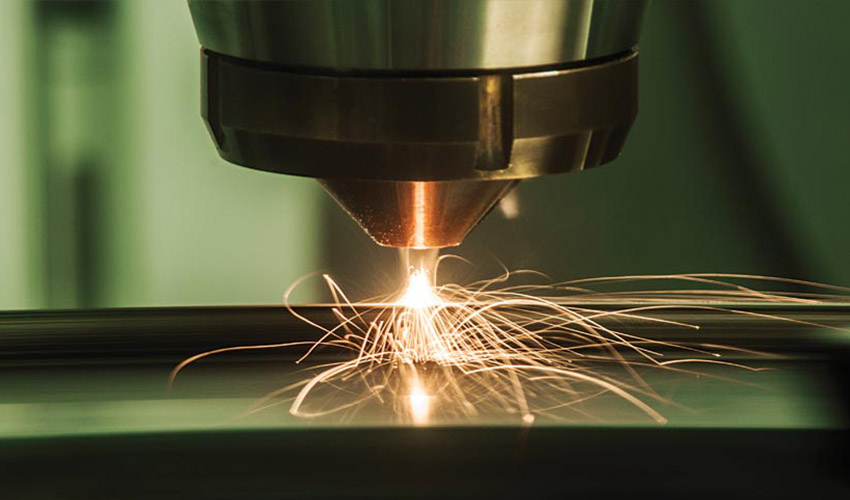 NewsThe Complete Guide to Directed Energy Deposition (DED) in 3D PrintingDirected Energy Deposition (DED) is a more complex 3D printing process, typically used to repair or add additional material to existing components. It is completely possible to fabricate parts from scratch using this technology, but it is often used for…
 NewsWEBINAR: Metal Additive Manufacturing for Research: Exploring ValCUN’s Molten Metal Deposition TechnologyMetal additive manufacturing is advancing fast, but for researchers, the most important questions are still open. How do printing parameters influence microstructure and final mechanical performance? What does process control actually look like in a metal extrusion system? And ho