News
Native Shoes presents its 3D printed liquid rubber shoes
The Canadian shoe manufacturer Native Shoes has announced a new collaboration with the Self-Assembly Lab at MIT to design 3D printed shoes, using liquid rubber. The project, called Liquid Printed Natives, aims to use futuristic manufacturing methods to create everyday…
- 3 min read
- News
- Six more stories
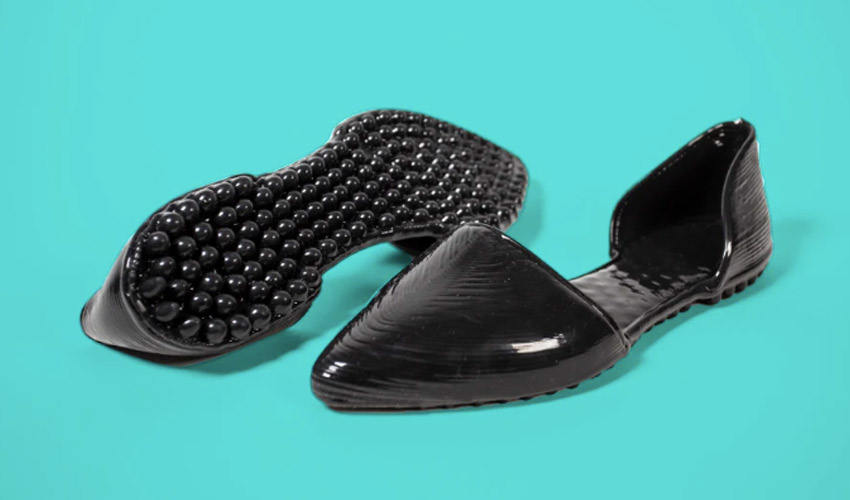
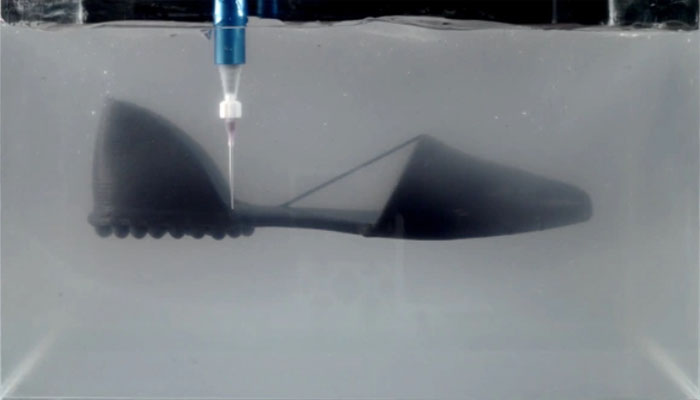
The Canadian shoe manufacturer Native Shoes has announced a new collaboration with the Self-Assembly Lab at MIT to design 3D printed shoes, using liquid rubber. The project, called Liquid Printed Natives, aims to use futuristic manufacturing methods to create everyday products, in this case different types of shoes, from sneakers to ballerinas. These shoes are produced in a gel container thanks to Self Assembly Lab’s Rapid Liquid Printing technique. The result are highly original and entirely personalised shoes.
In the fashion industry, if there is one niche that has long been surfing on additive manufacturing, it is in fact shoes. From plastic to metal, we have seen a large number of projects emerge one after the other, aiming to offer a tailor-made products with an exclusive design. This project is experimenting with liquid rubber, a somewhat unusual material in the 3D printing sector. It must be said that Native Shoes has always chosen materials that could participate to a circular economy approach to manufacturing. For example, one of its pairs is made from pineapple and corn husks.
Credits: MIT Self Assembly Lab
According to the manufacturer, the shoes in the Liquid Printed Natives project were 3D printed directly in a tray containing a reusable water-based viscous gel formula. The Canadian brand explains that it used a 50% recycled ethylene-vinyl acetate (EVA) material known for its rubbery appearance and flexibility. Thomas Claypool, founder of Native Shoes, explained that the printing process itself took longer than traditional injection molding methods (2 hours versus 40 minutes) but was much faster to market and much more personalized. In addition, he says that using additive manufacturing allows them to reduce their stocks and the amount of material used.
More from the desk
Six other notes from the rest of the bench.
 News3D Printed Violins Could Help Bring Music to AllMusic has been a part of humanity for as long as we have been recording history. And though it has changed much over the years, some things have stayed constant. For example the types of instruments and how they are…
 NewsAMUG 2022: A Round Up of all the News From the EventAMUG 2022 is officially over! The annual AM conference “for users – by users” took place this year from April 3rd to 7th in the Hilton in Chicago, Illinois. Once again, attendees were treated to packed days full of conferences,…
 ApplicationsAdditive Manufacturing Market Resumes Growth, Driven by the Defense SectorAMPOWER is an additive manufacturing consultancy dedicated to accelerating the adoption of 3D technologies worldwide. The company regularly publishes market studies and reports that shed light on the 3D printing industry. It has just unveiled its latest project, which analyzes&he
 PrintersWhat are the Material Jetting 3D Printers on the Market?Material Jetting is one of the seven families of additive manufacturing processes. As the name suggests, it consists of depositing material on a printing tray, layer by layer, much like a 2D printer that drops ink on paper. Here, the…
 NewsInside 3D Tour: Behind the Scenes at Massivit’s Headquarters and Additive Manufacturing FacilitiesAt this point, it seems likely that you have already heard of Inside 3D Tour, the series of videos in which 3Dnatives visits major manufacturers or distributors in the 3D printing industry to learn firsthand how different additive manufacturing methods…
 NewsTop 5 Videos: Delve Into Faster 3D Printing With 3D ExplainedSunday is finally here! And to help you start your week off on the right foot, we are once again sharing the top 5 3D printing videos that we found. To kick it off, learn from our very own Elliot…