Materials
NASA’s 3D Printed GRX-810 Superalloy Could Make Stronger Parts for Airplanes and Spacecraft
A year ago, NASA unveiled a new alloy that it claimed was more resistant and durable, potentially making it perfect for demanding aerospace applications. Called GRX-810, it was created through 3D printing and oxide dispersion, which would significantly improve its…
- 3 min read
- Materials
- Six more stories
A year ago, NASA unveiled a new alloy that it claimed was more resistant and durable, potentially making it perfect for demanding aerospace applications. Called GRX-810, it was created through 3D printing and oxide dispersion, which would significantly improve its performance. Now, a team from NASA and Ohio State University have worked on characterizing the superalloy, which was made in part through additive manufacturing. Furthermore, the manufacturer 3D Systems took the opportunity to test it on its metal 3D printing platform, confirming the superior properties of this new material.
As a reminder, in order to create GRX-810, NASA relied on a technique to place small oxide particles in a metal matrix to improve its properties, including heat resistance, strength and ductility. To accelerate this step, called oxide dispersion, the researchers used computer modeling and laser powder bed fusion to find the ideal composition of the superalloy in just a few minutes. In concrete terms, they start with a nickel and cobalt-chromium based alloy in which they disperse oxide particles on a nanometric scale, using the 3D printing process, layer by layer.
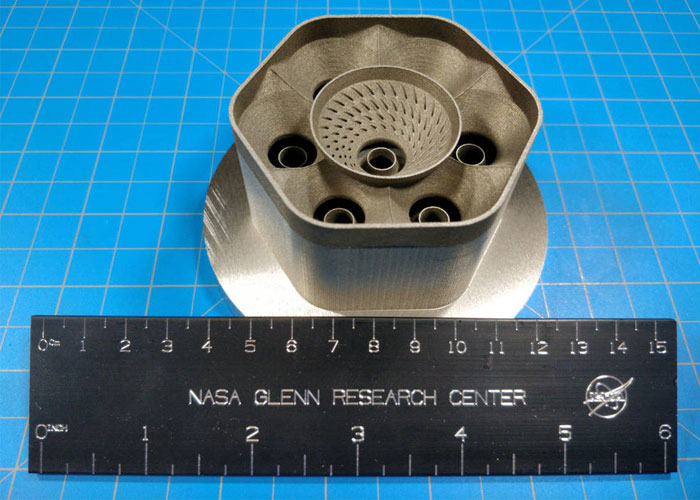
Part made using the GRX-810 superalloy (Photo Credits: NASA)
Tim Smith of NASA’s Glenn Research Center in Cleveland adds, “This superalloy has the potential to dramatically improve the strength and toughness of components and parts used in aviation and space exploration.” Indeed, GRX0810 is considered to be twice as strong, over 1,000 times more durable and twice as resistant to oxidation as current state-of-the-art 3D printed superalloys which can wisthstand temperatures of up to 2000˚F. Moroever, to verify its properties, NASA is working closely with 3D Systems to test parts made with this superalloy. The idea is to see if the superalloy can be used to create high-performance components that can hold up in such demanding applications as rocket engines. The first tests carried out have so far been successful.
More from the desk
Six other notes from the rest of the bench.
 MaterialsResearchers Find New Use for Biodiesel Waste in Eco-Friendly 3D PrintingIndustrialization, population, and economic growth are driving rising energy demands and an increased need for renewable fuel sources such as biodiesel, biogas, and bioethanol. These fuels aim to mitigate the greenhouse gas effect and are derived from renewable resources. For&hel
 NewsA moon village is being planned for 2030Building a future for humans in space was once thought to be just a pipe dream, but today, this could become a reality thanks to 3D printing (and the moon). With the recent approval by the European Space Agency (ESA), they are now working alongside architects…
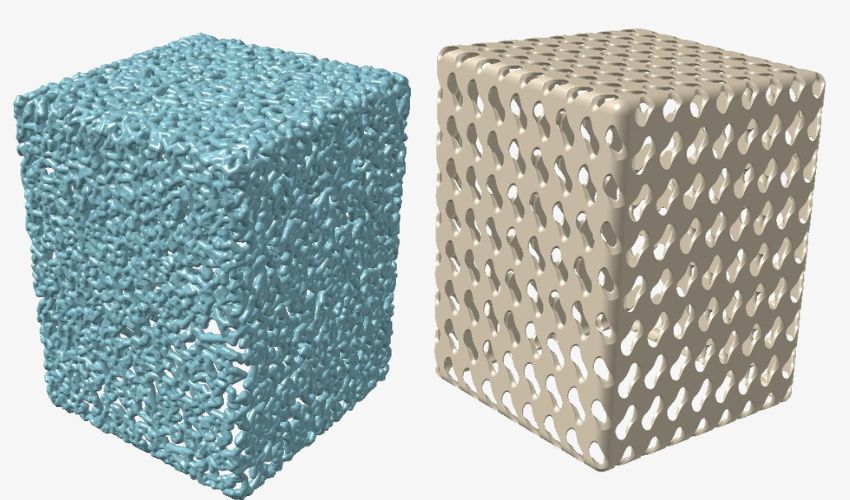 SoftwareChoosing the Right Lattice Structure in 3D PrintingWhen you ask those in the know what the benefits of additive manufacturing are, there is one thing that comes up time and again: design freedom. With the right design software, users can create incredible parts that are lightweight and…
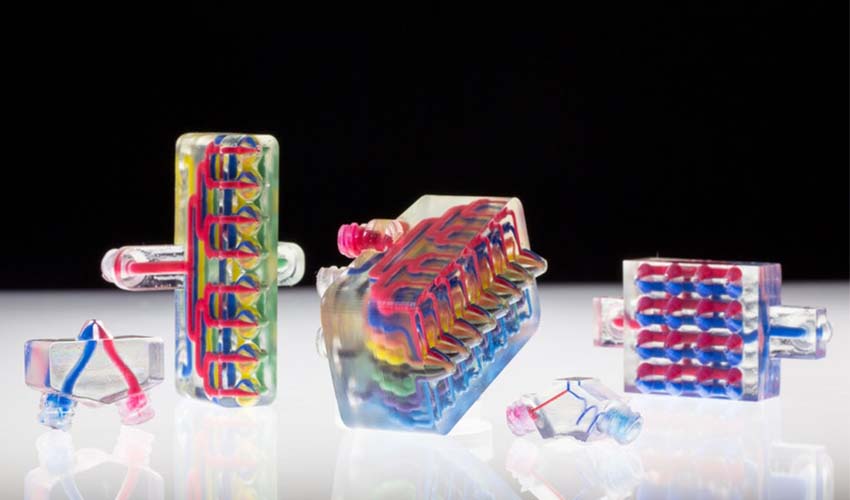 MaterialsHarvard researchers develop multinozzle 3D printer that can switch between 8 inksYou might be aware that most commercial extrusion-based 3D printers are only able to build objects from a single material at a time. And when they do allow for multiple materials and colors to be used, the process is slow.…
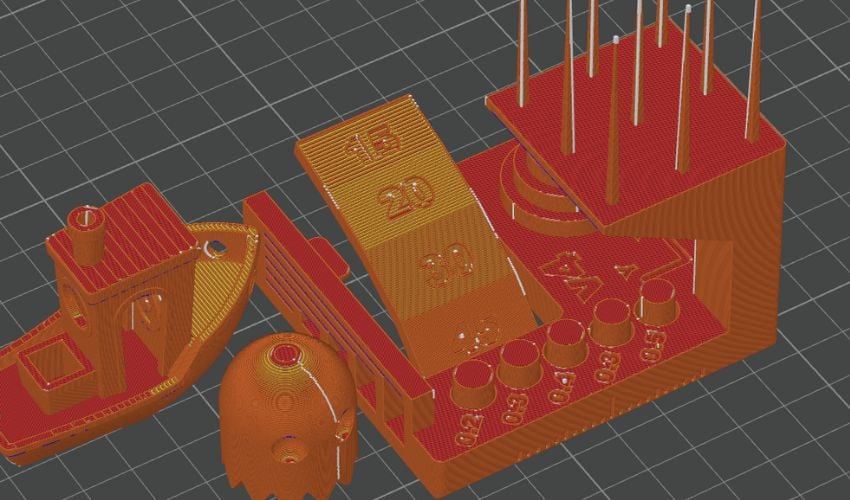 SoftwareAll You Need to Know About Orca SlicerIn today’s FDM 3D printing landscape, Bambu Lab is a major player. On social media, in printing forums and at international trade fairs such as Formnext, the Chinese manufacturer is on everyone’s lips and in high demand. But 3D printing…
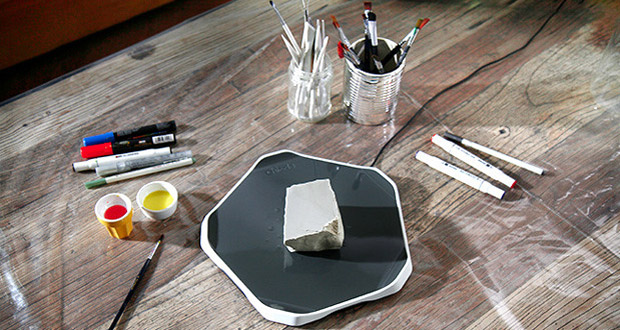 PrintersChizzle, the new 3D scanning tool with a modeling surfaceChizzle is a new tool that makes it easier than ever to create objects from clay, thanks to a connected modeling surface and a 3D scanner. The startup has recently started its crowdfunding campaign, hoping to give a solution to…