Applications
Mitsubishi Electric is Enabling Freeform 3D Printing of Satellites in Outer Space
Mitsubishi has long been active in more than just the automotive sector. The Japanese manufacturer of electrical and electronic products has also been making use of additive manufacturing technology and the associated new market fields for some time. Recently the…
- 3 min read
- Applications
- Six more stories
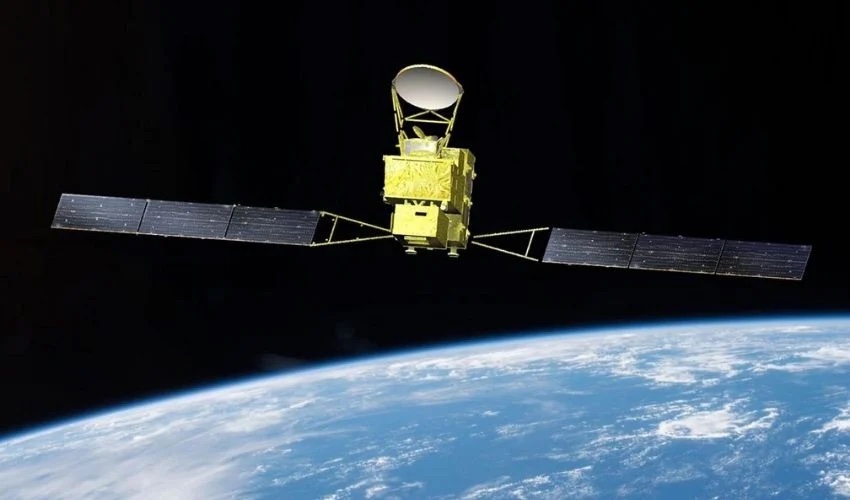
Mitsubishi has long been active in more than just the automotive sector. The Japanese manufacturer of electrical and electronic products has also been making use of additive manufacturing technology and the associated new market fields for some time. Recently the company announced, the development of a new technology for additive manufacturing which uses a combination of photosensitive resin and ultraviolet light in order to 3D print satellite antennas in the vacuum of outer space.
With the development of the newly developed liquid resin, the company is primarily targeting the challenge of manufacturing small, low-cost spacecraft buses with large structures. This means that reflectors for high-performance antennas can be made using additive manufacturing, subsequently also enabling the improvement of spacecraft structures, which thus become thinner and lighter.
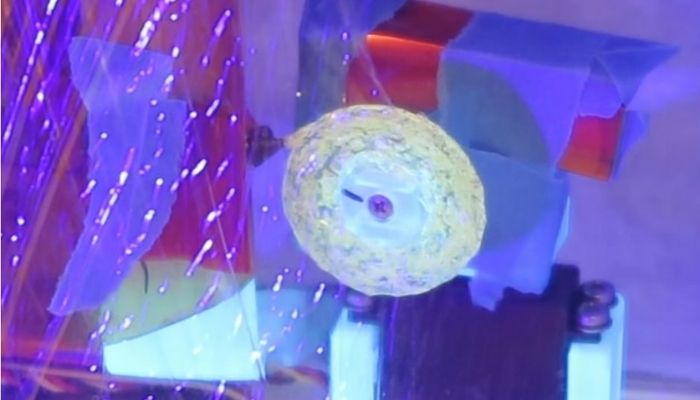
Medium pressure with an ultraviolet light source in a vacuum below 0.2 kPa (photo credits: Mitsubishi Electrics)
Mitsubishi Addresses Design Challenges for Satellites
In the broadest sense, the three main requirements for spacecraft antenna design consist of high gain, wide bandwidth and low weight, all of which conflict with each other. The maximum gain and bandwidth to be achieved require a large aperture, but for economic and orbital use, the antennas must still be light and small enough to fit inside a launch vehicle. And this is where Mitsubishi Electrics’ innovative approach comes into play: the resin-based manufacturing approach enables the efficient creation of antennas with high gain, wide bandwidth and large aperture.
More from the desk
Six other notes from the rest of the bench.
 ApplicationsWhich U.S. 3D Printing Companies Serve the Defense Sector?The 2026 Wohlers Report once again reported that the defense sector is the largest revenue generator for additive manufacturing, with aerospace following behind. Driven by a federal mandate to shore up supply chain resilience, the United States has invested billions…
 ApplicationsAerospace at RAPID + TCT 2025: Sintavia in the SpotlightOne of the things that we have noticed at RAPID + TCT this year, is undoubtedly the clear focus on applications. From conference sessions to exhibitor booth, we are seeing more concrete examples of how 3D printing can be used,…
 NewsPleko, the Spike Shoes 3D Printed Using Carbon FiberPleko is a new pair of shoes, made largely through 3D printing with composite materials. The structural part of the shoe, namely the insole, midsole, spikes and ribs, was designed with carbon fiber using selective laser sintering (SLS). The resulting…
 SoftwareTinkercad: The Online Software to Start 3D ModelingTinkercad is a free, browser-based platform for 3D design, electronics, and beginner-level coding, developed by Autodesk. Autodesk acquired the tool in 2013, two years after its launch by former Google engineer Kai Backman and co-founder Mikko Mononen, and has since…
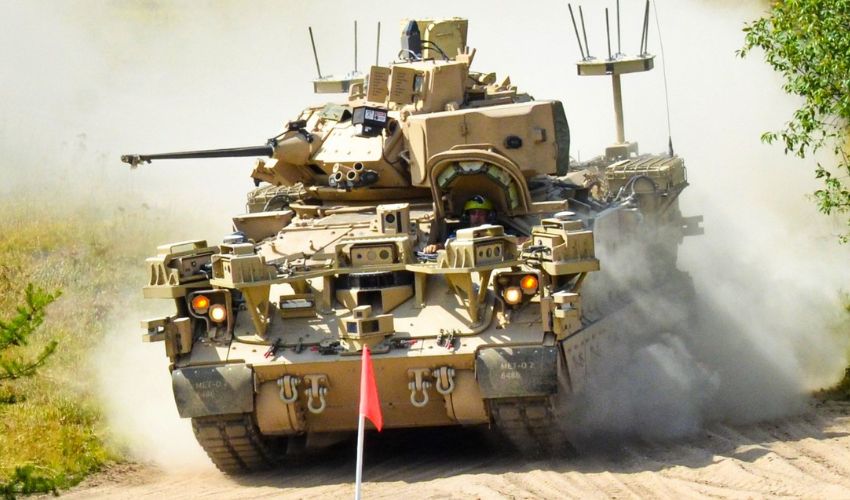 ApplicationsThe US Army Continues to Turn to 3D Printing for Vehicular PartsThe United States Military has consistently been at the forefront of 3D printed innovations, often using additive manufacturing to produce their equipment. From bunkers and bridges to weapons and drones, the organization is a big proponent of 3D printing in…
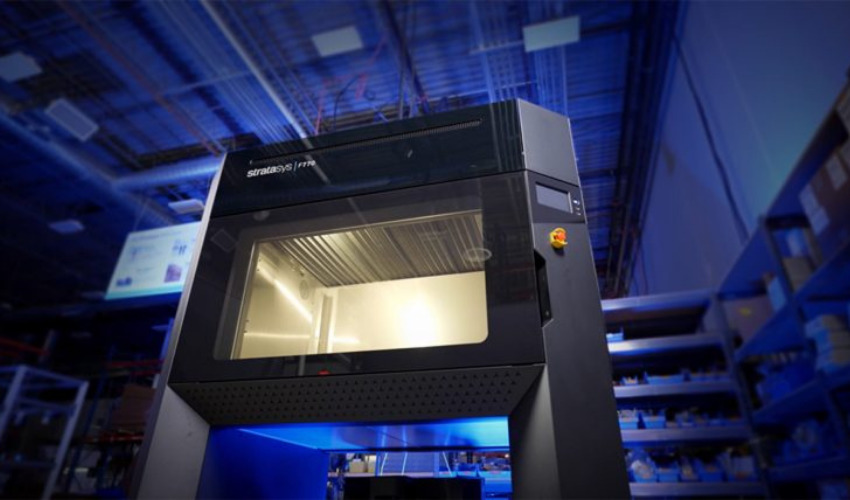 NewsStratasys Pushes into ‘Additive Manufacturing 2.0 Era’ with Launch of Machines For Every Market NeedStratasys, one of the largest and most-established 3D printing companies in the world and a leader in polymer 3D printing solutions announced today the launch of three new 3D printers that together will address a large portion of the multibillion-dollar…