Applications
MITRE and ONR Collaboration Propels Maritime Defense with 3D Printed Hopper Drone
In a collaboration between MITRE, a US federally funded research and development defense organization, and the Office of Naval Research (ONR), the development of a small uncrewed aerial vehicle (UAV) has marked a significant leap forward in maritime innovation and…
- 3 min read
- Applications
- Six more stories
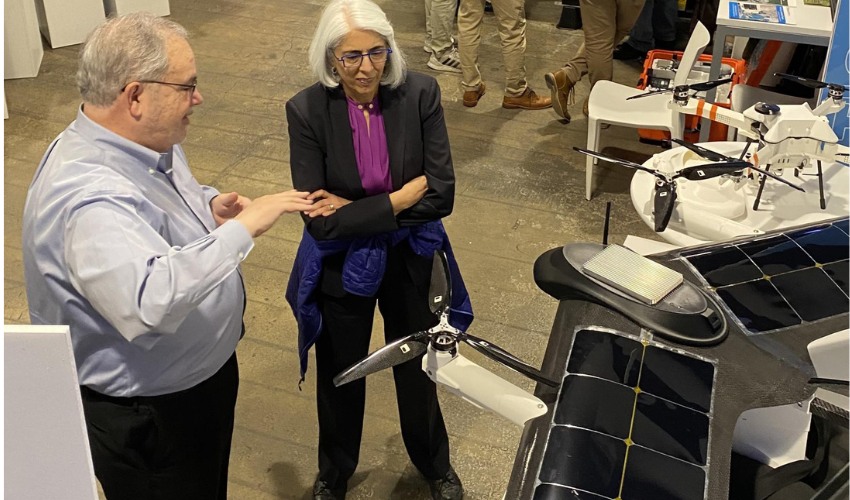
In a collaboration between MITRE, a US federally funded research and development defense organization, and the Office of Naval Research (ONR), the development of a small uncrewed aerial vehicle (UAV) has marked a significant leap forward in maritime innovation and defense technology. The Hopper drone, designed to operate autonomously at sea for extended periods, is set to transform various aspects of defense and marine research.
Engineers at MITRE and ONR have leveraged state-of-the-art design principles and simulation software to create a sturdy yet adaptable aerial system. Similarly to the design material of many past drones, one of the key innovations driving the success of the Hopper project is its utilization of advanced 3D printing technology. Engineers at MITRE have turned to the power of additive manufacturing to fabricate the drone’s airframe and components quickly and cost-effectively. Though no information has been released on the exact 3D printing technology used, there are a number that we have seen used for previous drones including FDM 3D printing and SLS.
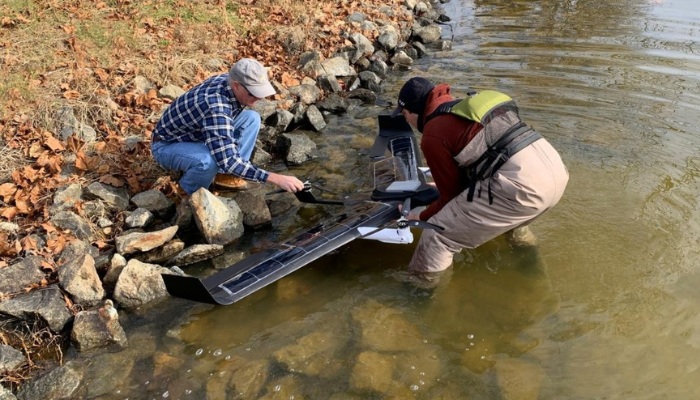
MITRE engineers Dave Sheffler and Tyler Paige prepare to deploy Hopper at Lake Anna State Park in Virginia.
This approach not only accelerates the production process but also allows for complex designs and customization to maritime environments. Additionally, it broadens the scope of the drone’s applications, extending beyond military use to include civil activities such as search and rescue, detecting meteorological events, and monitoring for illicit activities like illegal fishing.
More from the desk
Six other notes from the rest of the bench.
 News3D printing in art: an evolution of the conceptThe arrival of 3D printing technologies in the 1980s opened a world of possibilities not only on the industrial level, but also for creative developments. From the cheapening of certain technologies and the opening of several patents, artists have daily…
 ApplicationsWEBINAR: The Role of FDM 3D Printing in Automotive and MotorsportsWhen it comes to automobiles and especially motorsports, speed is key. As such, teams and manufacturers are constantly looking for ways to optimize weight on their vehicles. Enter 3D printing. Additive manufacturing is quickly being adopted in the automotive sector,…
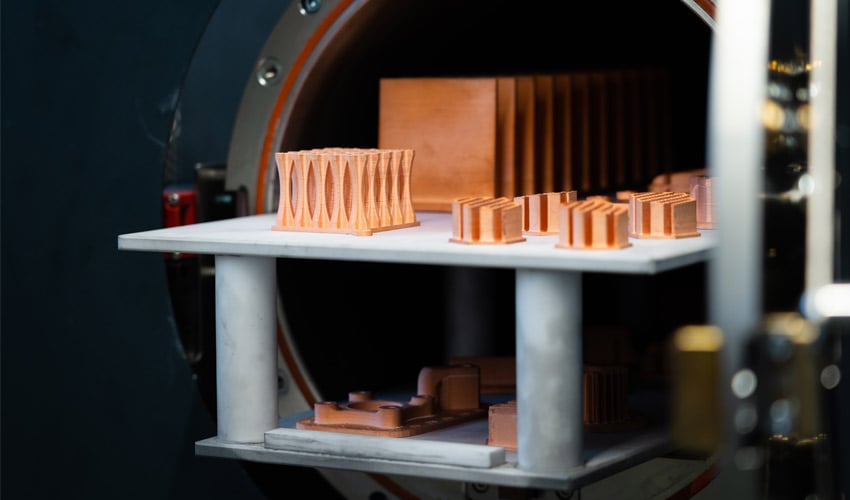 MaterialsMetal X can now 3D print pure copper partsThe US manufacturer Markforged announced last week that it would be possible to 3D print pure copper parts on its Metal X machine – a metal additive manufacturing solution that is relatively more accessible than competing systems. This is interesting…
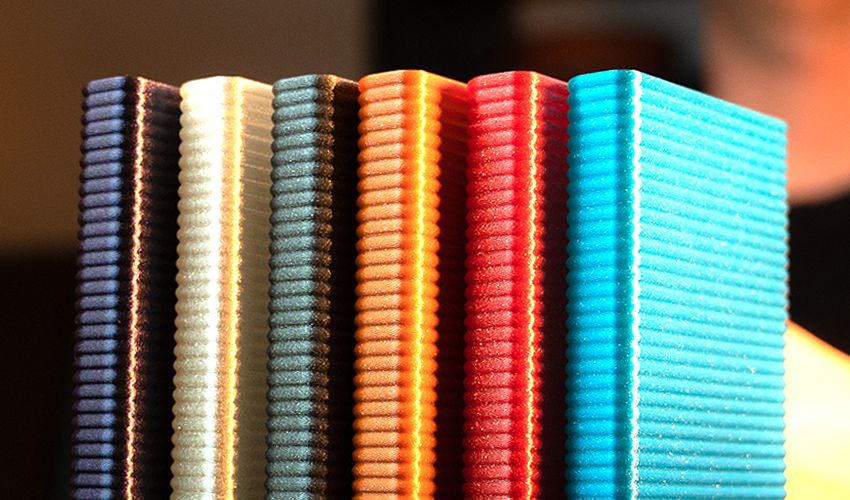 MaterialsFillamentum Opens Up a Rainbow of Possibilities With Newest PETGOne of the benefits of FDM printing is the wide range of filaments that are available (depending on the printer used). Even so, it goes without saying that one of the most popular is PETG, being one of the most…
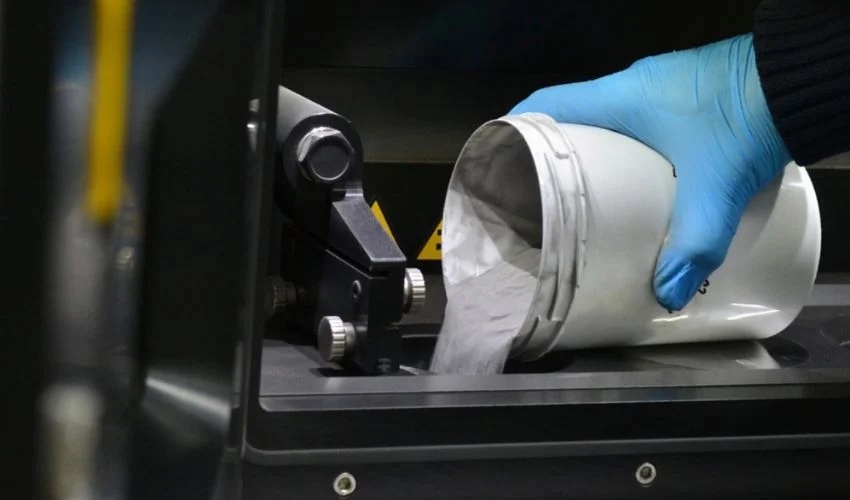 NewsRecent Report Highlights Sustainability Within Metal Additive ManufacturingWe have known for a while that sustainability is a key benefit of additive manufacturing. There are already many examples of this: for example, in architecture, all kinds of consumer goods, and even lithium batteries. A recently published report now…
 GuidesDeriva Sailmakers, the backpack brand committed to sustainable manufacturingDeriva Sailmakers is a backpack brand developed in the Basque Country that is committed to a more sustainable manufacturing process. Its objective is to promote a cleaner and stronger local fashion industry with the use of parts and fabrics made…