Applications
Direct Sound 3D Printing Could Print Implants Inside Your Body
Concordia University researchers developed a new platform technology that uses ultrasonic waves to create complex and precise objects. The researchers have succeeded in using sound to solidify liquid into plastic. This so-called direct sound 3D printing could make it possible&hel
- 3 min read
- Applications
- Six more stories

Concordia University researchers developed a new platform technology that uses ultrasonic waves to create complex and precise objects. The researchers have succeeded in using sound to solidify liquid into plastic. This so-called direct sound 3D printing could make it possible in the future to create implants directly in the body.
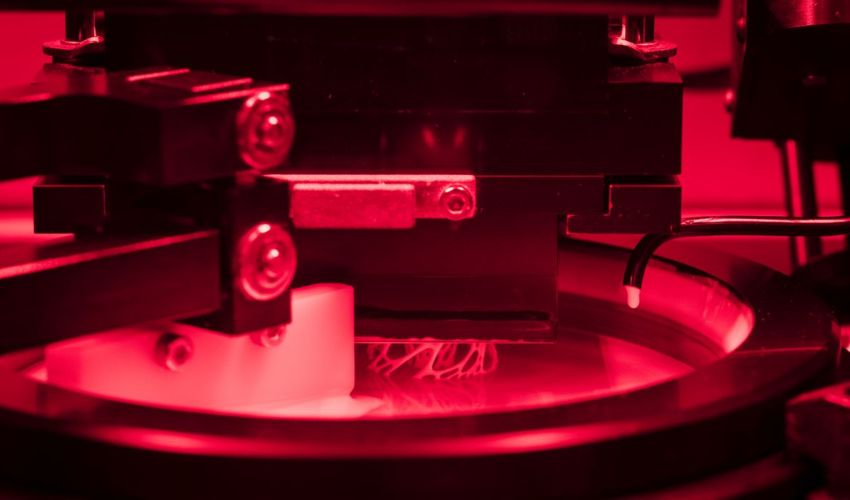
In Direct Sound Printing (DSP), ultra-high frequency sound waves are concentrated for only a trillionth of a second on a spot of liquid resin. This brief but powerful concentration causes the formation of a tiny bubble, which in turn has enough energy to trigger a chemical reaction that solidifies the resin. Most 3D printing methods currently in use are based on either photo (light) or thermal (heat) activated reactions, which then achieve precise manipulation of polymers. This newly developed direct sound 3D printing method could therefore provide a third option for creating new objects. Professor Muthukumaran Packirisamy, corresponding author of the research report, commented:
“Ultrasonic frequencies are already being used in destructive procedures like laser ablation. We wanted to use them to create something”
What is Direct Sound 3D Printing?
DSP is based on chemical reactions created by pressure fluctuations in tiny bubbles suspended in a liquid polymer solution. The researchers found that by using a specific type of ultrasound at a specific frequency and power, they could create very localized, highly focused chemically reactive regions. The reactions caused by ultrasound wave-driven oscillations in the micro-sized vesicles are intense, even though they last only picoseconds. There, the temperatures reach a pressure that is about 1,000 times the air pressure at sea level and about 15000 degrees Celsius. The reaction time here is so short that the surrounding material is not affected by the high temperatures thus caused.
More from the desk
Six other notes from the rest of the bench.
 MaterialsCombining Ceramics and Metals in a Single Resin 3D Printing ProcessLast week, the city of Hanover, Germany, hosted the annual Hannover Messe, an event dedicated to the manufacturing industry and digital transformation. From robotics to artificial intelligence, the focus is on automation, technology, and digitalization. And among the exhibitors a
 NewsTop 5: A New 3D Printed Car Created by Lexus and Inspired by Black Panther: Wakanda ForeverAnother week has come to an end which means it is, of course, time for our weekly top 5 3D printing videos of the week! First, Lexus shows off its new 3D printed car, produced jointly with Carbon and adidas,…
 News3D Daily Show #4: Improving Part Quality with Post-ProcessingToday was the final day of Formnext as well as our 3D Daily Show #4, with exclusive content from the event. Since it’s the last day, it’s only fitting that we also spoke about the last step of the additive…
 NewsTop 5 Videos: Stratasys Moves to More Mindful ManufacturingOnce again, we want to share with you the top 5 3D printing videos of the week. First up, Stratasys talks about the need to transition to more “Mindful Manufacturing,” especially the role of 3D printing in making supply chains…
 Applications3D Pets Can Help Dogs Back on Their Feet With Just a 3D Printer and a SmartphoneAlmost half of all canine limb amputations are either due to cancer treatment or accidents. While there have been multiple efforts focused on animal prostheses, it has often been more difficult to find an effective and widespread solution. For example,…
 NewsFormify Is Using 3D printing to Improve the Experience of Video Game PlayersAccording to a report published on April 19, 2022 by Newzoo, a company specializing in video game market data analysis, the E-sports sector is expected to grow by 21.8% compared to 2021. By the end of the year, it could…