Applications
Microfluidic 3D Bioprinting Allows a Better Reproduction of Cell Structures
At the Stevens Institute of Technology in the United States, a team of researchers is currently working on the development of a bioprinting method based on microfluidics. This microfluidic bioprinting is a technique that manipulates fluids with characteristics in the…
- 3 min read
- Applications
- Six more stories
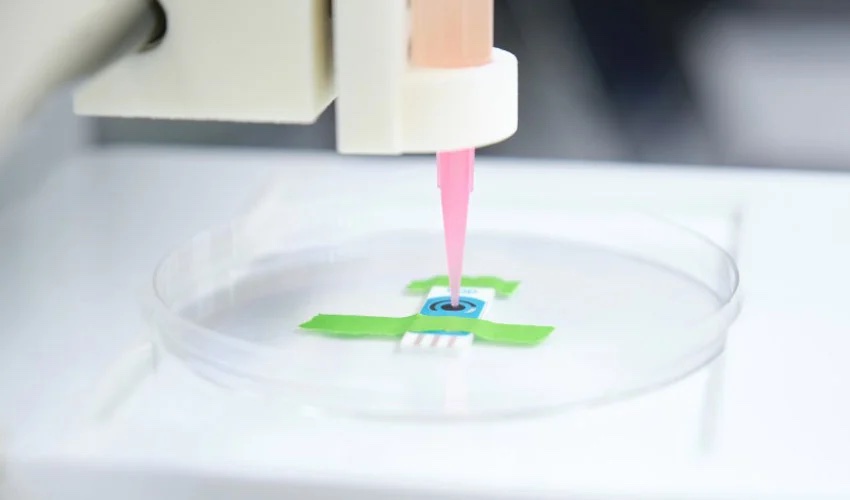
At the Stevens Institute of Technology in the United States, a team of researchers is currently working on the development of a bioprinting method based on microfluidics. This microfluidic bioprinting is a technique that manipulates fluids with characteristics in the micrometer range. The interesting part of it is that this project would give researchers the ability to work on a much smaller scale than ever possible before, even allowing for the creation of any type of human tissue. Researchers could reproduce the biological characteristics of human body cells very precisely thus advancing, for example, organ transplants.
Led by Professor Robert Chang, the team has developed a computational model to accelerate microfluidic bioprinting and enable organ development. According to the Division of Transplantation (DoT) of the Health Resources and Services Administration at the U.S. Department of Health and Human Services, there are currently 105,940 people on the national transplant waiting list. The lack of available organs for transplants is fatal for people across the country, and this issue could possibly be solved thank to 3D printing. As you probably know, bioprinting is able to reproduce customized cellular structures to facilitate the creation, for example, of skin or even organs. Though we are still far from obtaining a 3D printed heart or a fully functional kidney, as this latest advancement has clearly shown, progress is real.
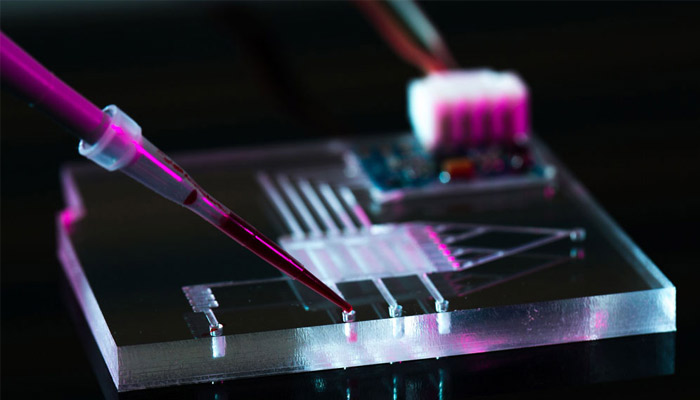
Microfluidics is a science that manipulates fluids with characteristics in the micrometer range
The research conducted by the research of this American team could tip the balance. That is especially because it is based on microfluidics. Other 3D bioprinters on the market are mainly based on extrusion, which are extruding inks layer by layer with a thickness of about 200 microns. However, thanks to microfluidic bioprinting, it would be possible to go down to only a few tens of microns and in that way have a scale much closer to that of the cell itself. Robert Chang explains: “Creating new organs to order and saving lives without the need for a human donor will be an immense benefit to healthcare. However, reaching that goal is tricky because printing organs using “bio-inks” — hydrogels laden with cultured cells — requires a degree of fine control over the geometry and size of printed microfibers that current 3D printers simply can’t achieve.”
More from the desk
Six other notes from the rest of the bench.
 NewsArevo and Superstrata present 3D printed unibody carbon fiber bikesArevo and Superstrata have just unveiled new 3D printed unibody bicycles, unique in both the design and properties. Last year, Arevo, a California-based additive manufacturing startup, built the first 3D printed carbon fiber unibody bike frame. The e-bikes were called…
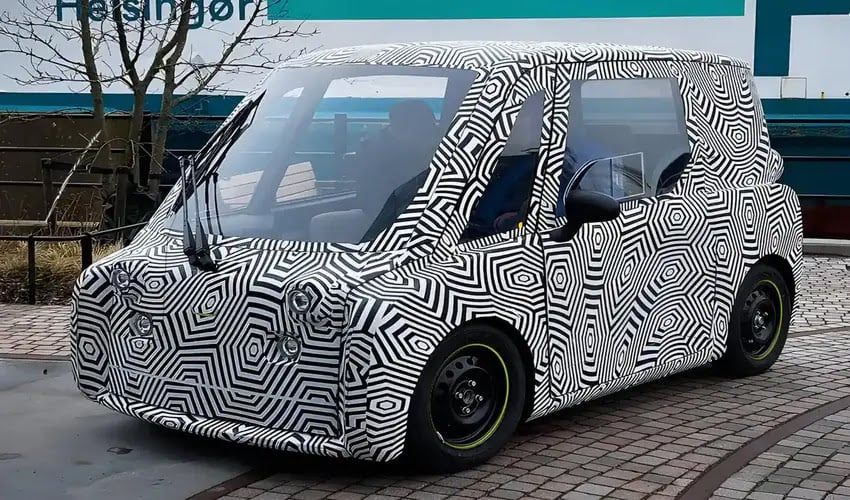 ApplicationsThe E-Miles L7e: A Revolutionary 3D Printed Electric CarThe automotive industry is experiencing a significant transformation propelled by 3D printing technology. This innovative approach is unlocking numerous opportunities in electric vehicle manufacturing. For instance, it facilitates the creation of tailored prototypes and the fabri
 NewsTop 5 Videos: 10 ways to upgrade your 3D printer in 2021This week we found the top 5 videos about 3D printing and the way additive manufacturing is changing production. The technology has infiltrated many sectors, from medical to automotive: check our selection of the week to keep up with the innovations! If you enjoy these, you&helli
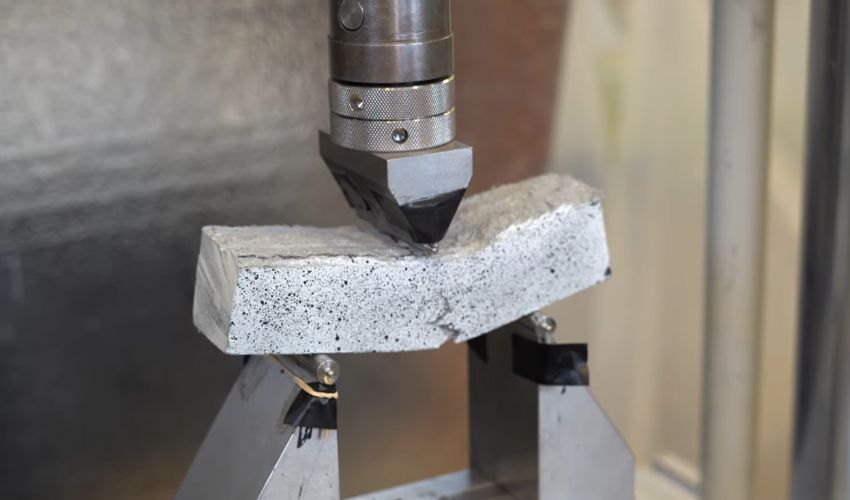 MaterialsBendable Concrete? UNM Engineers Develop Material for Construction 3D PrintingConcrete, construction 3D printing’s favorite material, is getting an upgrade thanks to research from the University of New Mexico (UNM). There, researchers patented a bendable concrete material design specifically formulated for 3D printing. This was not the only research
 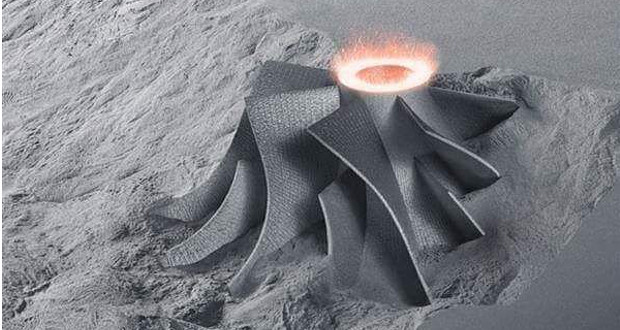 NewsGE and ATI form partnership to create a meltless metal for AMMetal 3D printing is a staple in the 3D printing industry; bringing new innovations and a newfound home in sectors such as aerospace and defense or marine and boating. Continuing in this trend of pushing the seemingly limitless boundaries of 3D printing…
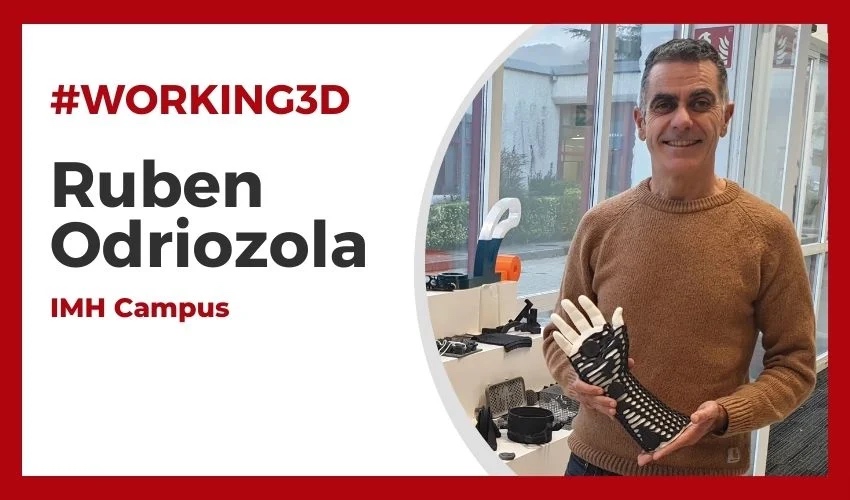 Guides#Working3D: Seven Questions for an Additive Manufacturing ProfessorAdditive manufacturing is no longer just an emerging technology, it has established itself as a key tool to transform the industry. In this context, training future professionals in 3D printing is not an option, rather a necessity. Technological training centers…